
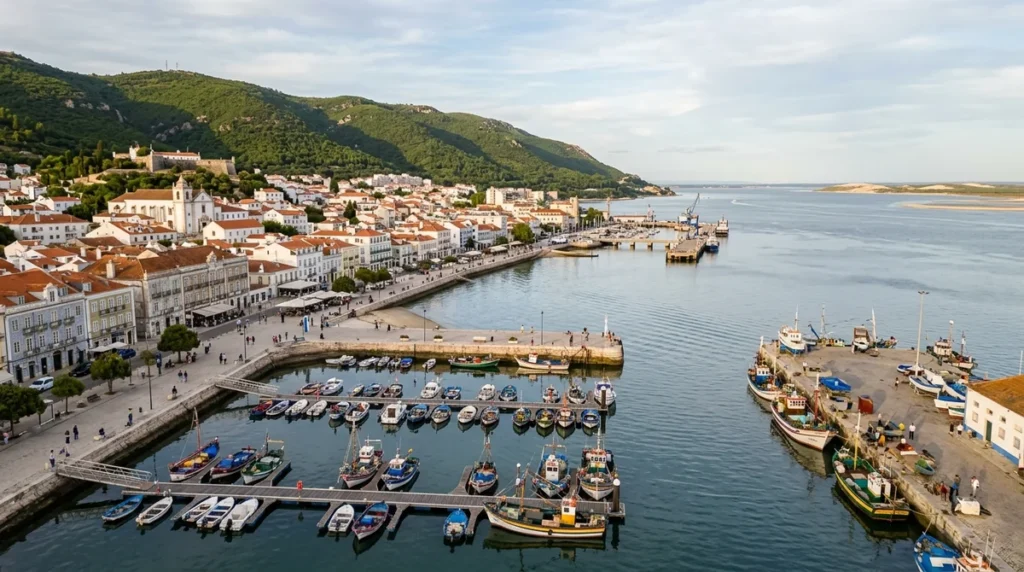
Setubal is a working port city on the Sado estuary about 50km south of Lisbon, and it is one of the most underrated day trips from the capital. You reach it in under an hour by train, and you get a genuine Portuguese city instead of a tourist set piece: Portugal’s best fish market, a pod of wild dolphins in the estuary, the signature dish of fried cuttlefish, a ferry to island-like beaches, and the gateway to the Arrabida hills. Almost no visitors go, which is exactly the point.
This guide covers the practical day: how to get there, if you need a car, what to actually do, and where to eat the choco frito that Setubal is famous for.
- Best for: food, markets, dolphins and an authentic port city
- Getting there: about 50 minutes by train from Lisbon
- Don’t miss: the Mercado do Livramento and a plate of choco frito
- On the water: dolphin watching in the Sado, or the ferry to Troia
- Car needed? No for the city; helpful only for the Arrabida beaches
Is Setubal worth a day trip from Lisbon?
Yes, if you want the real thing over the polished thing. Setubal is not pretty in the postcard way that Sintra or Cascais are; it is a lived-in fishing city with a great market, superb seafood and one of Europe’s few resident dolphin populations right offshore. It rewards travellers who like food, boats and local life.
Skip it if your list is all palaces and monuments, because Setubal’s pleasures are lower-key: a market lunch, a boat trip, a fort with a view. For a fuller loop it pairs naturally with the Arrabida coast, covered in our Arrabida day trip guide, and with nearby Sesimbra.
Recommended tour
FULL DAY PRIVATE TOUR - WINE TASTING + SESIMBRA & ARRÁBIDA NATIONAL PARK
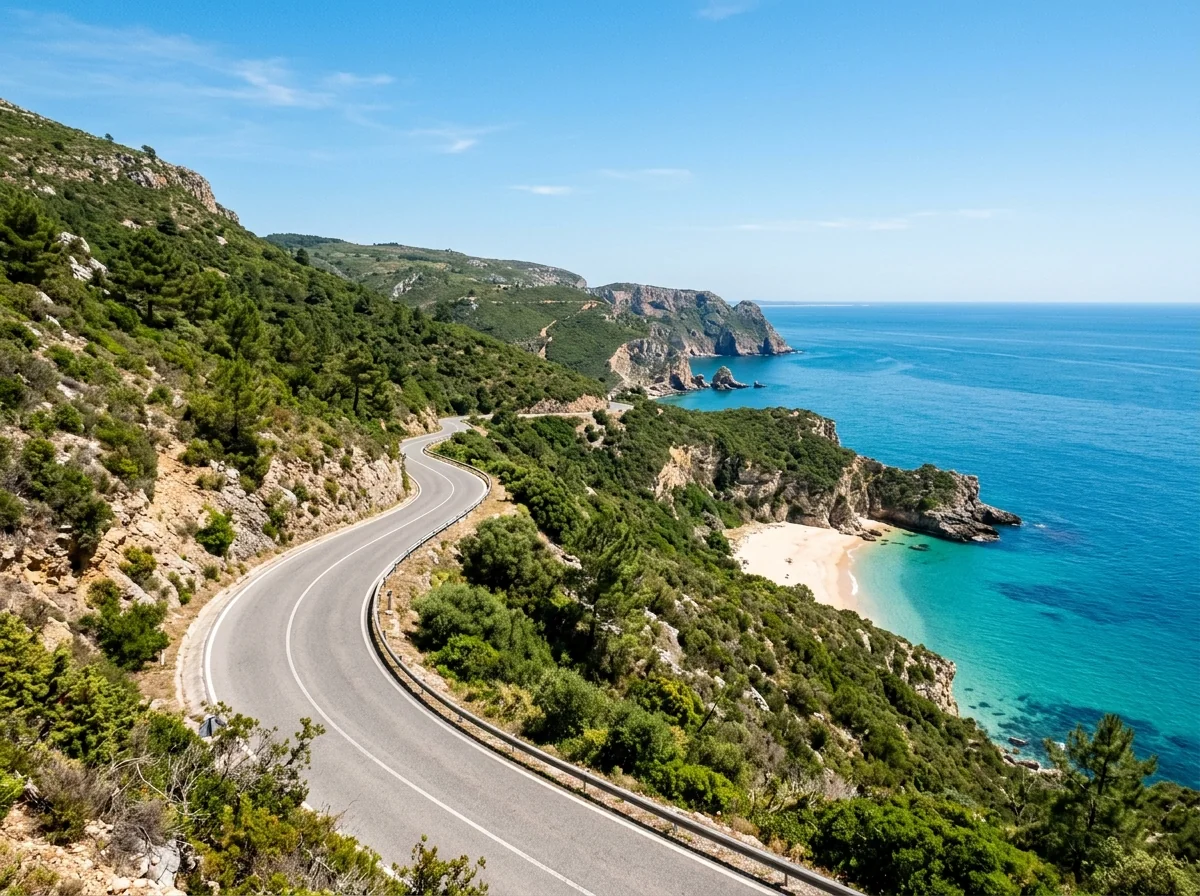
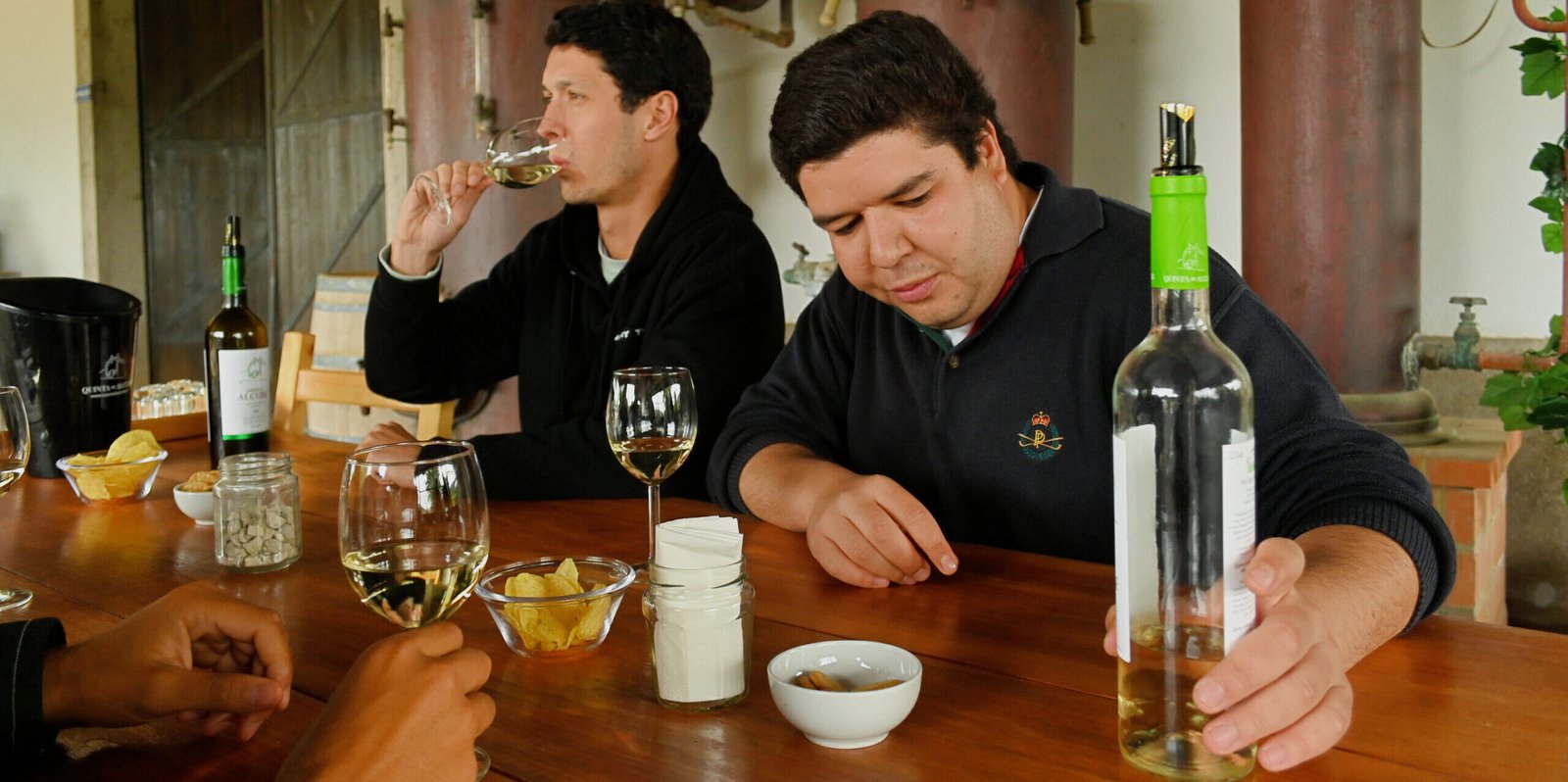
Join a private 9-hour tour exploring Azeitão, Sesimbra, and Arrábida. Enjoy a guided journey with Francisco Gomes, including A.C. transport, professional guidance and a private wine tasting of four varieties at a renowned vineyard. Max: 8 people.
See dates & book →How to get to Setubal from Lisbon
The train is the easy answer. Fertagus runs across the 25 de Abril Bridge from Lisbon to Setubal in about 50 minutes, with departures roughly every 30 minutes and no changes. From Setubal station it is a 15-minute walk into the centre and the market.
| Option | Time | Note |
|---|---|---|
| Fertagus train | about 50 min | Around 5.35 euros each way, every 30 min, direct |
| Bus | about 1 hour | From Sete Rios; useful if it suits your start point |
| Car | about 45 min | Via the A2; only worth it for the Arrabida beaches |
Book the train through Fertagus, or just tap in with a Navegante card. The ride across the bridge with the estuary opening up ahead is a good start to the day.
With a car or without?
For most people the answer is without. Everything that makes Setubal special sits in the city or on the water, all reachable on foot or by ferry. A car only earns its keep if your real target is the Arrabida beaches, and even then the summer car ban complicates it.
Without a car
|
With a car
|
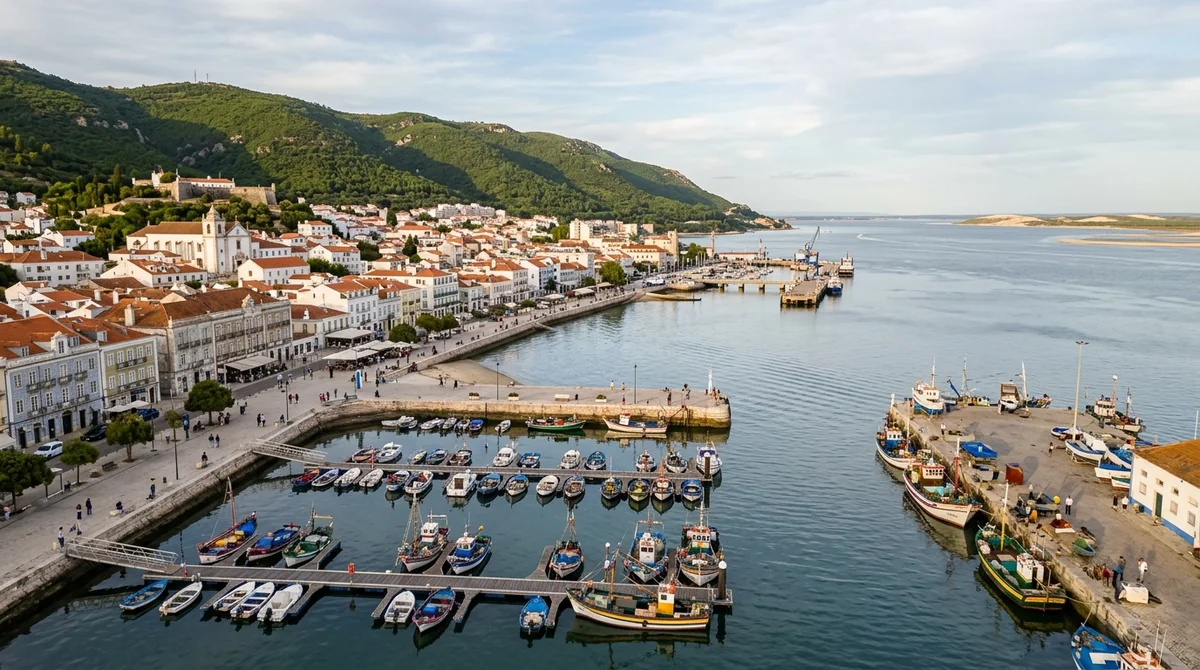
If the Arrabida beaches are your priority, read our access guide to Portinho da Arrabida first, because in summer you reach them by shuttle, not by car.
What to do in Setubal
A good Setubal day is a loop of the market, the water and a long lunch. Here is what earns your time.
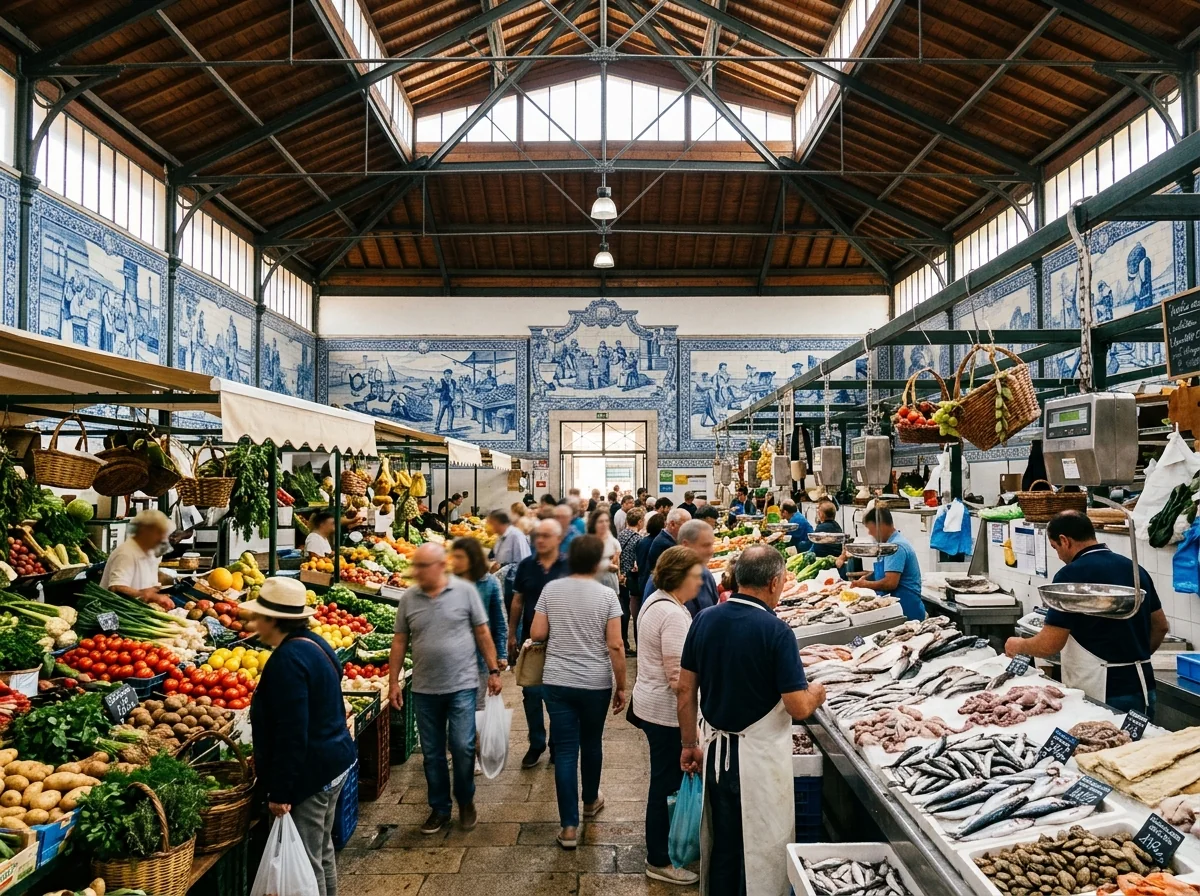
- Mercado do Livramento: one of the best fresh-produce and fish markets in Portugal, with tiled walls and more than 130 stalls, open Tuesday to Sunday from early morning; most of the fish is gone by 11
- Forte de Sao Filipe: a star-shaped 16th-century fort above the city with a sweeping view over the estuary and Troia
- Dolphin watching: a boat trip into the Sado to see the resident bottlenose pod
- Ferry to Troia: cross the estuary to a long peninsula of sand, dunes and Roman ruins
Dolphins in the Sado estuary
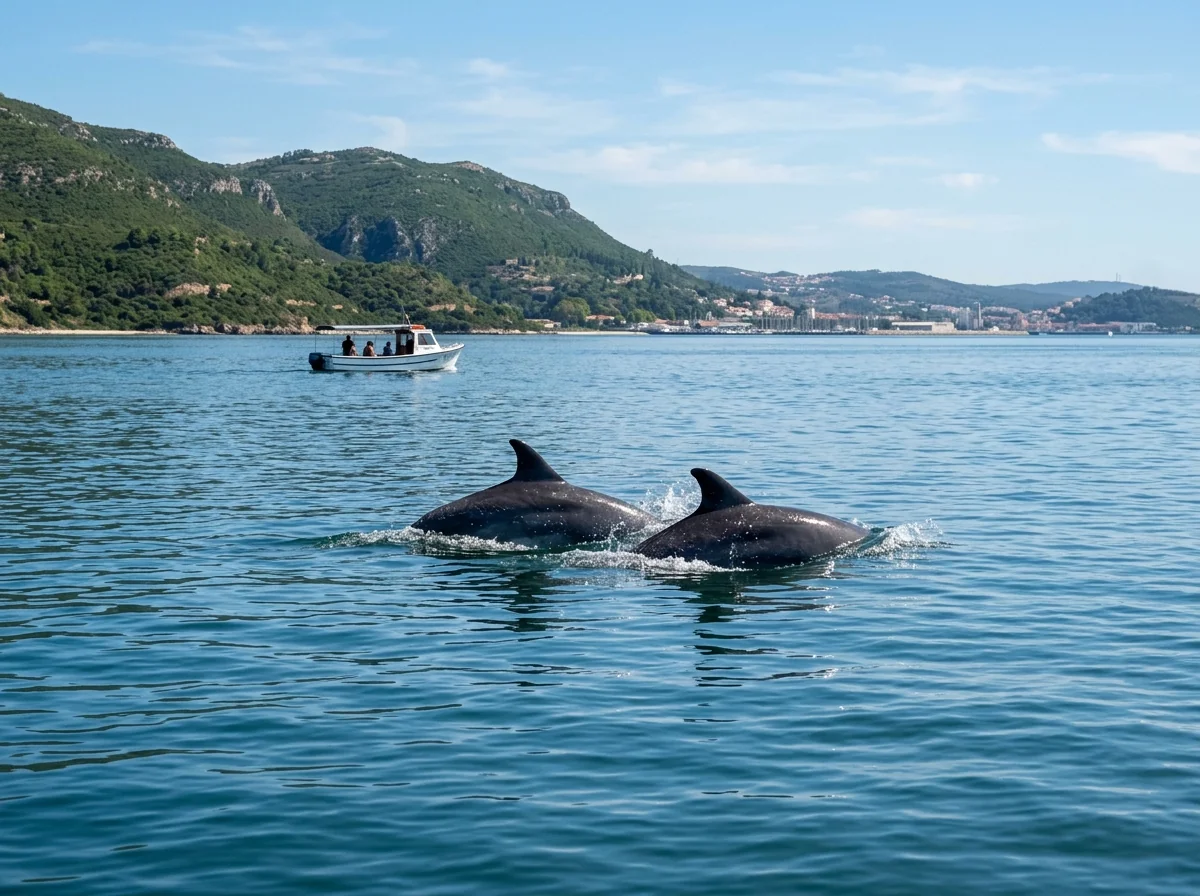
Setubal has something almost no other city in Europe can offer: a pod of around 30 bottlenose dolphins that live in the estuary year-round. You can see them on a small boat tour from the marina, typically a couple of hours on the water with crew who know where the pod tends to feed.
Eat choco frito, the dish of Setubal
You do not leave Setubal without eating choco frito. Choco is cuttlefish, cut into pieces, breaded and fried, and served with chips and a wedge of lemon. It is the city’s signature plate, the local answer to fish and chips, and it is everywhere from the market stalls to the port-side restaurants.
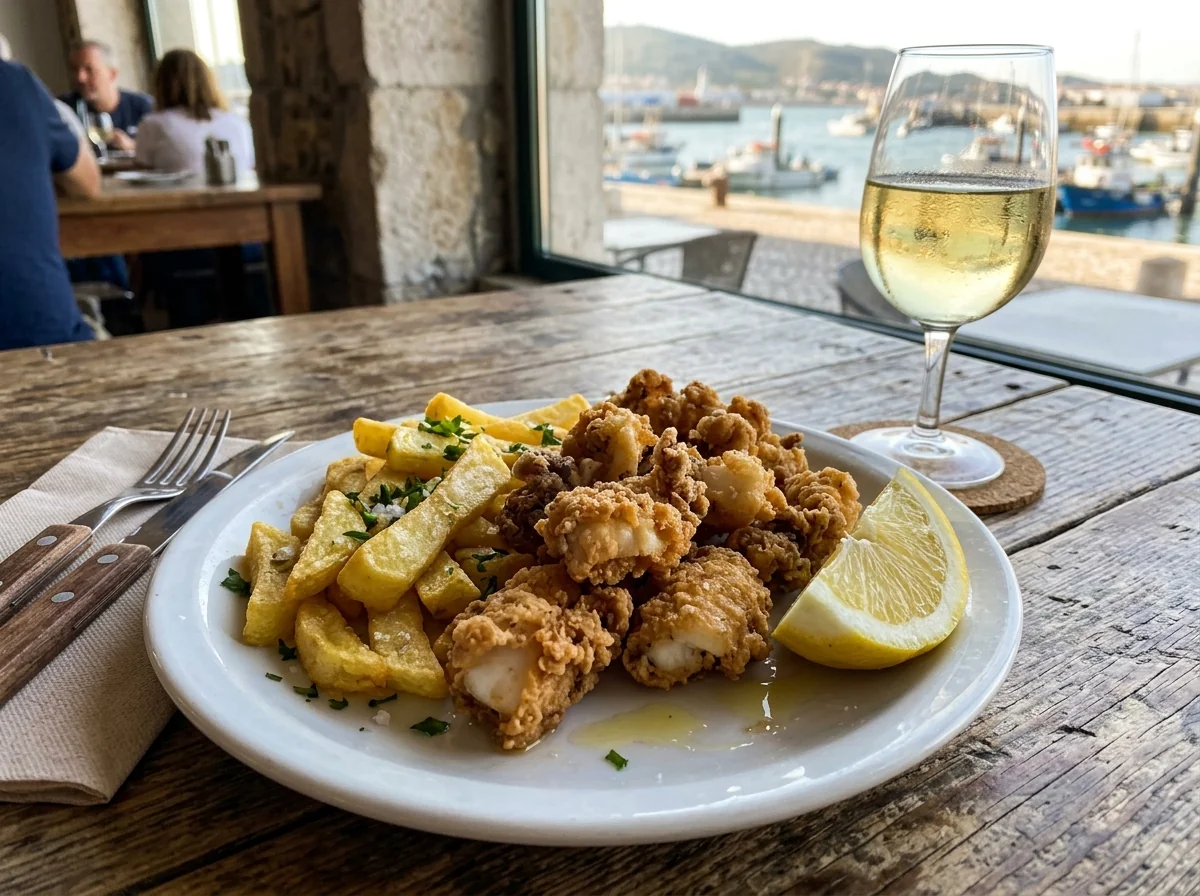
Pair it with a glass of Moscatel de Setubal, the sweet fortified wine the region is known for, made in the vineyards around nearby Azeitao. Between the fish market, the choco and the Moscatel, Setubal is as much an eating trip as a sightseeing one.
Cross the water to Troia
If the city fills a morning, the afternoon belongs to Troia. The ferry crosses the Sado from Setubal in about 25 minutes to a long sandy peninsula of calm beaches, dunes and pine, with Roman ruins near the tip. The crossing itself is scenic, and on a good day the dolphins show up alongside the boat.

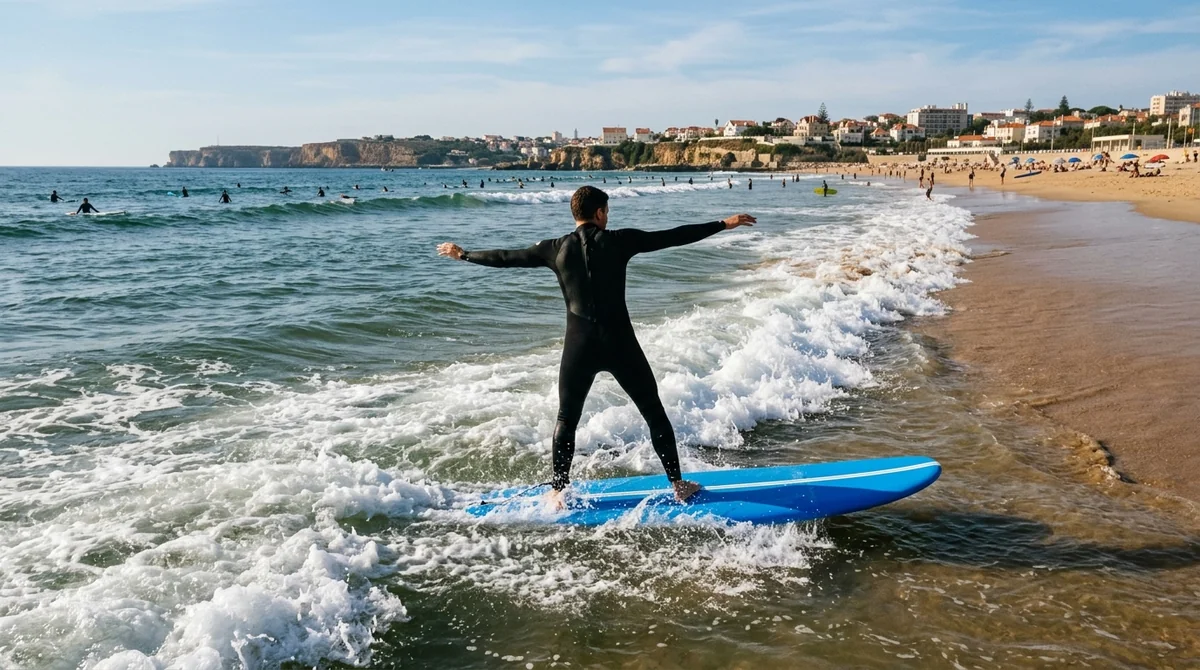
Troia’s estuary-side beaches are calmer and warmer than the wild Atlantic coast, which makes them good for families. For more on the beaches this trip connects to, see the best beaches in Arrabida Natural Park.
When is the best time to visit Setubal?
Late spring through early autumn is ideal, with May, June and September giving warm weather and calmer water for dolphin trips and the Troia ferry. The market is best early on any day it opens, when the fish is fresh and the stalls are loud. Avoid Mondays, when the market is closed.
Recommended tour
FULL DAY PRIVATE TOUR - WINE TASTING + SESIMBRA & ARRÁBIDA NATIONAL PARK
Join a private 9-hour tour exploring Azeitão, Sesimbra, and Arrábida. Enjoy a guided journey with Francisco Gomes, including A.C. transport, professional guidance and a private wine tasting of four varieties at a renowned vineyard. Max: 8 people.
See dates & book →Frequently Asked Questions
How do you get from Lisbon to Setubal?
The easiest way is the Fertagus train, which crosses the 25 de Abril Bridge from Lisbon to Setubal in about 50 minutes for around 5.35 euros each way, running every 30 minutes with no changes. From Setubal station it is a 15-minute walk to the centre and the market. By car it takes about 45 minutes via the A2.
Is Setubal worth visiting?
Yes, if you like food, markets and the water over monuments. Setubal is an authentic port city with one of Portugal’s best fish markets, resident dolphins in the Sado estuary, the local dish of choco frito, and a ferry to the beaches of Troia. It is quieter and more genuine than Sintra or Cascais.
Can you see dolphins in Setubal?
Yes. The Sado estuary has a resident pod of around 30 bottlenose dolphins that live there year-round, one of few such populations in Europe. You see them on a small boat tour from the Setubal marina, usually a couple of hours on the water. They are wild, so sightings are likely but never guaranteed.
What food is Setubal known for?
Setubal is famous for choco frito, fried cuttlefish cut into pieces, breaded and served with chips and lemon. It is the city’s signature dish, found everywhere from market stalls to port-side restaurants. Pair it with a glass of Moscatel de Setubal, the sweet fortified wine made in the vineyards around nearby Azeitao.
How do you get from Setubal to Troia?
A ferry crosses the Sado estuary from Setubal to the Troia peninsula in about 25 minutes. Troia is a long strip of calm sandy beaches, dunes and pine forest with Roman ruins near the tip. The crossing is scenic, and on a good day you may see the estuary dolphins alongside the boat.
Do you need a car to visit Setubal?
No, not for the city. The market, forts, restaurants, marina, dolphin trips and Troia ferry are all reachable on foot or by boat, and the train from Lisbon is quick and cheap. A car only helps if your main aim is the Arrabida beaches, and even those roads close to cars in summer.
An easy day for people who like to eat
Setubal is the day trip for travellers who would rather have a market lunch and a boat trip than another ticket queue. Take the train, eat the choco frito, get out on the estuary, and you have seen a side of the Lisbon region most visitors miss entirely. Our Wine Tasting and Arrabida tour with Francisco takes in this coast and its cellars if you would rather have it all driven and guided.


-
FULL DAY PRIVATE TOUR - WINE TASTING + SESIMBRA & ARRÁBIDA NATIONAL PARK
From €95.00 per personBook Now