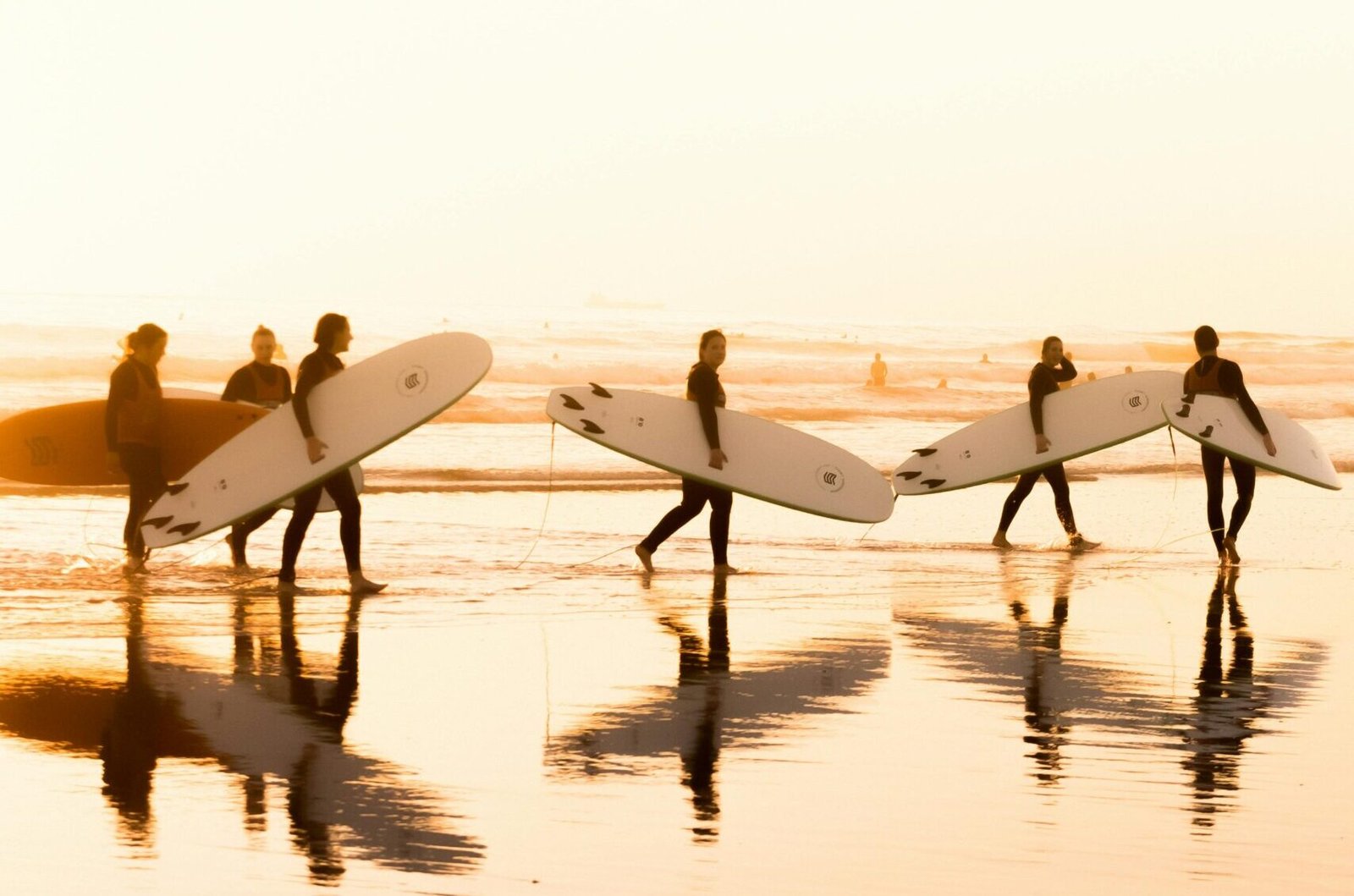

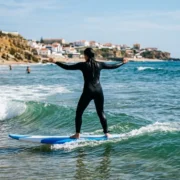
The pop-up is the move that takes you from lying on your board to standing on a wave, and it is the single skill every beginner struggles with. The secret is that it is one explosive motion, not a series of steps: hands flat under your chest, push up, and bring both feet under you at once, straight to a low stance. Never climb up on your knees.
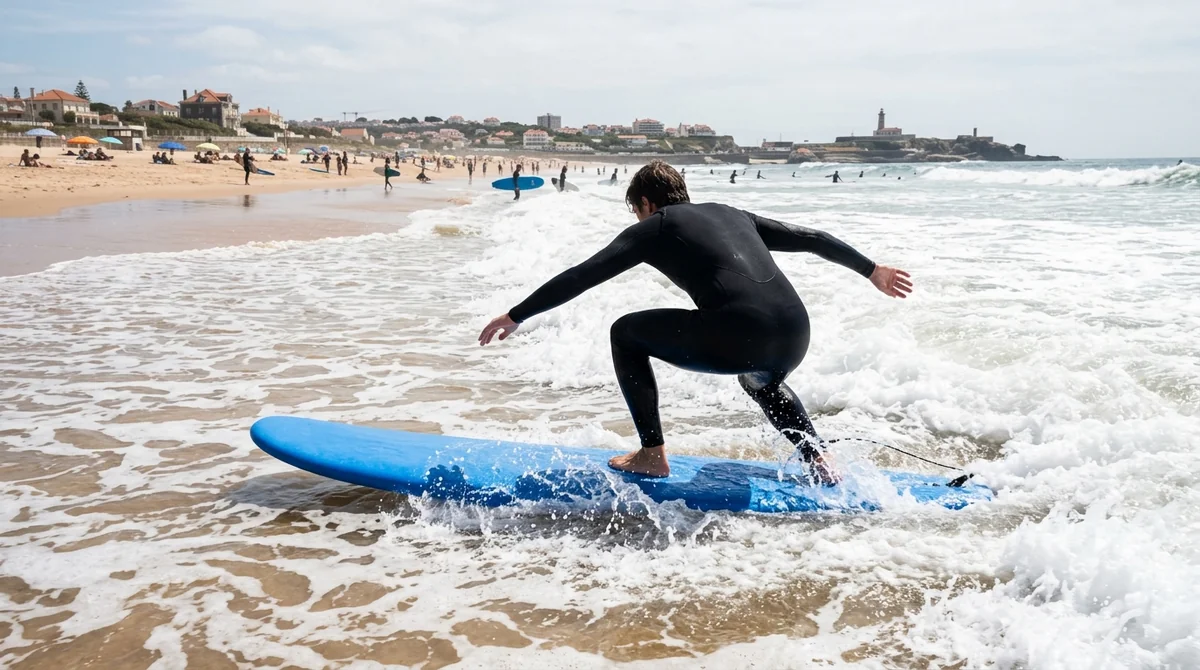
This is a professional surfer’s breakdown of the pop-up, written by Luis Perloiro, who fixes it in person every week at Carcavelos beach near Lisbon. It covers the exact technique, how to find your stance, the mistakes that hold everyone back, and a dry-land drill you can do at home before you ever touch the water.
Recommended tour
PRIVATE SURF LESSON
Join a 3.5-hour private surf session at Carcavelos Beach, with daily departures from Hard Rock Café at 9 A.M. Enjoy guidance from a professional surfer (Luis Perloiro), transport in an A.C. van, surf gear, and a final drink at Tricana Beach Bar. Max: 8 people. Intensity: 7/10.
See dates & book →What is the pop-up?
The pop-up is the transition from paddling flat on your stomach to standing in a surf stance, done in the split second a wave picks up your board. Get it smooth and you ride; hesitate or do it in stages and you fall. It is the hinge the whole sport turns on, which is why it deserves real practice.
You learn it in the whitewater, the broken foam close to shore, on a big soft board. That is covered in our full guide to how to surf; this guide zooms in on the pop-up itself.
The pop-up, step by step
Break it down to learn it, then blend it into one motion. Here is the sequence a pro teaches.
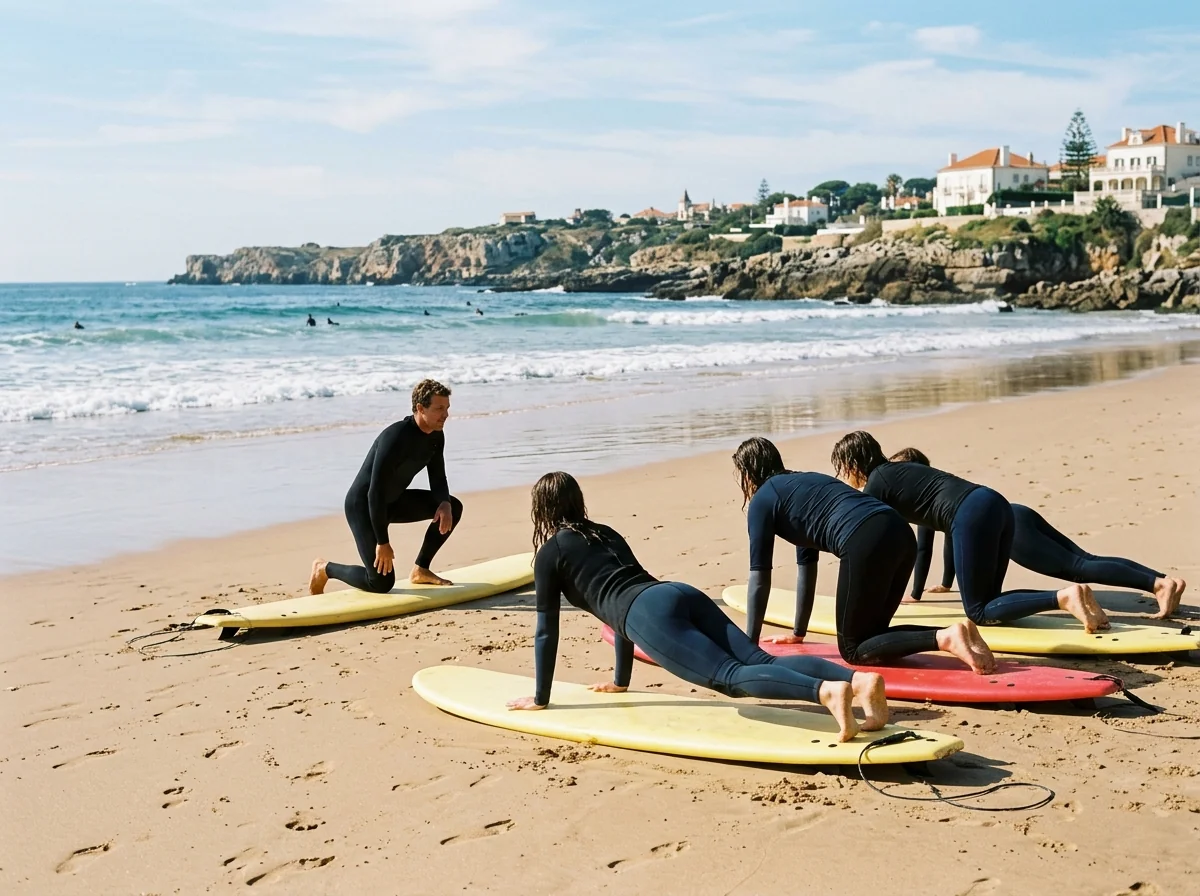
- Catch the wave first. Keep paddling until you feel the wave take the board and push you forward. Do not try to stand before the board is moving with the wave.
- Hands flat, under your chest. Place your palms flat on the deck beside your ribcage, level with your chest. Do not grip the rails, and do not throw your arms out wide.
- Push up into a plank. Press up explosively with locked arms, lifting your chest and hips off the board, like a cobra flowing into a plank.
- Bring both feet through in one motion. In a single fluid move, swing your front foot up between your hands and land your back foot near the tail. It is one action, not a push-up followed by a shuffle.
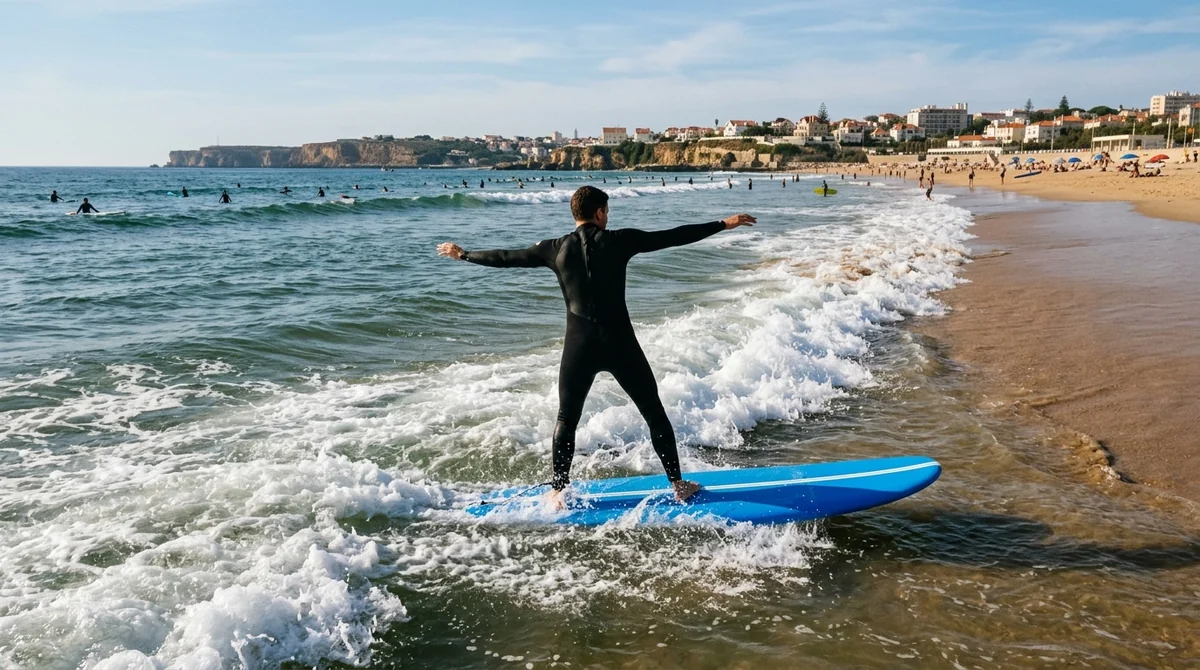
- Land low, eyes up. Finish in an athletic stance, feet about shoulder-width, knees bent, weight centred, and look forward to where you are going, never down at your feet.
Regular or goofy?
Which foot goes forward is down to what feels natural. If your left foot leads, you surf regular; if your right foot leads, you surf goofy. Both are equally good, and the terms are just part of the language of surfing.
Common pop-up mistakes
Almost every failed pop-up comes down to the same short list. Fix these and the rest falls into place.
- Knees first. Coming up onto the knees feels easier but builds a slow, hard-to-break habit. Go straight to your feet.
- Looking down. Eyes on the board drop your weight forward and nosedive you. Look at the beach.
- Doing it in stages. A push-up, then a pause, then the feet. The pause kills your balance. It must be one motion.
- Standing too early. Popping up before the wave has the board leaves you stalled and sinking.
- Feet too narrow or too far back. A narrow or tail-heavy stance has no balance. Aim for a wide, centred base.
The dry-land drill
You can build the muscle memory on your living-room floor, and it works. Do this daily in the week before a lesson or a surf trip.
Where the pop-up finally clicks
The pop-up is the one part of surfing you cannot fully self-teach, because timing and balance click fastest when someone watches each attempt and tells you what your body actually did. A coach turns ten random tries into ten corrected reps.
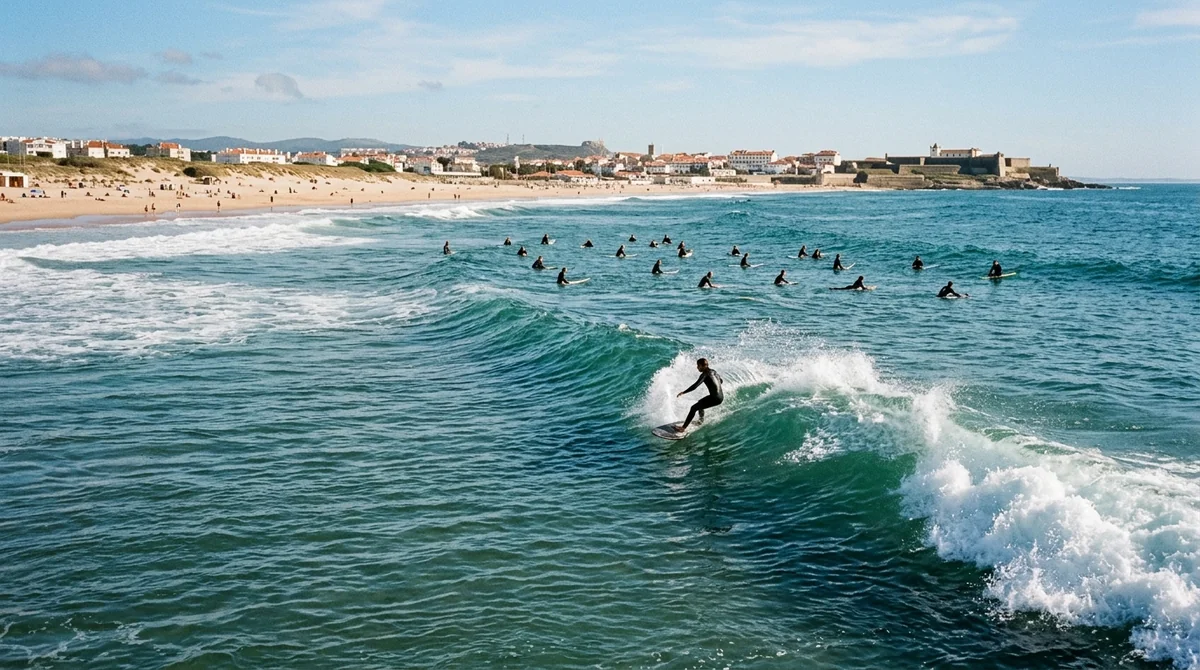
That is exactly what a lesson gives you. On our beginner lesson at Carcavelos, Luis runs the land drill, then pushes you into gentle foam waves and fine-tunes every pop-up in real time, on a soft board with the wetsuit provided. Our Carcavelos surf guide covers the beach, and our guide to how long it takes to learn to surf sets the wider expectations.
Recommended tour
PRIVATE SURF LESSON
Join a 3.5-hour private surf session at Carcavelos Beach, with daily departures from Hard Rock Café at 9 A.M. Enjoy guidance from a professional surfer (Luis Perloiro), transport in an A.C. van, surf gear, and a final drink at Tricana Beach Bar. Max: 8 people. Intensity: 7/10.
See dates & book →Frequently Asked Questions
How do you pop up on a surfboard for beginners?
Catch the wave, place your hands flat on the deck beside your chest, push up explosively and bring both feet under you in one motion, landing in a low athletic stance with your eyes looking forward. The key is that it is a single fluid move straight to your feet, not a push-up followed by climbing up on your knees.
Should you pop up with your knees or your feet?
Always straight to your feet. Coming up onto your knees first feels easier for a beginner, but it builds a slow, unstable habit that is hard to unlearn and leaves you unable to ride properly. Practise going from lying to a standing stance in one motion, skipping the knees entirely, from your very first attempts.
Why do I keep falling when I pop up?
The usual culprits are looking down at the board, doing the pop-up in slow stages instead of one motion, standing up before the wave has the board, or landing with your feet too narrow or too far back. Fix your eyes on the beach, commit to one explosive movement, and land in a low, wide, centred stance.
How do I know if I am regular or goofy?
If your left foot naturally leads, you surf regular; if your right foot leads, you are goofy. To find yours, have someone gently push you from behind when you are not ready: the foot you step forward onto is usually your front foot. Sliding across a smooth floor in socks reveals the same thing.
How do you practise the pop-up on land?
Lie face down on a towel in your paddling position, hands flat under your chest, then push up and pop to your stance in one motion, landing low with your eyes up. Do ten to twenty clean, slow reps a day. This dry-land drill builds the muscle memory so the movement is automatic before you are in the water.
How long does it take to learn the pop-up?
Most beginners manage a pop-up in the whitewater during their first lesson, but making it smooth and automatic takes repetition over several sessions. Daily dry-land practice and a coach correcting each attempt speed it up a lot. Once the pop-up is reliable, the rest of surfing opens up quickly.
Master the pop-up, unlock surfing
Everything in surfing sits on top of a good pop-up: one committed motion, straight to a low stance, eyes on the horizon. Drill it on land, commit to it in the foam, and it becomes automatic sooner than you think. To have every rep corrected in person, book a session at Carcavelos with Luis and pop up on a real wave in your first hour.


-
FULL DAY PRIVATE TOUR - WINE TASTING + SESIMBRA & ARRÁBIDA NATIONAL PARK
From €95.00 per personBook Now