

Pena Palace is the most popular palace in Sintra. With nearly 2 million visitors annually, it ranks as Portugal’s most visited monument. In 2019, Pena Palace welcomed 1,976,367 tourists, earning the distinction of being the most visited museum, palace, and monument in the entire country. Quinta da Regaleira follows as the second most popular, attracting approximately 800,000 visitors each year.
But here is something worth knowing: the most popular palace is not necessarily the best palace for your visit. Each Sintra attraction offers a completely different experience, and understanding what draws crowds to each one helps you decide whether to follow the masses or explore the alternatives.
Complete Sintra Palace Popularity Rankings for 2026
The numbers tell a clear story. Here is how Sintra’s palaces and monuments rank by annual visitors, based on data from Parques de Sintra and tourism statistics:
| Rank | Palace/Monument | Annual Visitors | Crowd Level | Advance Booking |
|---|---|---|---|---|
| 1 | Pena Palace | ~2 million | Extreme | Essential |
| 2 | Quinta da Regaleira | ~800,000 | High | Highly recommended |
| 3 | Moorish Castle | ~400,000 | Moderate | Recommended |
| 4 | Sintra National Palace | ~400,000 | Moderate | Usually not needed |
| 5 | Monserrate Palace | ~200,000 | Low | Rarely needed |
In 2023, the combined Parques de Sintra sites welcomed 3.36 million visitors, nearly matching the pre-pandemic peak of 3.7 million in 2019. The gap between Pena Palace and everything else remains striking. Pena receives more than double the visitors of its nearest competitor.
Why Pena Palace Ranks as Sintra’s Most Popular Attraction
Four factors explain why Pena Palace dominates the popularity rankings year after year.
Unmistakable Visual Appeal
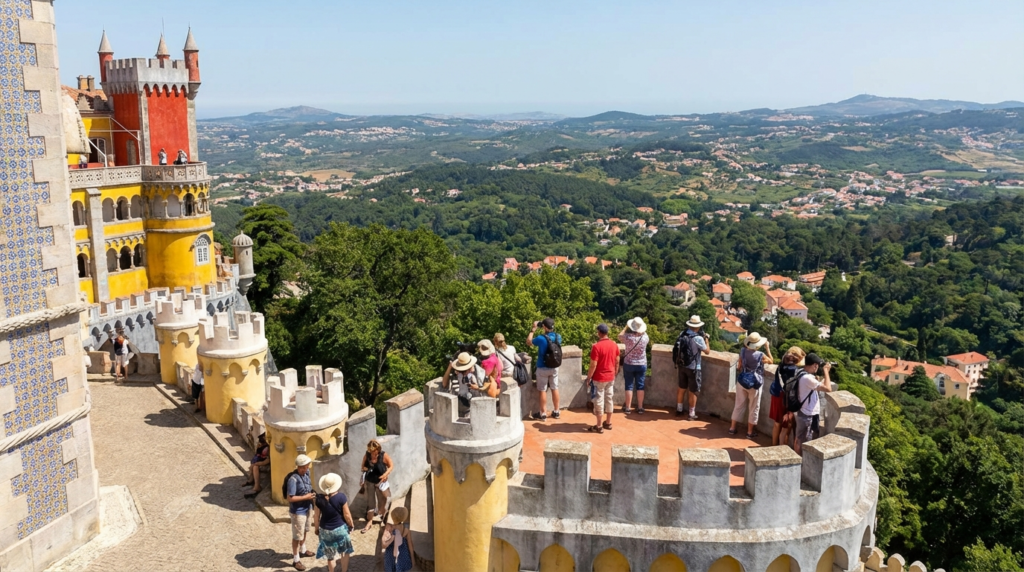
The bright red and yellow towers of Pena Palace create one of the most recognizable silhouettes in Portugal. On clear days, you can spot the colorful palace from Lisbon, 30 kilometers away. Nothing else in Sintra, or perhaps anywhere in Europe, looks quite like it.
This visual distinctiveness translates directly into social media success. Pena Palace consistently ranks among the most photographed landmarks in Portugal. The vibrant colors photograph beautifully against the surrounding green forests, making it irresistible for Instagram, TikTok, and travel blogs.
Official Recognition Drives Attention
Pena Palace has accumulated credentials that reinforce its must-visit status. UNESCO designated it as part of the Cultural Landscape of Sintra World Heritage Site in 1995. It also holds a place among the Seven Wonders of Portugal, a distinction voted on by the Portuguese public.
These accolades appear in every guidebook, tour description, and tourism website. First-time visitors to Sintra almost always prioritize Pena because it tops every recommendation list.
Genuine Historical Significance
Beyond the aesthetics, the Pena Palace carries an authentic royal history. King Ferdinand II commissioned the palace in 1842, transforming a ruined monastery into a Romanticist masterpiece. The interior preserves the furnishings and atmosphere from 1910, the year Queen Amelia spent her final night there before fleeing Portugal during the Republican Revolution.
The preserved royal apartments, dining rooms, and private chambers show exactly how Portuguese royalty lived. This authenticity resonates with visitors seeking substance alongside spectacle.
Expansive Grounds Reward Exploration
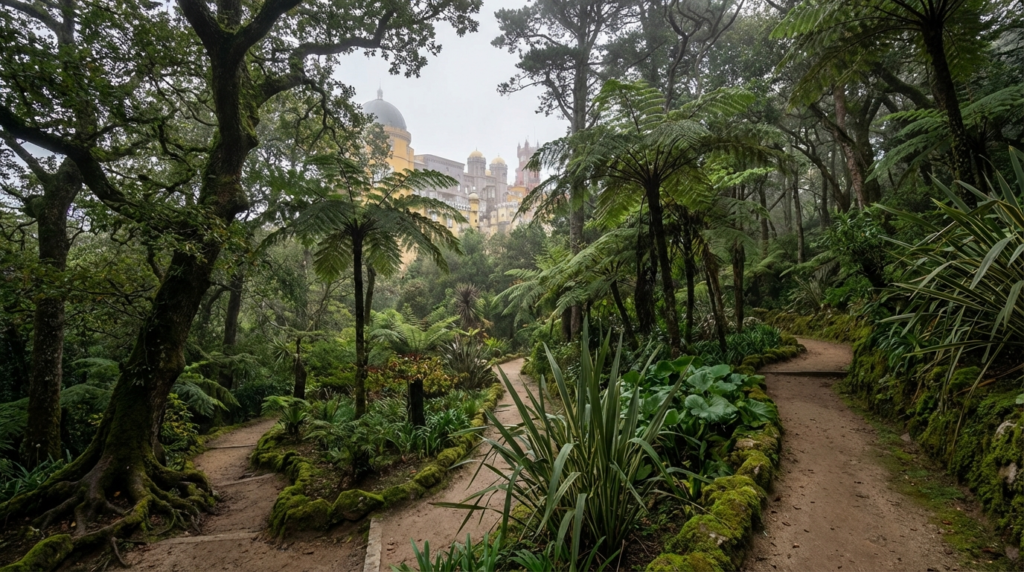
The palace itself occupies a small fraction of the 200-hectare Pena Park. Beyond the colorful terraces, visitors discover forests with exotic plants, ornamental lakes, hidden grottoes, and panoramic viewpoints. The Chalet of the Countess of Edla, a charming Swiss-style retreat included with park admission, provides another reward for those willing to explore beyond the main attraction.
Quinta da Regaleira: The Rising Star of Sintra
A decade ago, Quinta da Regaleira was Sintra’s hidden gem. Today, with approximately 800,000 annual visitors, it has become the clear second most popular attraction and now requires timed entry tickets to manage crowds.
The Initiation Well Changed Everything
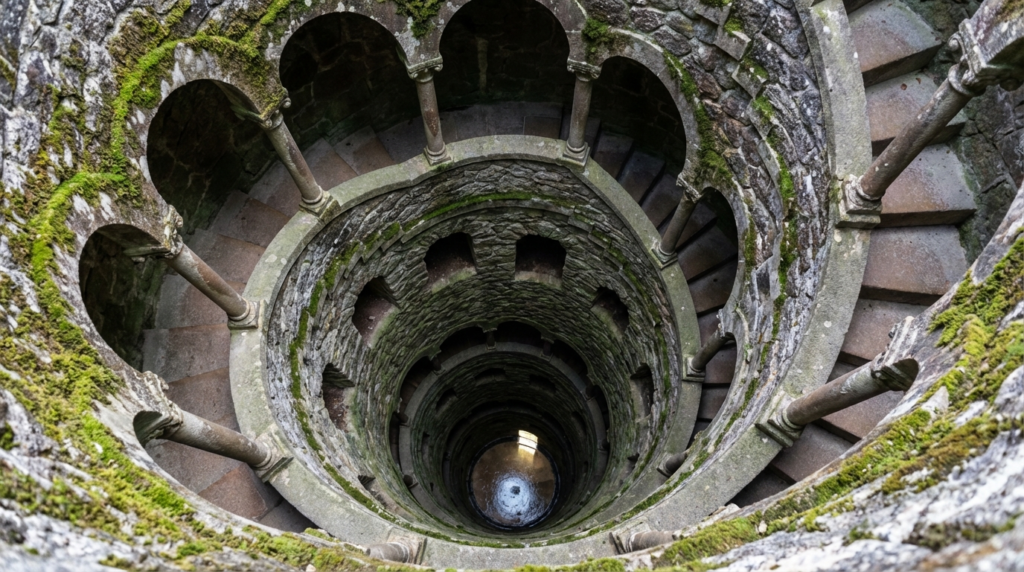
One image drove Regaleira’s explosive growth: the Initiation Well. This 27-meter spiral descent, with nine platforms representing Dante’s circles of Hell and a Templar Cross at the bottom, became a viral sensation on social media.
The well photographs dramatically from every angle, and these images spread rapidly across Instagram, Pinterest, and TikTok. Travel influencers amplified the effect, transforming an obscure mystical attraction into an essential stop.
Adventure Over Observation
Regaleira offers something Pena Palace cannot: participatory exploration. The estate functions like an elaborate puzzle, with underground tunnels connecting caves, grottoes, and hidden passages throughout the 4-hectare grounds. Visitors explore at their own pace, discovering stepping stones across dark pools, emerging from caves into sunlit gardens, and decoding the symbolism scattered everywhere.
This experiential quality resonates particularly well with younger travelers and adventure seekers who want more than traditional palace sightseeing.
For a detailed comparison of these two top attractions, see our complete guide to choosing between Pena Palace and Regaleira.
The Other Popular Palaces Worth Knowing
The focus on Pena and Regaleira overshadows several palaces that deserve consideration.
Sintra National Palace: The Historical Heart
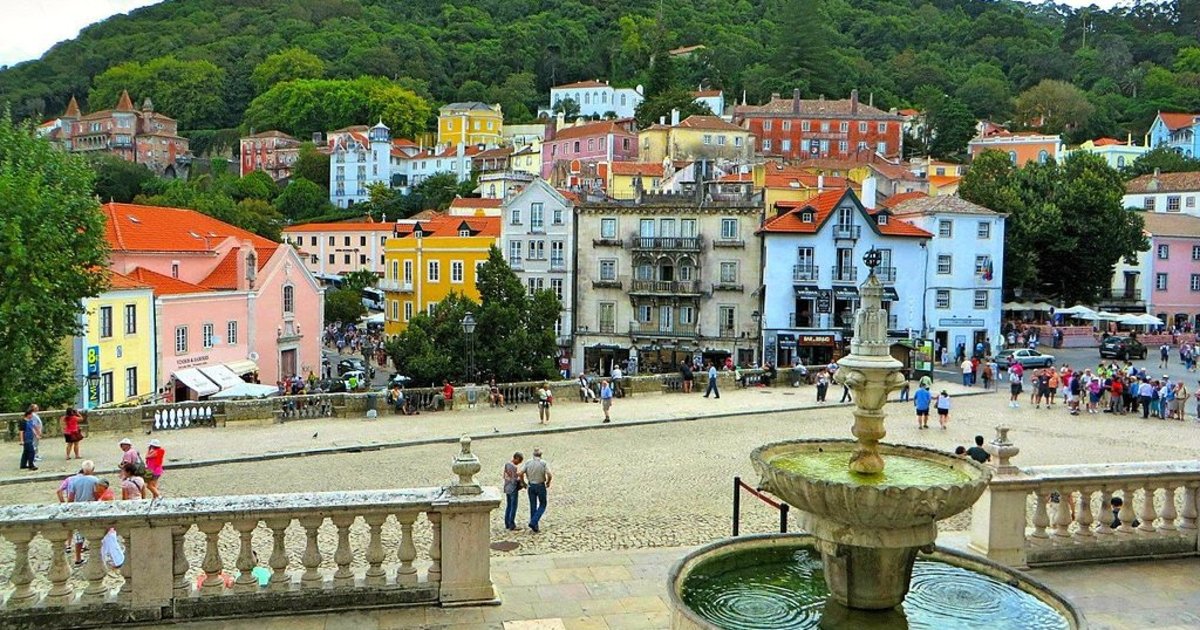
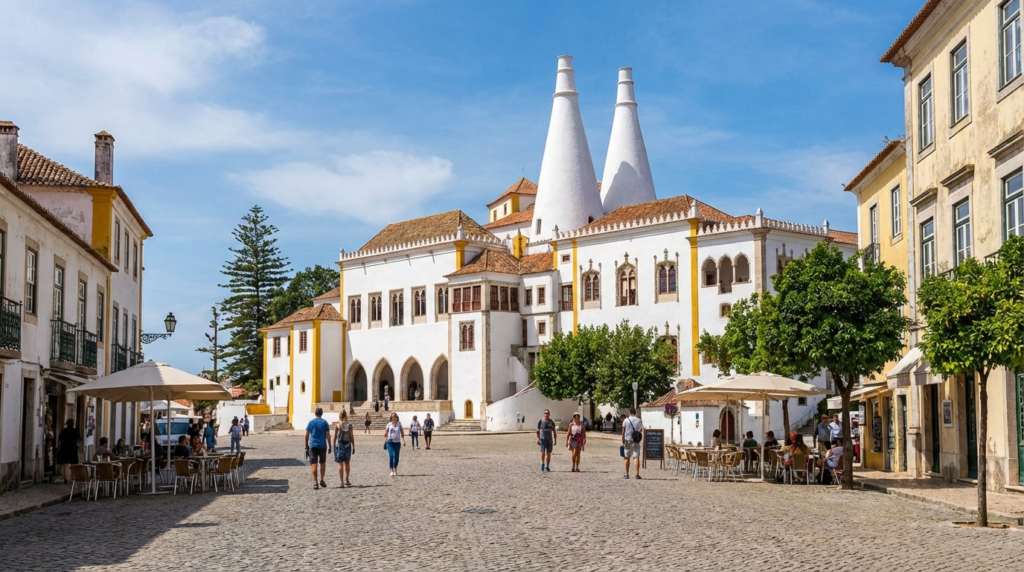
The twin white conical chimneys dominating Sintra’s town center belong to the Sintra National Palace, the best-preserved medieval royal residence in Portugal. Monarchs lived here continuously for over 500 years, making it one of the longest-occupied palaces in European history.
Inside, the Magpie Room and the gilded Coat of Arms Room display exceptional medieval decoration. The palace receives around 400,000 annual visitors yet rarely feels overcrowded because it does not require timed entry. This makes it an excellent choice during peak midday hours when other sites are overwhelmed.
Monserrate Palace: The Peaceful Alternative
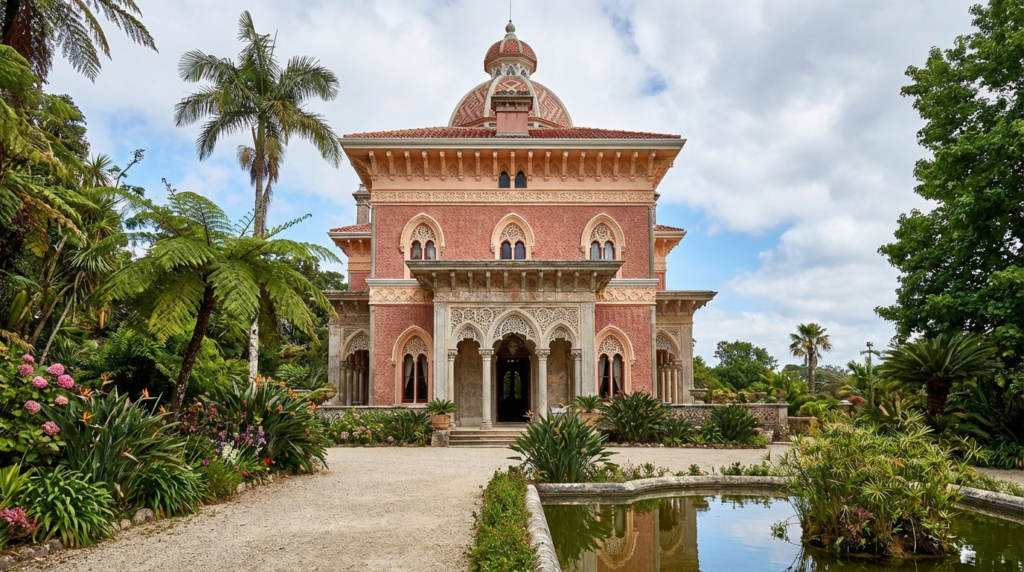
Monserrate Palace sits surrounded by 30 hectares of botanical gardens featuring over 1,000 plant species. With roughly 200,000 annual visitors, a fraction of Pena’s crowds, most days you can wander through the ornate interiors and extensive gardens in relative peace.
The palace blends Gothic, Moorish, and Indian architectural influences, creating something entirely different from the other Sintra attractions. The 3.5-kilometer distance from Sintra’s center deters casual visitors, which is precisely why those seeking tranquility should make the journey.
For a complete comparison of all three palaces, see our Pena vs Regaleira vs Monserrate guide.
Popular vs Best: Understanding the Difference
The most popular palace is not automatically the best choice for every visitor. Consider what you actually want from your Sintra experience.
Choose Pena Palace if you want:
- The iconic Sintra photo everyone recognizes
- Preserved royal interiors showing how Portuguese monarchs lived
- Extensive park grounds for half a day of exploration
- The quintessential first-time Sintra experience
Choose Quinta da Regaleira if you want:
- Adventure and hands-on exploration
- Underground tunnels and mysterious symbolism
- More flexibility with your visit (you can stay as long as you like)
- Something children will actively enjoy
Choose Sintra National Palace if you want:
- Deep Portuguese history spanning 500 years
- Manageable crowds without timed entry pressure
- Central location, making it easy to combine with lunch in town
- Exceptional medieval interiors
Choose Monserrate Palace if you want:
- Peace and tranquility away from crowds
- World-class botanical gardens
- A romantic, contemplative atmosphere
- An experience that rewards returning visitors
How to Visit the Most Popular Sintra Palaces
Crowds at popular attractions require a strategy. Here is how to approach each one:
For Pena Palace: Book timed entry tickets at least one week ahead during peak season. Arrive at 9am when the park opens to reach the palace before 10:30 am, when crowds peak. Expect queues even with pre-booked tickets. Allow at least three hours for a proper visit.
For Quinta da Regaleira: Book afternoon tickets (after 3 pm) for shorter queues at the Initiation Well. The estate is extremely busy in the mornings due to its 9:30 am opening time. Allow two to three hours for thorough exploration.
For Sintra National Palace: This palace rarely requires advance booking. Use it as your midday activity between 10:30 am and 3 pm when other sites are most crowded. A typical visit lasts 60-90 minutes.
For Monserrate Palace: Same-day tickets are usually available. The palace sits 3.5km from the center, reachable by bus 435 from the train station. Allow two hours for the palace and gardens.
Our complete guide to seeing Sintra in one day provides tested itineraries that account for crowd patterns at each site.
Frequently Asked Questions
What is the number one palace in Sintra?
Pena Palace is the number one palace in Sintra by visitor numbers, with nearly 2 million annual visitors. It was named Portugal’s most visited monument in 2019 with 1,976,367 recorded visitors. The colorful hilltop palace consistently ranks as the top attraction in the entire Lisbon region.
Is Pena Palace or Quinta da Regaleira better?
Neither is objectively better. They offer completely different experiences. Pena Palace delivers royal grandeur, colorful architecture, and sweeping panoramic views. Quinta da Regaleira provides mystery, adventure, and underground exploration. Many visitors include both on a full day in Sintra. Your preference depends on whether you want traditional palace sightseeing or an interactive adventure.
Which Sintra palace has the smallest crowds?
Monserrate Palace has the smallest crowds among Sintra’s major palaces, with roughly 200,000 annual visitors compared to Pena’s 2 million. Its location, 3.5km from the town center, means fewer casual visitors. The Sintra National Palace in the town center also maintains manageable crowds because it does not require timed entry tickets.
Do you need to book Sintra Palace tickets in advance?
For Pena Palace, advance booking is essential during peak season. Tickets sell out days ahead, and the strictly timed entry system does not allow late arrivals. Quinta da Regaleira also requires timed tickets but offers more flexibility. The Sintra National Palace and Monserrate typically have same-day ticket availability.
How many palaces can you see in Sintra in one day?
Most visitors can comfortably see two palaces in one day, possibly three with efficient planning and an early start. Attempting more than three results in a rushed, exhausting experience. Pena Palace alone can occupy three or more hours if you explore the grounds properly.
What is the oldest palace in Sintra?
The Sintra National Palace is the oldest palace in Sintra and the best-preserved medieval royal residence in Portugal. Portuguese monarchs occupied the palace continuously for over 500 years, from the early Middle Ages through the 19th century.
Making Your Decision
Pena Palace holds the title of Sintra’s most popular palace for good reason. The colorful towers, royal history, and expansive grounds deliver an experience that justifies its fame. If you visit Sintra only once, Pena remains the default recommendation.
But popularity should not be your only consideration. Quinta da Regaleira’s rapid rise shows that many travelers prefer adventure over observation. The Sintra National Palace offers history without the crushing crowds. Monserrate rewards those willing to venture beyond the obvious choices.
Whatever you choose, advance planning makes a significant difference in Sintra. The combination of hillside terrain, timed entry systems, and massive visitor numbers creates logistical challenges that catch unprepared travelers off guard.
For a stress-free experience covering multiple palaces with expert guidance and handled logistics, consider a guided full-day tour of Sintra and Cascais that eliminates the headaches of independent navigation.