
The best beaches near Lisbon are Carcavelos for most visitors, Costa da Caparica for surfers and space-seekers, and Praia da Conceição in Cascais for those who want a charming town alongside their sand. All three are reachable by public transport in under an hour, with train tickets costing around €2.25 each way. If you have a car or are willing to take a guided day trip from Lisbon, the Arrabida coast south of the Tagus offers some of the most stunning turquoise water you will find anywhere in Europe.
But here is the honest truth, most beach guides skip: not every Lisbon beach suits every traveler. Some are perfect for families, others for surfers, and a few require serious hiking to reach. The water temperature hovers between 16°C and 20°C even in August, which surprises visitors expecting Mediterranean warmth. And during peak summer weekends, the most accessible beaches get genuinely crowded.
This guide breaks down the best beaches near Lisbon by what actually matters: how to get there, what it costs, who each beach is best for, and which ones are worth the extra effort.
Best Beaches Near Lisbon at a Glance
Before diving into details, here is a quick comparison to help you pick the right beach for your trip.
| Beach | Travel Time | Best For | Transport | Crowd Level |
| Carcavelos | 25 min | All-around, families, beginner surf | Train | High (summer) |
| Santo Amaro de Oeiras | 20 min | Quick afternoon trip | Train | Moderate |
| Tamariz (Estoril) | 30 min | Classic resort feel, couples | Train | Moderate-High |
| Conceicao (Cascais) | 40 min | Town + beach combo | Train | High |
| Costa da Caparica | 45-60 min | Surfing, beach bars, space | Ferry + bus | Varies |
| Praia do Guincho | 60 min | Advanced surf, windsurf | Train + bus | Moderate |
| Praia da Ursa | 45 min + hike | Photography, adventure | Car only | Low |
| Galapinhos (Arrabida) | 60-75 min | Crystal water, snorkeling | Car only | Low-Mod |
Each beach on this list serves a different type of traveler. If you only have a few hours, stick with the Cascais train line. If you have a full day and want something spectacular, plan for Arrabida or the Sintra coast.
Best Beaches Near Lisbon by Train (the Cascais Line)
The Cascais train line is the reason Lisbon is secretly one of Europe’s best beach cities. From Cais do Sodre station in central Lisbon, a suburban train hugs the coastline westward, stopping at beach after beach for roughly 40 minutes until it reaches Cascais. A one-way ticket costs approximately €2.25 for adults (€1.15 for children), and trains run every 20 minutes. No reservation needed, just tap your Viva Viagem transit card and go.
One important note: these beaches get packed on summer weekends. Arrive before 10:00 AM or go on a weekday if you want breathing room.
Carcavelos — Best All-Around Beach
Carcavelos is the default recommendation for good reason. It is the largest sandy beach on the Cascais line, wide enough that you can usually find space even when it is busy, and the waves are manageable for swimming and beginner surfing. The walk from Carcavelos train station takes about 15 minutes.
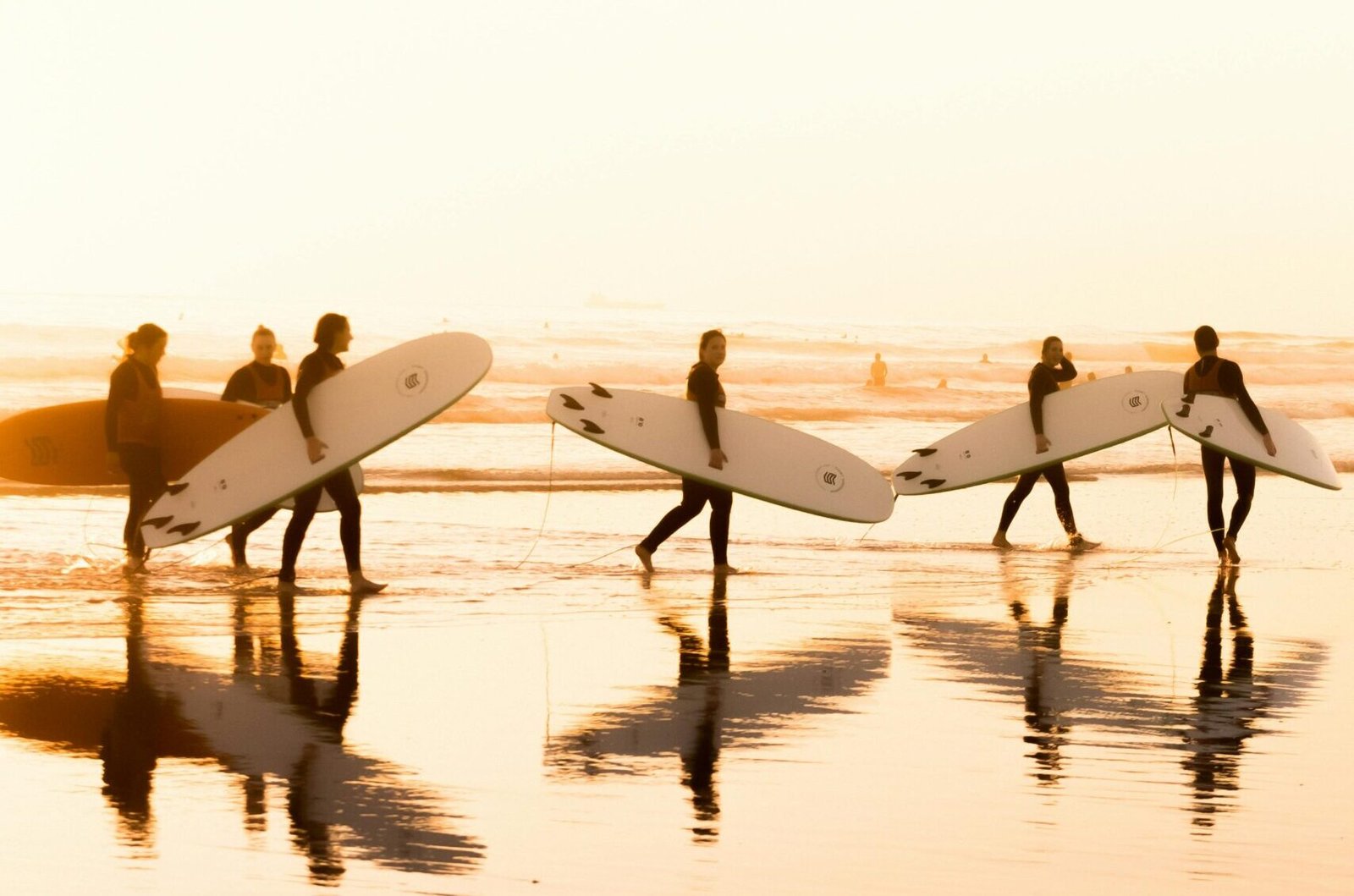
Several surf schools operate directly on the beach, offering group lessons from around €30–40 per person for a two-hour session with equipment included. There are beach bars, restaurants, and public showers right on the sand.
Best for: First-time visitors, families, beginner surfers, and groups.
Honest downside: On hot summer Saturdays, it feels like half of Lisbon is here. The sand closest to the station fills up fast.
Praia de Santo Amaro de Oeiras — Closest to Lisbon Centre
If you want the shortest possible trip from downtown to the sand, Santo Amaro delivers. It is just 20 minutes by train, with a 10-minute walk from Oeiras station. The beach is smaller and more local-feeling than Carcavelos, with a pleasant promenade behind it.
Best for: Short afternoon trips, locals-only atmosphere.
Honest downside: Limited in size, and the immediate surroundings are less scenic than Cascais.
Praia do Tamariz (Estoril) — Classic Resort Beach
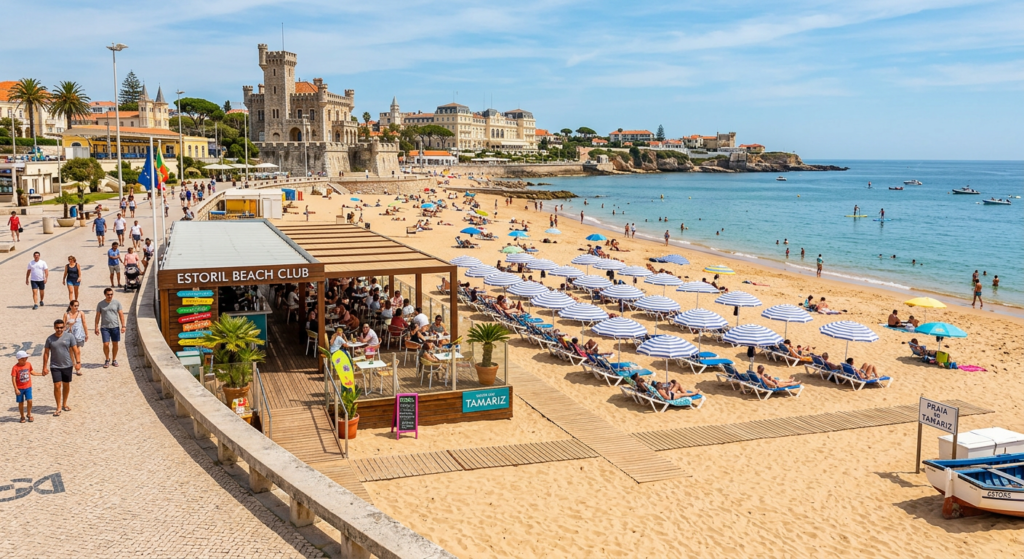
Estoril’s main beach sits right below the famous Casino Estoril, giving it a slightly glamorous, old-school resort atmosphere. There is a tidal swimming pool carved into the rocks, which is excellent for families with young children nervous about waves. The train stop is Estoril, about 30 minutes from Cais do Sodre.
Best for: Couples, families with small children, anyone who wants a resort vibe without resort prices.
Honest downside: The beach itself is fairly narrow, especially at high tide. It feels more “look at the scenery” than “spread out and play.”
Praia da Conceição (Cascais) — Best for Town Plus Beach
Cascais is more than a beach — it is one of the prettiest coastal towns near Lisbon, with a pedestrianized historic centre, excellent seafood restaurants, and a harbour full of boats. Praia da Conceição is the main beach, a five-minute walk from the train station. It connects with Praia da Duquesa next door, creating a longer stretch at low tide.
If you are choosing between Sintra and Cascais for a day trip, Cascais gives you the beach element that Sintra lacks. You can easily spend a morning at the beach and an afternoon exploring the town.
Best for: Travelers who want a full day out, not just a beach visit. Town exploration, seafood lunches, sunset walks.
Honest downside: Conceição is small and gets crowded. The water is calm, which is great for swimming, but boring if you want waves.
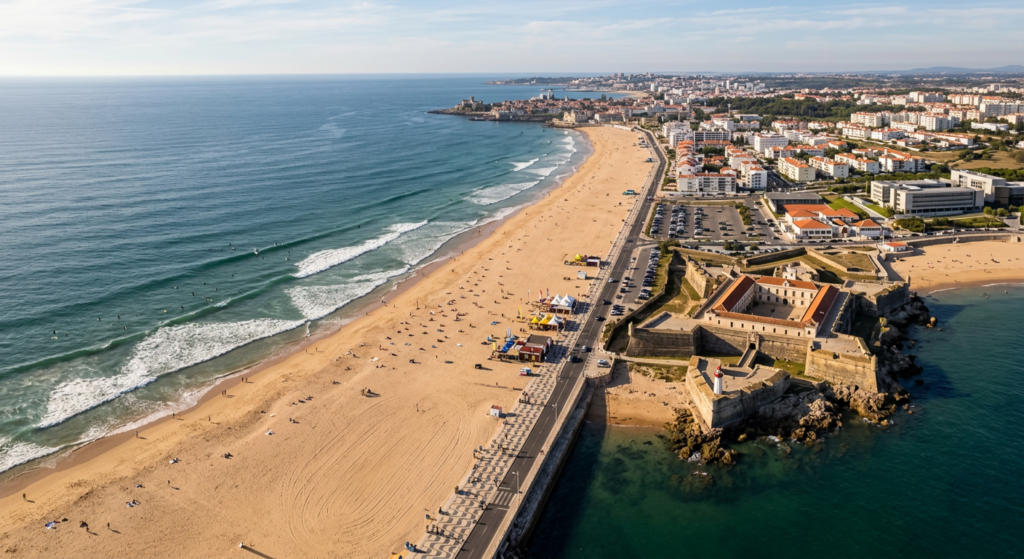
[IMAGE 2: Cascais harbour and Praia da Conceição beach]
Best Surfing Beaches Near Lisbon
Lisbon is one of the few European capitals where you can catch waves within an hour of your hotel. The Atlantic delivers consistent swells along multiple coastlines, and the surf culture here is thriving.
Costa da Caparica — Best Surf Close to Lisbon
Costa da Caparica sits on the south bank of the Tagus, directly across from Lisbon. It is a single, enormous stretch of sand running nearly 26 kilometres along the coast, facing the full Atlantic. This means consistent waves, multiple surf spots for different skill levels, and critically, far more space than the Cascais line beaches.
Getting there takes a bit more effort than the Cascais train. The most scenic route is the ferry from Cais do Sodre to Cacilhas (€1.80, 20 minutes), then bus 135 to Costa da Caparica (about 30 minutes). By Uber, it is roughly €20–25 from central Lisbon.
During summer (June–September), a mini tourist train called the Transpraia runs along the coast from the main town southward, stopping at increasingly quiet and beautiful beaches. Tickets cost €3–5 for the first zone and €5–8 for the second zone. The further south you go, the fewer people you find — and the better the beach bars get.
Our complete guide to surfing in Costa da Caparica covers the best breaks, surf schools, and seasonal conditions in detail.
Best for: Surfers of all levels, beach bar culture, people who want space.
Honest downside: Trickier to reach by public transport. The waves can be powerful and unpredictable — respect the ocean, especially if you are a beginner.
Carcavelos — Best for Beginner Surfers
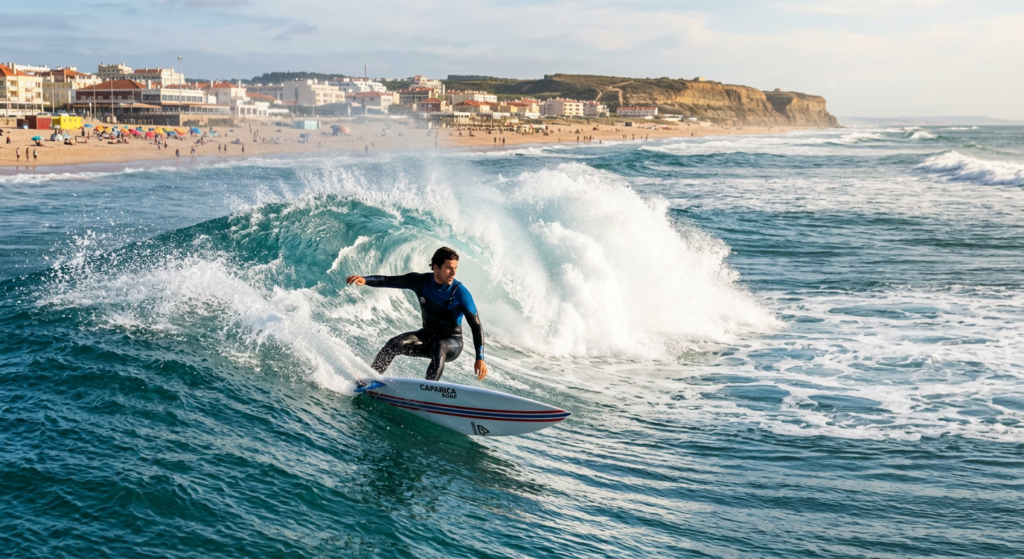
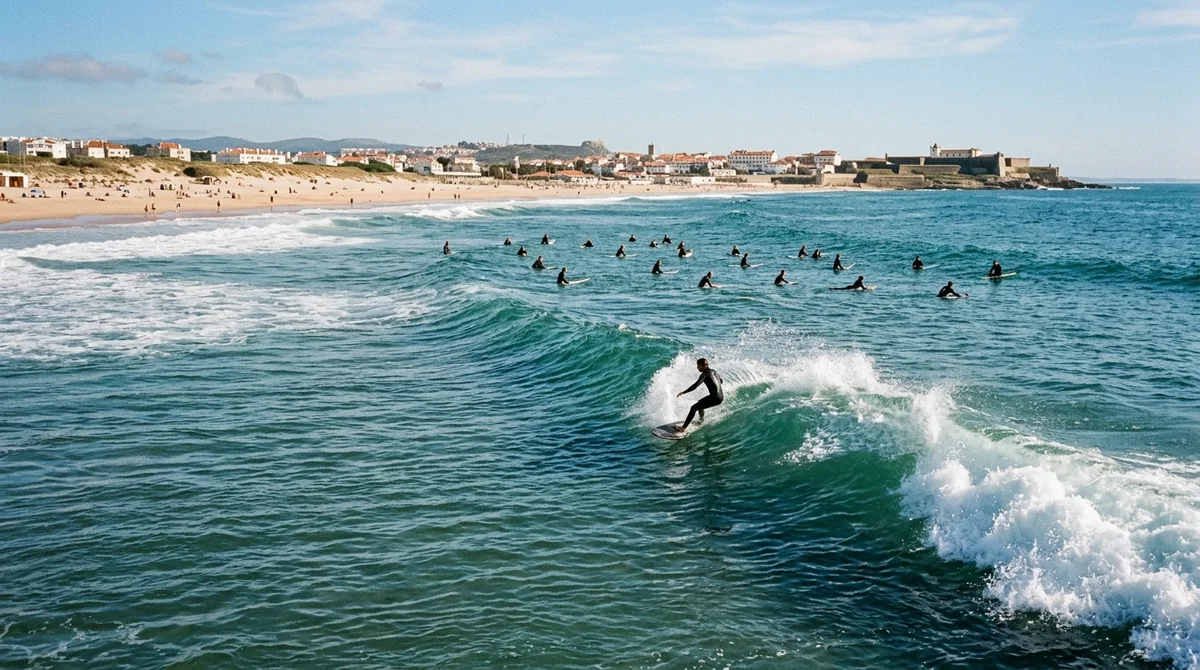
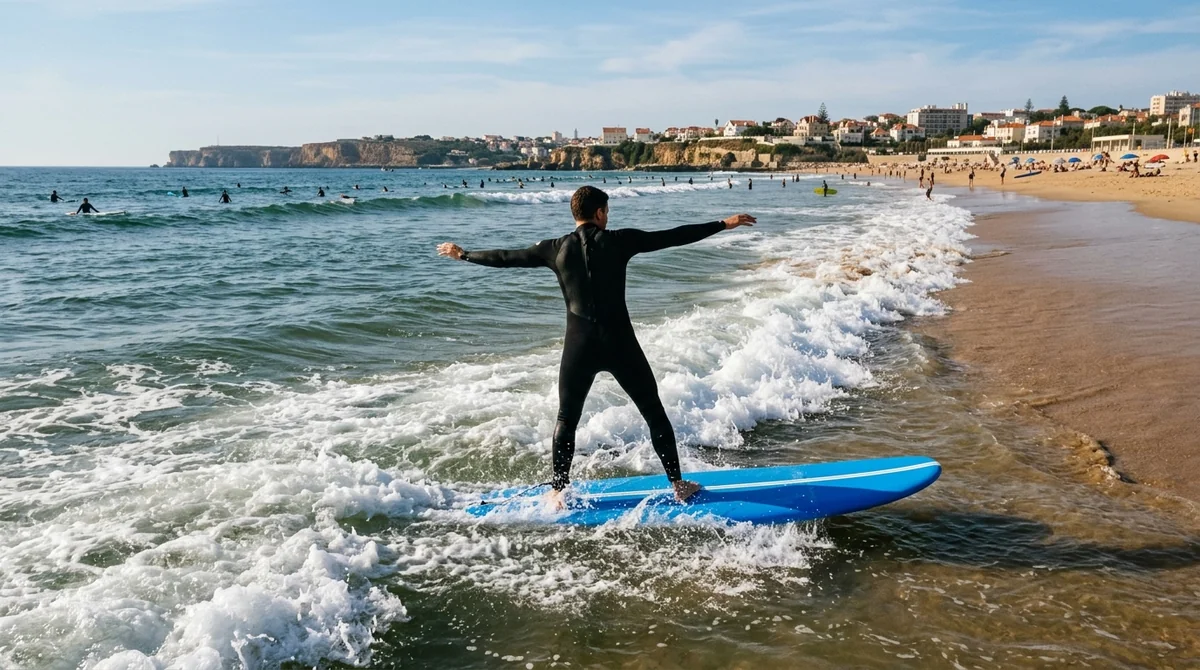
Carcavelos doubles as both a great swimming beach and the most accessible surf spot from Lisbon. The waves here are generally smaller and more forgiving than Costa da Caparica, making it ideal for first-time surfers. Multiple surf schools operate here year-round, with group lessons averaging €30–40 per session.
For a more structured experience, Sea & See Tours offers guided surf sessions at Carcavelos led by Luis Perloiro, a former Portuguese national surf champion. Having a nationally ranked surfer as your instructor is not something you find at a typical surf school — and his knowledge of local conditions means you are always at the right spot for your skill level.
Best for: First-time surfers, families wanting to try surfing, and anyone who values convenience.
Honest downside: Smaller waves mean experienced surfers will get bored quickly.
Praia do Guincho — Best for Advanced Surfers and Windsurfers
Guincho sits just beyond Cascais in the Sintra-Cascais Natural Park. The wind here is relentless, which makes it a paradise for windsurfers and kitesurfers but challenging for casual beachgoers. The setting is spectacular — wild, exposed, with the Serra de Sintra rising behind you. See our honest Praia do Guincho guide before you go.
Getting to Guincho requires a bus or taxi from Cascais (about 15 minutes), or roughly 50 minutes by car from Lisbon centre.
Best for: Experienced surfers, windsurfers, kitesurfers, and photographers.
Honest downside: The wind can be brutal. Swimming is often dangerous due to strong currents. Not a relaxation beach.
Most Beautiful Beaches Near Lisbon (Worth the Drive)
The beaches accessible by train are convenient, but they are not Portugal’s most beautiful. For jaw-dropping scenery, you need to go a bit further — either by car, taxi, or guided tour.
Praia da Ursa — Most Dramatic Beach
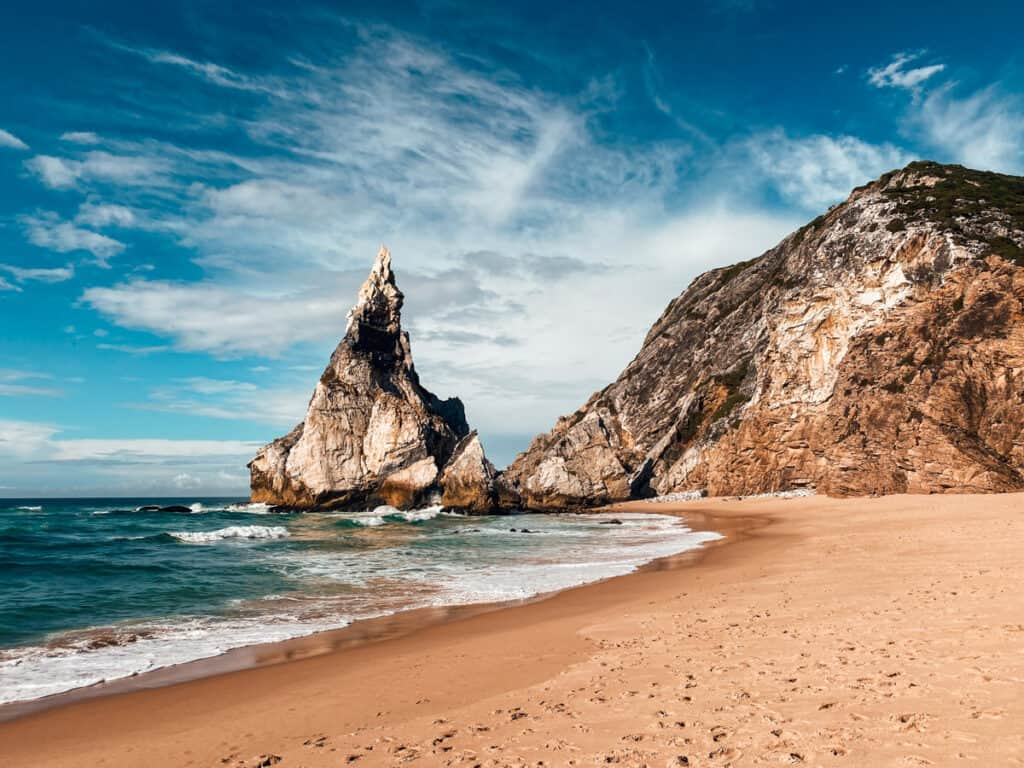
Praia da Ursa, near Cabo da Roca (the westernmost point of mainland Europe), is the kind of beach that stops you mid-sentence. Massive rock formations rise from the sand, the cliffs tower above, and on a good day, it genuinely looks more like Southeast Asia than Portugal. Read our Praia da Ursa guide for the hike and safety.
The catch: you have to earn it. There is no road access. You park near Cabo da Roca and hike a steep, uneven trail for about 20–30 minutes down to the beach. The return climb is harder than it sounds, especially in the afternoon heat. Wear proper shoes — not flip-flops.
There are no facilities whatsoever. No lifeguards, no toilets, no shade, no food. Bring everything you need and pack out your rubbish.
Best for: Adventure seekers, photographers, couples wanting something special.
Who should skip it: Families with young children, anyone with mobility issues, people who want a relaxed beach day.
Praia da Adraga — Best Hidden Gem
Tucked into a valley below the Sintra hills, Adraga consistently appears in “best kept secret” lists — although the secret is getting out. The beach sits at the base of green cliffs, decorated with dramatic rock formations and caves. There is a well-regarded seafood restaurant (Restaurante da Adraga) right on the beach, which is rare for this wild stretch of coast.
It is about 40 minutes by car from Lisbon. There is limited parking that fills fast on summer weekends.
Best for: Nature lovers, photographers, couples, and anyone who appreciates raw coastal beauty with one good restaurant option.
Honest downside: The water is cold and often rough. Not ideal for swimming. Very limited parking.
Praia dos Galapinhos (Arrabida) — Best Clear Water Near Lisbon
If turquoise, crystal-clear water is your priority, Arrabida is where you need to go. This protected natural park south of Lisbon contains several cove beaches with water clarity that rivals the Mediterranean. Galapinhos, voted one of the best beaches in Europe, sits in a sheltered cove with calm, warm(ish) water perfect for snorkeling.
The catch: Arrabida is about an hour’s drive from Lisbon, and during summer, the park authority restricts road access. You may need to park further away and take a shuttle or walk. Public transport options are very limited.
If you would rather combine Arrabida with wine tasting in the Setubal region, Sea & See Tours runs a full-day wine and coast tour that covers this area. It removes the logistics headache and includes lunch, tastings, and expert commentary on the region. For independent travelers, renting a car (from around €30–40 per day) is the best self-guided option.
Best for: Snorkelers, couples, and anyone who wants the most beautiful water near Lisbon.
Who should skip it: Visitors without a car who do not want to join a tour. Families need lots of facilities.
How Much Does a Lisbon Beach Day Actually Cost?
One of the most common questions is how much to budget for a beach day. Here is an honest breakdown for 2026:
| Expense | Cascais Line (Train) | Costa da Caparica | Arrabida (Car) |
| Transport (return) | €4.50 | €6–8 | €30–40 (rental) |
| Sunbed + umbrella | €15–20 | €10–15 | €10–15 |
| Lunch (casual) | €12–18 | €10–15 | €12–18 |
| Drinks / snacks | €5–8 | €5–8 | €5–8 |
| Total per person | €35–50 | €30–45 | €20–30 + car |
These are realistic mid-range estimates. You can absolutely spend less by bringing your own towel, packing sandwiches, and skipping the sunbed rental. A budget beach day on the Cascais train line can cost under €10 if you bring your own food and sit on a towel.
Surf lessons add €30–50 per person for a group session, typically lasting about two hours with equipment included.
For a guided experience that covers transport, equipment, an expert instructor, and lunch, expect to pay more, but the per-person value calculation changes when you factor in what is included. Check the surfing experience details for specific pricing.
Guided Beach and Surf Experiences from Lisbon
Going to the beach independently is easy and affordable on the Cascais line. For the more remote beaches, or if you want a structured surf experience, a guided option makes more sense.
Sea & See Tours offers surf experiences at Carcavelos Beach led by Luis Perloiro, a former Portuguese national surf champion. This is not marketing puffery; Luis competed at the highest level of Portuguese surfing and brings decades of wave knowledge to every session. Small groups, all equipment included, and genuine expertise on where to catch the best waves based on that day’s specific conditions.
Who should consider a guided experience: You are a first-time surfer who wants expert instruction. You want to visit Arrabida or the Sintra coast without renting a car. You have limited time and want someone else to handle logistics.
Who is better off going independently: You are an experienced surfer who knows the breaks. You want a lazy beach day with no agenda. You are staying near Cascais or Costa da Caparica and can walk to the beach.
All Sea & See Tours meet at Hard Rock Cafe in Restauradores Square, Lisbon, making the start point easy to find.
When to Visit Lisbon’s Beaches
June through September is peak beach season. Days are long, rain is almost nonexistent, and water temperatures reach their warmest (around 18–20°C on the Cascais line, slightly warmer in Arrabida’s sheltered coves). The downside: crowds, especially on weekends and during Portuguese school holidays in July and August.
May and October are the sweet spot for many travelers. Air temperatures are warm enough for comfortable sunbathing (20–25°C most days), beaches are far less crowded, and accommodation prices drop significantly. The water is colder (16–18°C), but perfectly swimmable if you are not bothered by a brisk Atlantic dip.
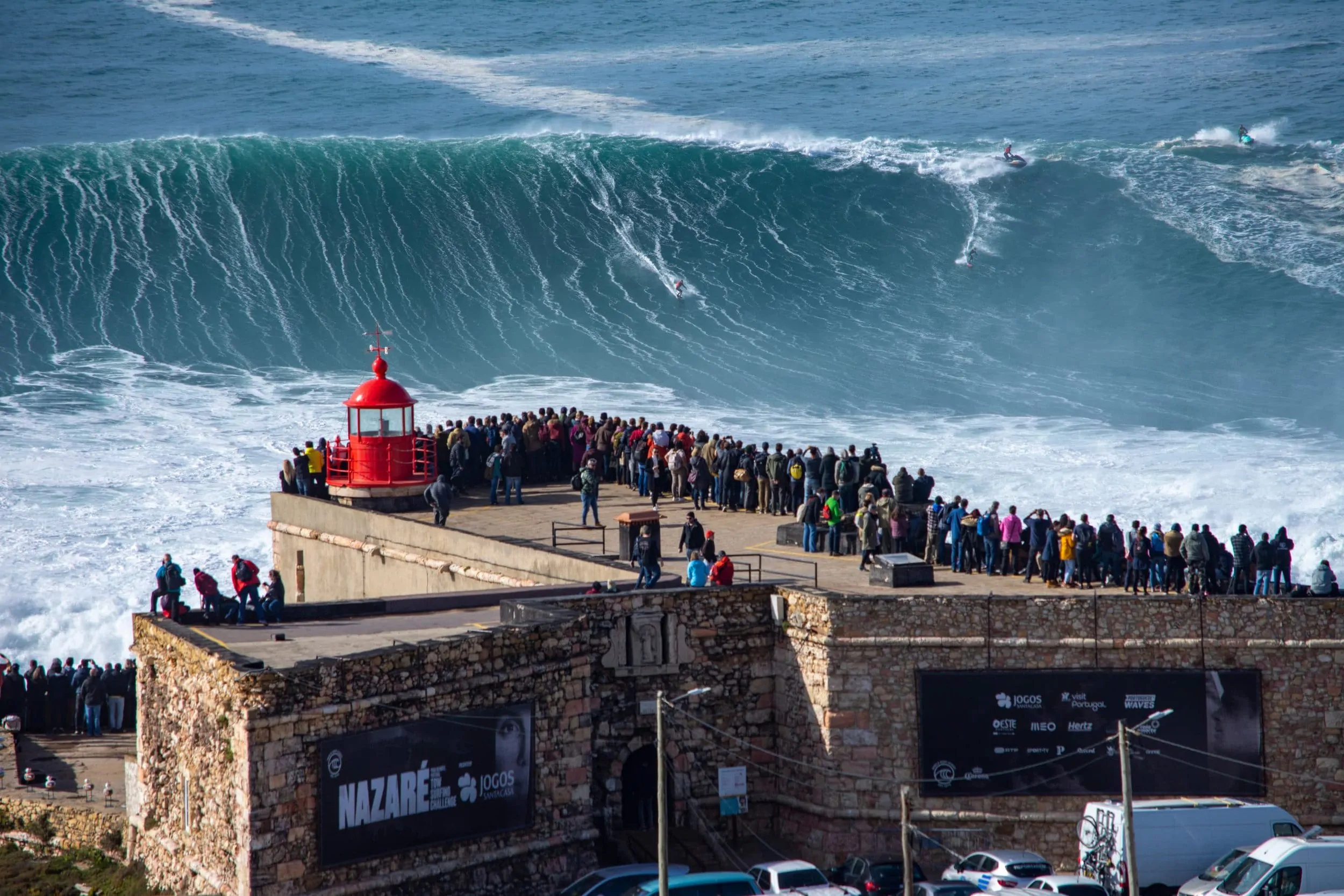
November through April is not traditional beach season, but it has its own appeal. Costa da Caparica and Carcavelos still attract surfers year-round, and watching powerful winter waves from a clifftop cafe is a genuinely special experience. If winter surf tourism interests you, our guide to the biggest waves in Portugal covers the best spots and timing.
One reality check: the Atlantic is cold. Even in August, the water temperature at most Lisbon beaches rarely exceeds 20°C. If you are coming from the Caribbean, Thailand, or even the Greek islands, prepare for a shock. The Arrabida coast is the exception — its sheltered coves can feel several degrees warmer.
Frequently Asked Questions About Beaches Near Lisbon
Your Perfect Lisbon Beach Day Starts Here
The best beaches near Lisbon cover every preference — from the easy convenience of Carcavelos to the wild drama of Praia da Ursa to the turquoise paradise of Arrabida. Most visitors should start with the Cascais train line for their first beach day and save the more adventurous options for a dedicated trip.
If surfing is on your list, few cities in Europe make it this easy. A lesson with Luis Perloiro at Carcavelos gives you a former national champion as your coach, right on one of Lisbon’s best beginner beaches. Check availability and pricing for the surf experience here.
The sand is waiting. Grab that train ticket and go.


-

FULL DAY PRIVATE TOUR - WINE TASTING + SESIMBRA & ARRÁBIDA NATIONAL PARK
From €95.00 per personBook Now