
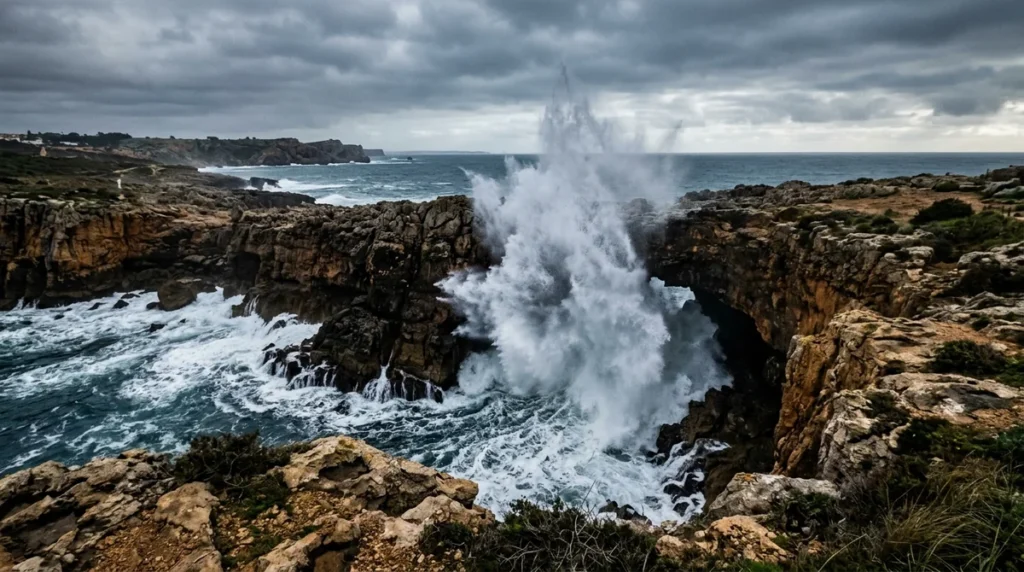
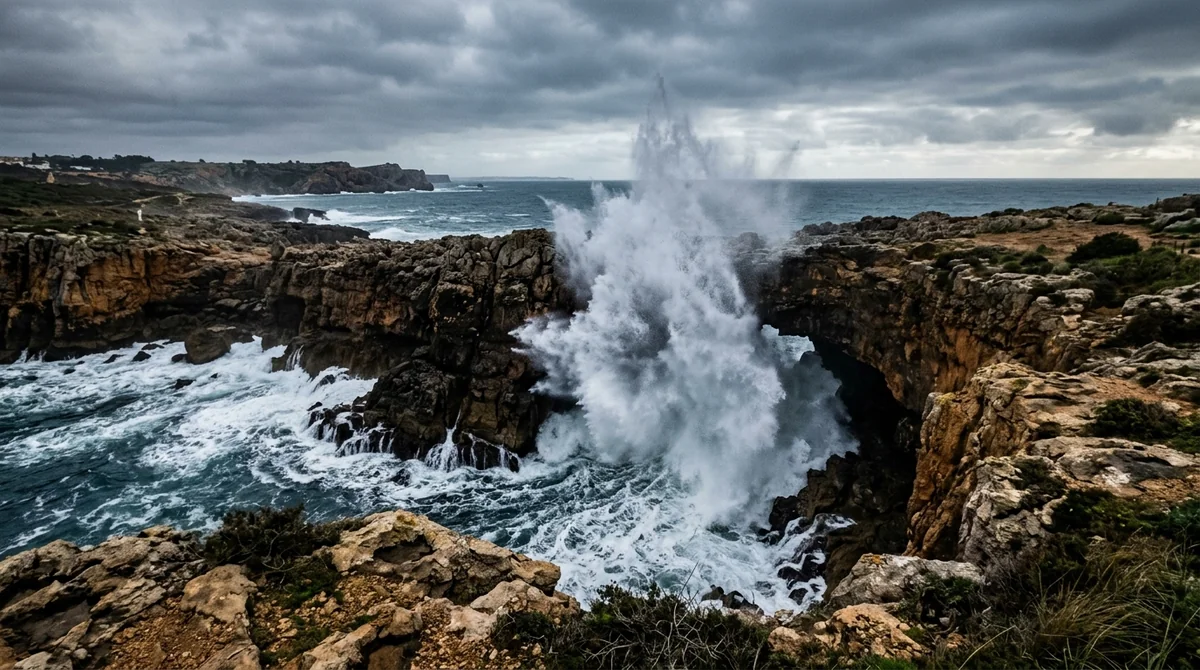
Boca do Inferno, or Hell’s Mouth, is a chasm and sea arch in the cliffs about two kilometres west of Cascais. The Atlantic surges into the hollow and slams against the rock, loudest in winter and at high tide. It is a free, open-air viewpoint you can reach on foot from town in around 20 minutes, and it pairs well with a lighthouse, a marina and a beach.
The name promises drama, and on the right day it delivers. Time it wrong and you get a quiet hole in the rock. This guide gives you the honest version: what Boca do Inferno actually is, the exact ways to reach it from Cascais in a spare hour, when the sea puts on its show, and the strange true story of the man who faked his death here. It sits inside a wider Cascais day, so our guide to Sintra and Cascais in one day is the natural companion.
Recommended tour
FULL DAY PRIVATE TOUR - SINTRA & CASCAIS WITH LUNCH INCLUDED
Explore Sintra, Cape of Roca, and Cascais on this 9-hour private tour, departing daily from Hard Rock Café. Enjoy entry to Pena Park and Palace, lunch at “Toca do Julio,” and storytelling by Francisco Gomes, all with A.C. transport. Max: 8 people.
See dates & book →What is Boca do Inferno, and what does the name mean?
Boca do Inferno is a collapsed sea cave on the Costa da Guia, the stretch of Cascais coast just west of the town. Centuries of Atlantic erosion cut a gaping chasm and an arch into the limestone, and seawater still reaches the bottom and strikes the walls. There is a railed viewing platform above it, free to use, open to the sky.
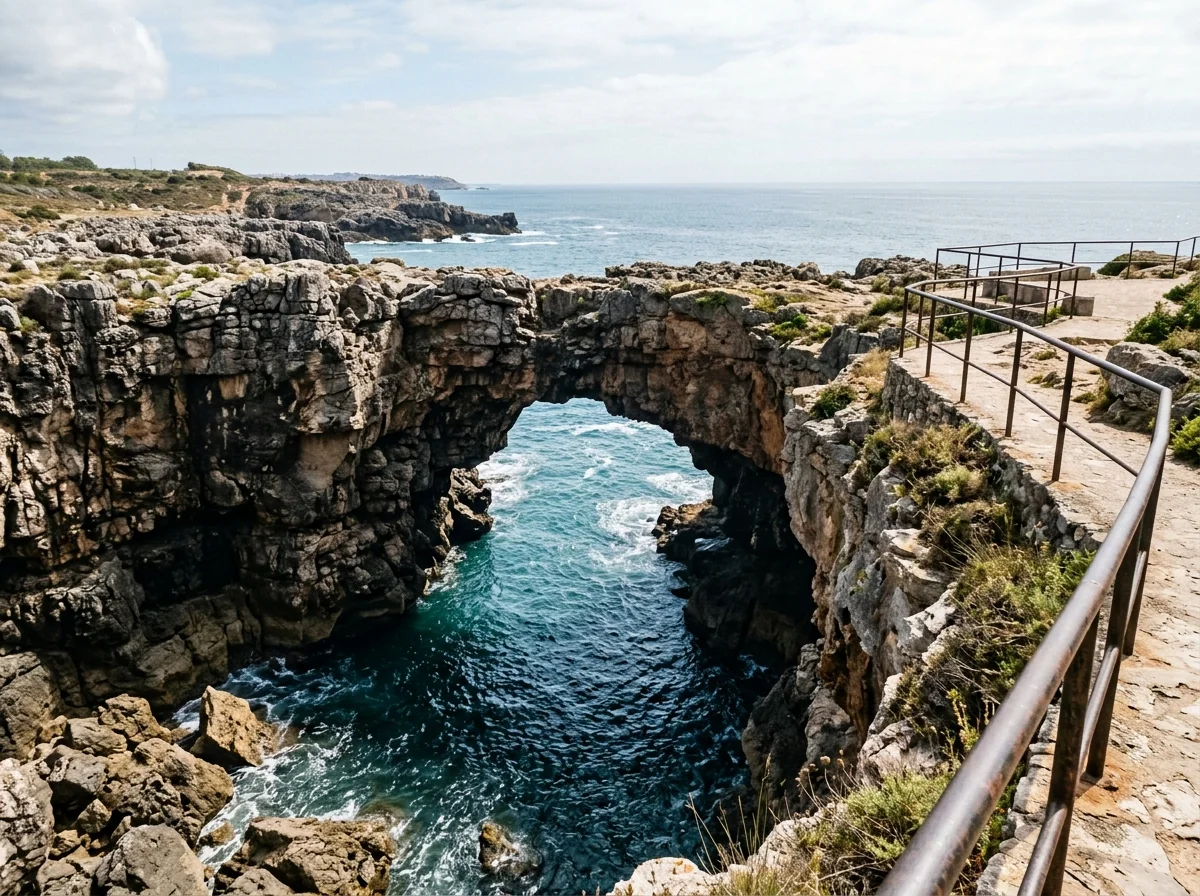
The name means “Mouth of Hell.” It comes from the noise: when a big swell meets a high tide, the water booms and churns in the hollow and throws spray over the rocks. Portuguese sailors gave it the name for that roar, and the site was filmed as early as 1896, in one of the first films shot in Portugal.
How to get to Boca do Inferno from Cascais
Boca do Inferno is an easy walk from central Cascais, so most people go on foot and take the coast road there and back. It is about two kilometres from the town centre, following the seafront past the marina and the Condes de Castro Guimaraes museum along Avenida Rei Humberto II de Italia.
| How | Time | Cost |
|---|---|---|
| On foot from Cascais centre | About 20 minutes | Free |
| On foot from the marina | About 15 minutes | Free |
| By bike, coastal path | Around 10 minutes | Rental varies |
| Taxi or rideshare | About 5 minutes | Roughly 4 to 9 euros |
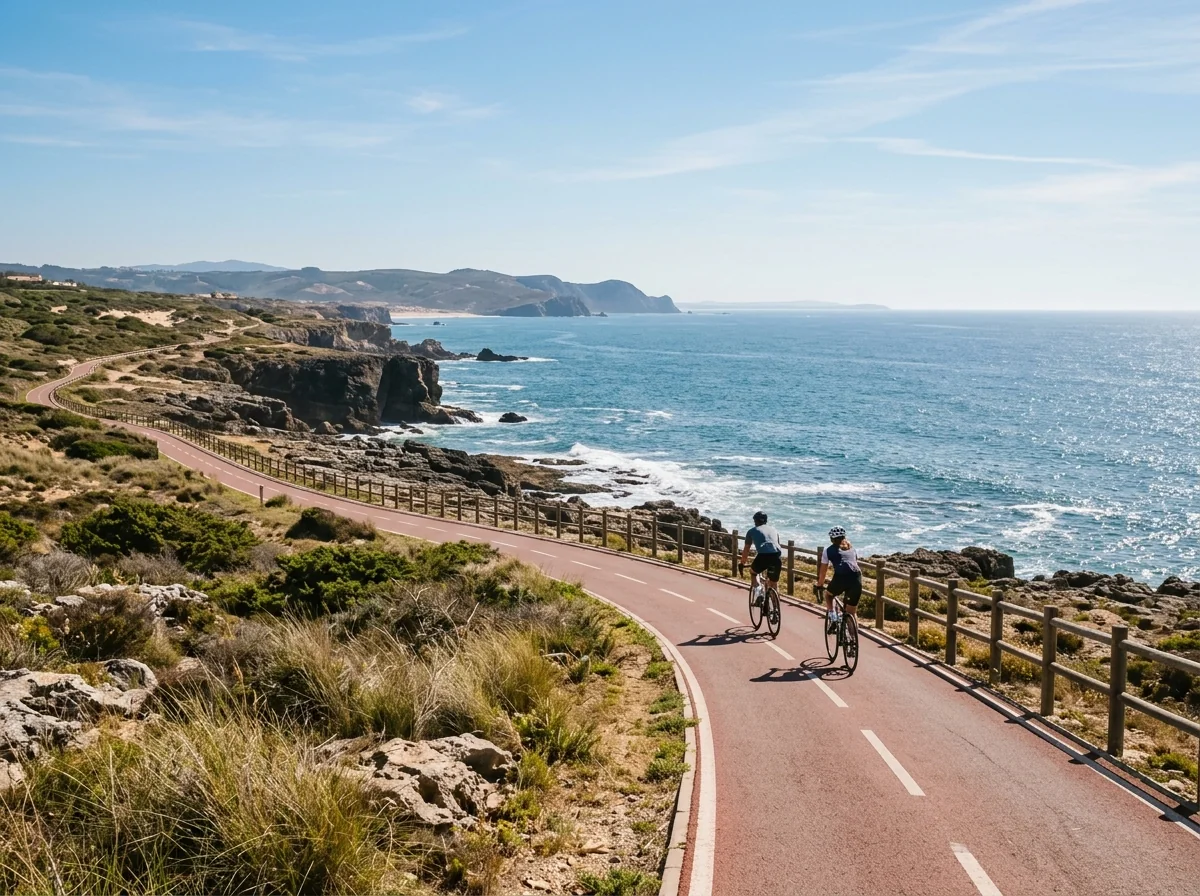
A flat coastal cycle path runs along this shore and continues west toward Praia do Guincho, so a rented bike turns the trip into a longer coast ride. A local bus also runs from central Cascais toward the coast if you would rather not walk. There is a small car park by the site, but on a summer day it fills early, and the walk is more pleasant than the search for a space.
Is Boca do Inferno worth visiting? When it actually roars
It is worth it if you match your visit to the sea. Boca do Inferno is at its best in winter storms and on any day with a strong Atlantic swell and a high tide, when the water explodes up through the chasm. On a calm summer afternoon the sea is flat, the hollow is quiet, and first-timers can leave underwhelmed if they expected fireworks.
| Conditions | What to expect |
|---|---|
| Winter storm or big swell | Booming water and spray, the full show |
| High tide with incoming swell | The best window in any season |
| Calm summer day | Flat and quiet, still a good coastal stop |
The strange true story: Aleister Crowley’s fake death
In September 1930, the British occultist Aleister Crowley faked his own suicide at Boca do Inferno. He left a note by the chasm hinting he had thrown himself into the sea, and the Portuguese poet Fernando Pessoa, who had met him in Lisbon, passed the story to the newspapers.
Crowley had been staying on the coast with a young German companion, Hanni Jaeger. About three weeks after his supposed death, he reappeared, very much alive, at an exhibition of his own work in Berlin. Historians read it as a publicity stunt, and it remains the oddest footnote attached to this stretch of cliff.
What else is right there
Boca do Inferno takes ten minutes to look at, so build it into a short coastal circuit. Handicraft market stalls set up near the viewpoint, and there are seafood restaurants on the cliff if you want lunch with the ocean in front of you. Within a short walk you can reach several of Cascais’s best sights.
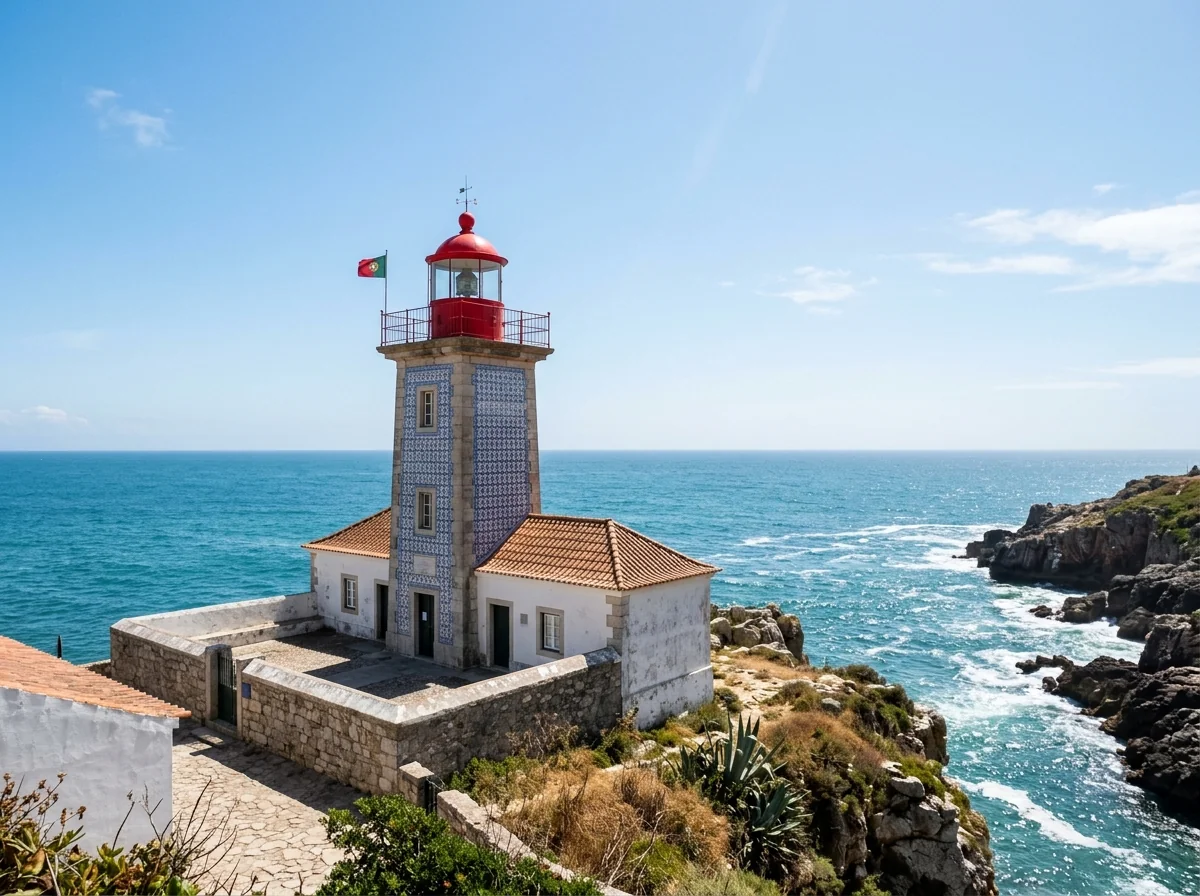
- Farol de Santa Marta: a blue-and-white tiled lighthouse and small museum on the way back to town, around 5 euros, with a ticket that also covers the Casa de Santa Maria next door.
- Casa das Historias Paula Rego: a striking red-roofed museum devoted to the Portuguese artist Paula Rego, around 5 euros, a short walk inland.
- Cascais Marina and old town: the harbour, the fishing-boat beach and the pedestrian streets of the centre, all free to wander.
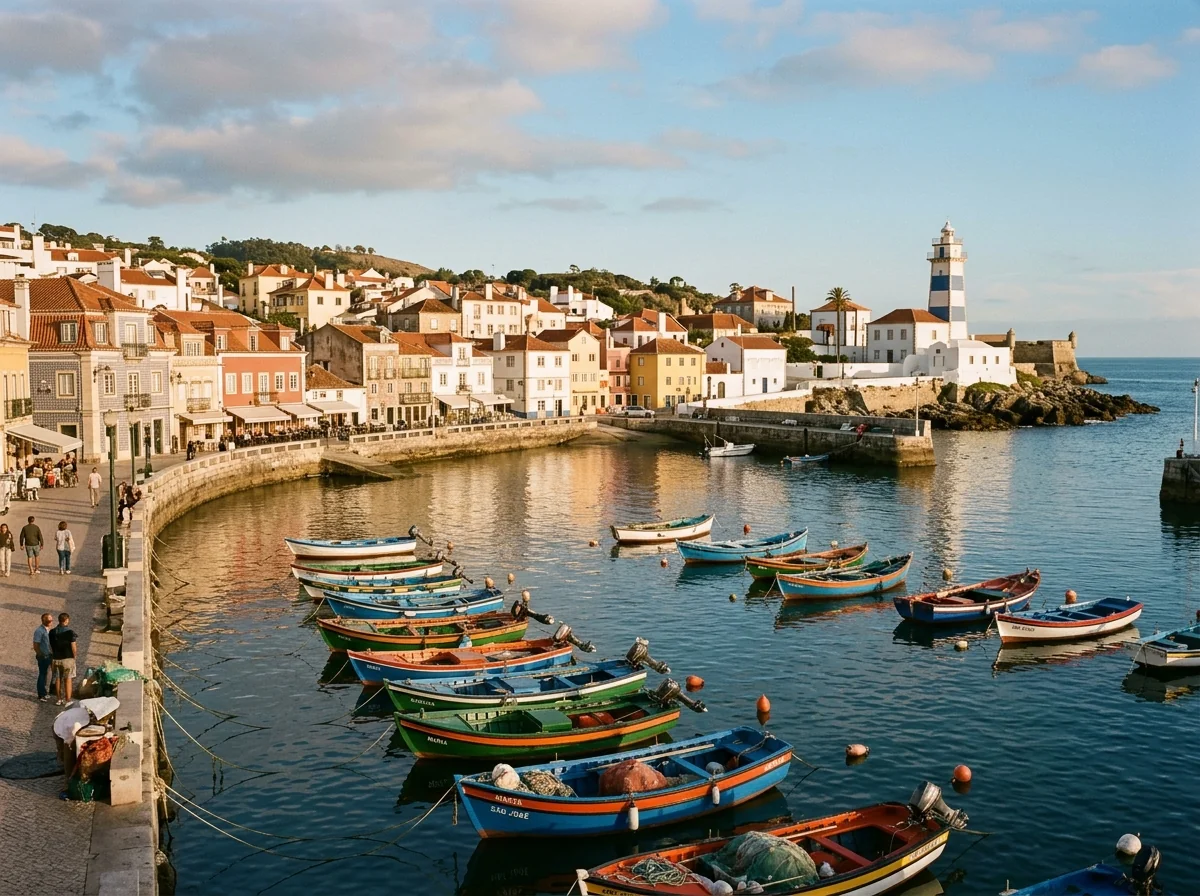
That circuit, Boca do Inferno, the Santa Marta lighthouse and the marina, is a relaxed half-day. For the full list of what to do in town, our guide to things to do in Cascais covers the beaches, the parks and the food.
See Boca do Inferno on a Sintra and Cascais day trip
Boca do Inferno sits inside the free time our private Sintra and Cascais day gives you in the town. The tour pairs a guided morning at Pena Palace with an afternoon on the coast at Cabo da Roca and Cascais, so you can walk out to Hell’s Mouth in your Cascais hour without working out buses, bikes or parking. If you are still choosing between the two towns, our comparison of Sintra versus Cascais helps you decide.
Recommended tour
FULL DAY PRIVATE TOUR - SINTRA & CASCAIS WITH LUNCH INCLUDED
Explore Sintra, Cape of Roca, and Cascais on this 9-hour private tour, departing daily from Hard Rock Café. Enjoy entry to Pena Park and Palace, lunch at “Toca do Julio,” and storytelling by Francisco Gomes, all with A.C. transport. Max: 8 people.
See dates & book →Frequently Asked Questions
What is Boca do Inferno?
Boca do Inferno, or Hell’s Mouth, is a chasm and sea arch carved into the limestone cliffs of the Cascais coast, about two kilometres west of the town centre. The Atlantic reaches the base and slams against the rock. It is a free, open-air viewpoint, not a beach or a paid attraction.
Why is it called Boca do Inferno, or Hell’s Mouth?
The name comes from the sound and fury of the sea inside the chasm. When a strong Atlantic swell rolls in at high tide, the water booms and churns in the hollow below the viewpoint and throws up spray. Portuguese sailors called it the mouth of hell for that roar.
Where is Boca do Inferno in Portugal?
It sits on the Costa da Guia, on the coast just west of Cascais, in the Lisbon district. Cascais is about 30 kilometres west of Lisbon, at the end of the Cascais train line, so Boca do Inferno is an easy half-day trip from the capital.
How do you get to Boca do Inferno from Cascais?
It is roughly a 20-minute walk from Cascais centre along the coast road, or about 15 minutes from the marina. You can also cycle the coastal path, take a short taxi or rideshare, or use a local bus heading toward the coast. Entry to the viewpoint is free.
Is Boca do Inferno worth visiting?
Yes, if you time it right. In winter, or on any day with a big Atlantic swell and a high tide, the sea puts on a real show. On a calm summer afternoon the water is flat and the chasm is quieter, so pair it with the lighthouse, the marina and a coastal walk instead.
Is Cascais worth visiting for a day trip?
Yes. Cascais has a walkable old town, sheltered beaches, a marina and coastal walks, all reachable by train from Lisbon in about 40 minutes. Boca do Inferno, the Santa Marta lighthouse and the beaches fill a relaxed day, and Cascais pairs naturally with Sintra on a longer trip.
Time it with the tide
Boca do Inferno rewards a little planning. Check the swell and aim for a high tide, and Hell’s Mouth earns its name. Catch it flat, and treat it as one stop on a coastal circuit with the lighthouse and the marina. Either way it is free and a short walk from town. To see it without the logistics, walk out during your Cascais free time on our private Sintra and Cascais day with Francisco.

-
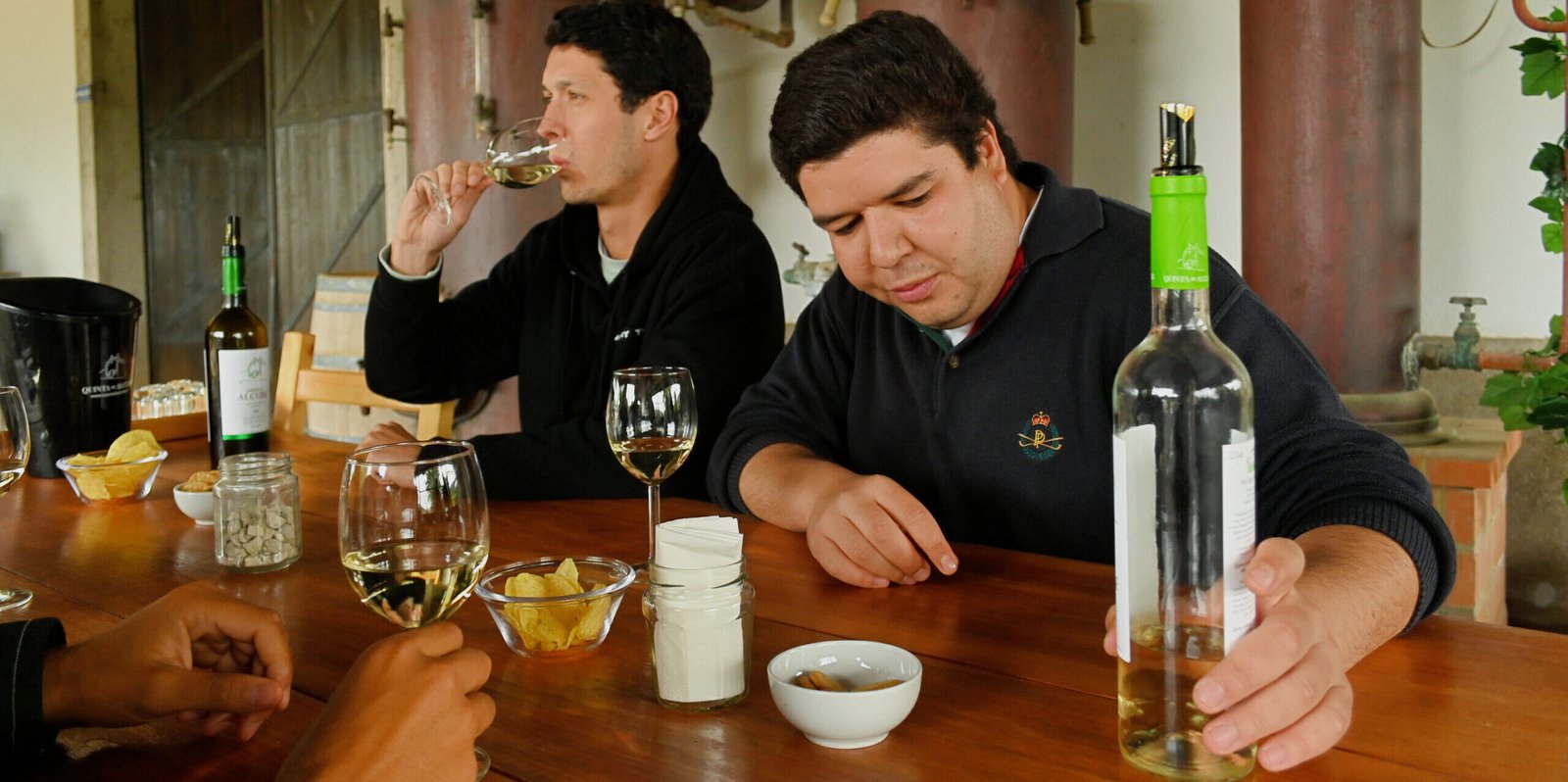
FULL DAY PRIVATE TOUR - WINE TASTING + SESIMBRA & ARRÁBIDA NATIONAL PARK
From €95.00 per personBook Now