

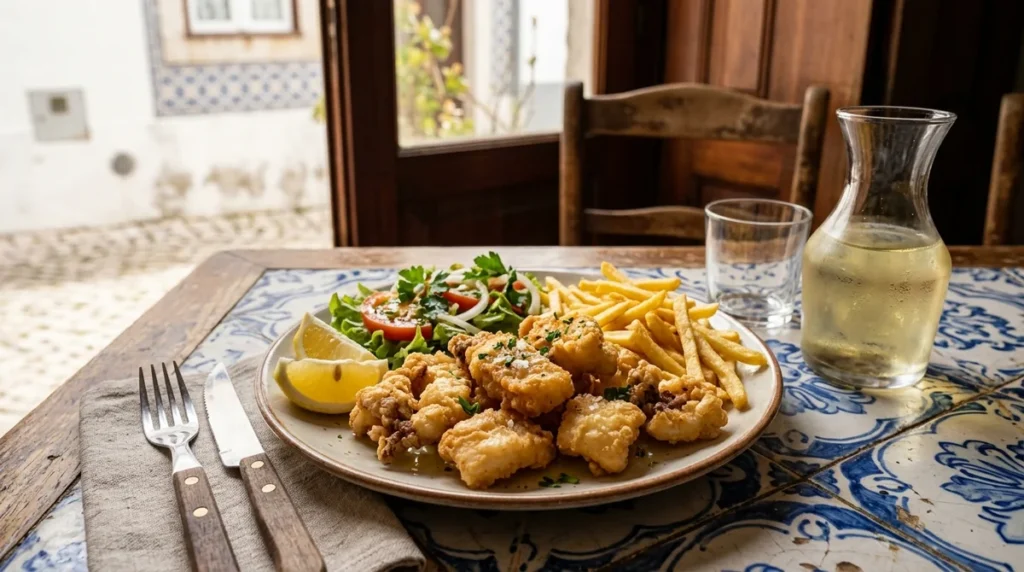
What to eat in Setubal starts with one dish: choco frito, the fried cuttlefish that locals treat as a point of civic pride. Beyond it, Setubal is one of Portugal’s best seafood cities, built around a working fishing port, a famous tiled market, and the Sado estuary that feeds both. Add the Moscatel wine and sheep cheese from the hills next door, and you have a full food day, about 50 minutes south of Lisbon.
This guide covers the dishes worth ordering, the market worth timing your morning around, and where the food actually sits in the city, so you eat like a local and not off a tourist menu. If you want the wider sights too, pair it with a full Setubal day trip. Here, the focus is the food.
- The dish to order: choco frito, fried cuttlefish with fries and lemon
- The place to visit: Mercado do Livramento, the tiled fish market
- Also try: Sado oysters, red mullet, Queijo de Azeitao, Moscatel de Setubal
- Where the food is: along Avenida Luisa Todi, near the market and waterfront
- From Lisbon: about 50 minutes on the Fertagus train
Recommended tour
FULL DAY PRIVATE TOUR - WINE TASTING + SESIMBRA & ARRÁBIDA NATIONAL PARK
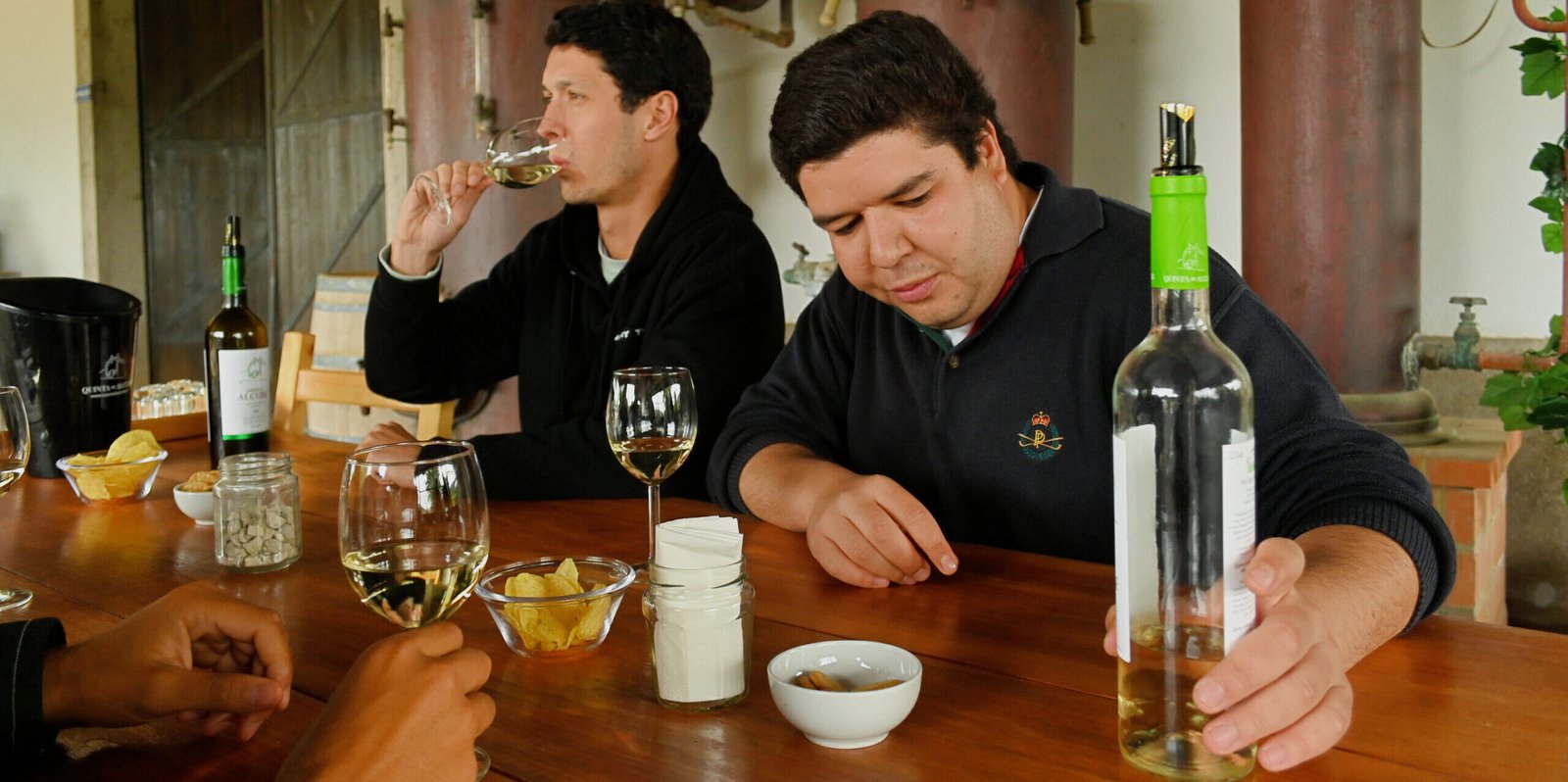
Join a private 9-hour tour exploring Azeitão, Sesimbra, and Arrábida. Enjoy a guided journey with Francisco Gomes, including A.C. transport, professional guidance and a private wine tasting of four varieties at a renowned vineyard. Max: 8 people.
See dates & book →What Is Setubal Known For, Food-Wise?
Setubal is a fishing city first and a tourist town second, and it eats like one. The Sado estuary and the Atlantic supply a working port, the port supplies the Mercado do Livramento every morning, and the restaurants around it cook whatever came in. That short chain from boat to plate is the whole appeal.
Three things define the local table: choco frito, the fresh fish and shellfish of the Sado, and the sweet Moscatel de Setubal made in the Arrabida hills just west of the city. You can cover all three on foot in an afternoon, which is why Setubal makes such a good food day from Lisbon.
Choco Frito: Setubal’s Signature Dish
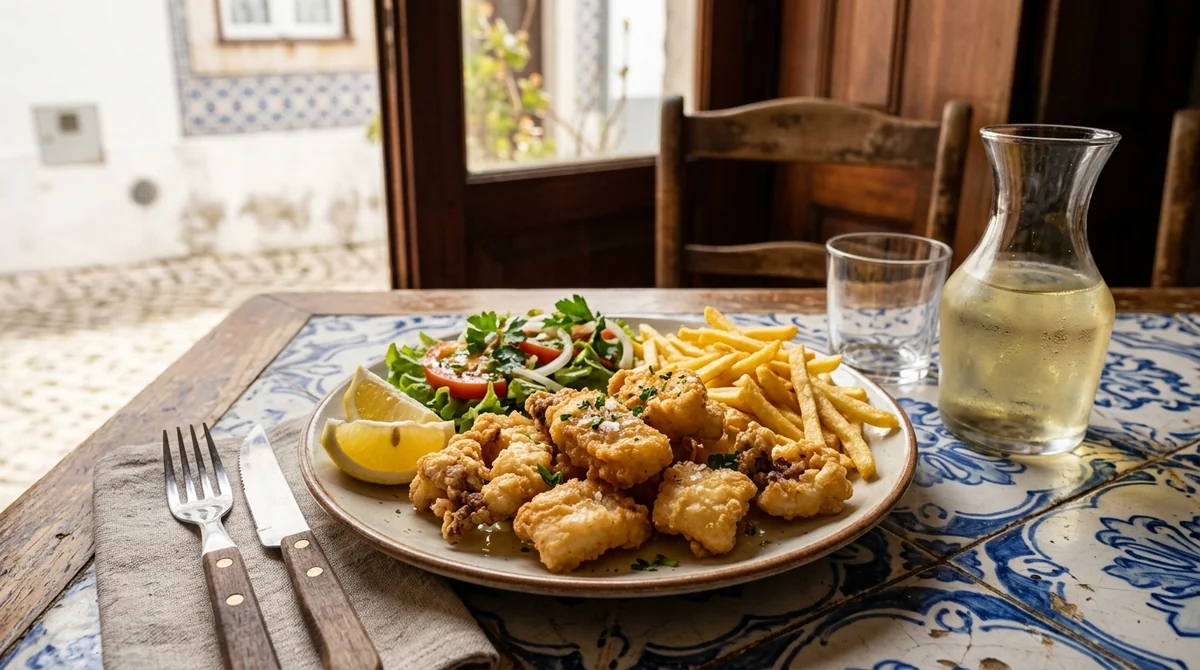
Choco frito is fried cuttlefish, and in Setubal it is close to a local religion. The cuttlefish is cleaned, coated in seasoned flour, and fried until the edges go crisp and golden, then served with fries, a simple salad, and lemon wedges to squeeze over. The city even has public statues of the cuttlefish, and it throws a Festa do Choco each April in its honour.
How to order it
Ask for choco frito and you get a generous plate, usually a mix of tender tentacle pieces and thicker cuts of the body. It is meant to be eaten simply: a squeeze of lemon, the fries, maybe a cold beer or a crisp local white. Most of the city’s choco spots sit along Avenida Luisa Todi, the waterfront avenue near the market.
As the story goes, choco frito began as a fishermen’s meal, made from the cuttlefish that did not sell well, floured and fried at the end of the day. You will hear more than one version of the origin in Setubal, so treat it as local legend rather than settled history. What is not in doubt is that the city cooks it better than anywhere else in Portugal.
Mercado do Livramento: One of the World’s Great Fish Markets
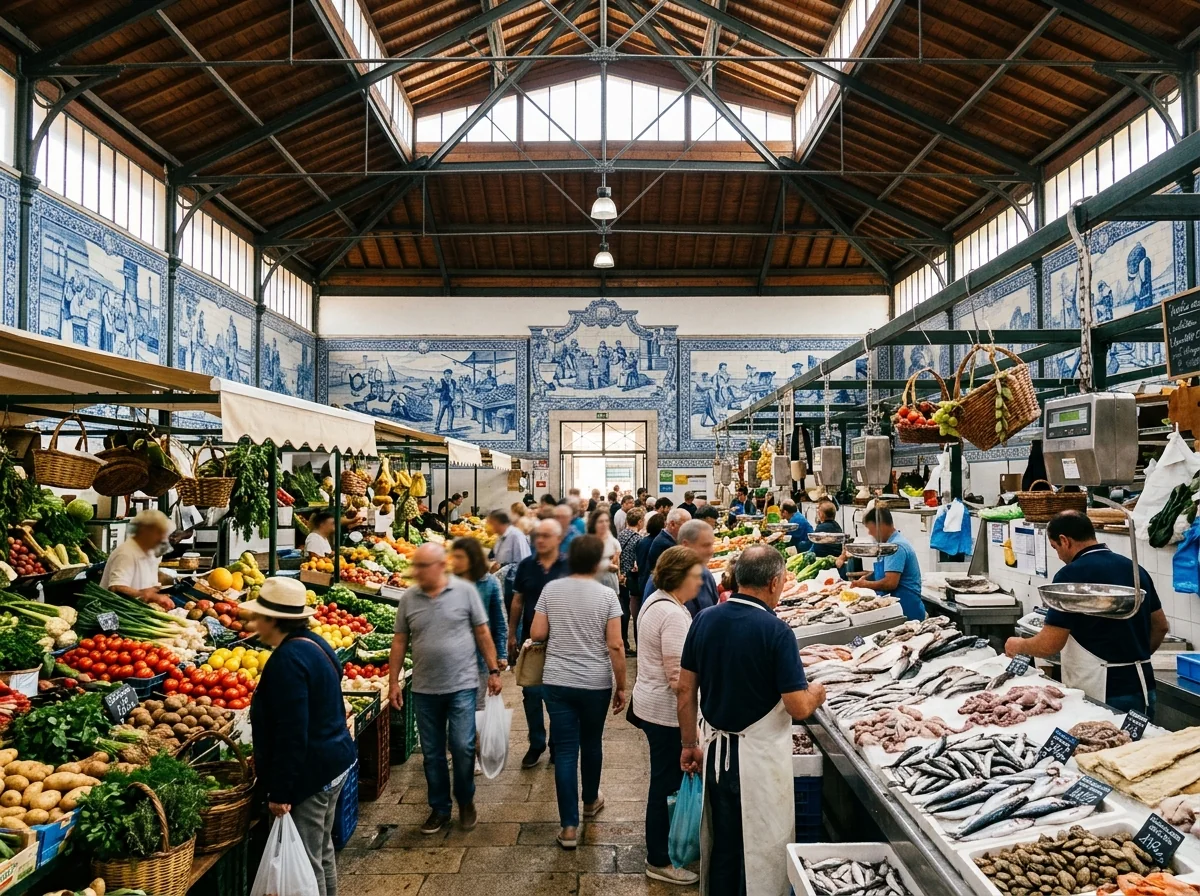
The Mercado do Livramento on Avenida Luisa Todi is the reason Setubal eats so well, and it is worth visiting even if you are not shopping. USA Today reported it in 2015 as one of the best fish markets in the world, and on a busy morning it is easy to see why: rows of the Sado’s catch on ice, loud and fast and completely local.
The current market building opened in 1930, and its walls carry thousands of hand-painted azulejo tiles showing the fishing and farming life of the region. Beyond the fish counters you will find produce, regional cheese, honey, bread and Moscatel.
- Hours: Tuesday to Sunday, roughly 7:00 to 14:00, closed Monday
- Best time: early morning, when the catch is freshest and the hall is busiest
- Cost: free to walk through
- Don’t miss: the tiled panels near the entrances and the fish hall at full tilt
Beyond Choco Frito: Fish, Oysters and the Sado
Setubal calls itself a capital of fish and seafood, and the menus back it up. Once you have had the choco, the rest of the estuary is worth working through. This is honest, unfussy cooking: grilled whole fish, seafood rice, a good stew.

- Salmonete: red mullet, a Setubal favourite, best simply grilled
- Sado oysters: farmed in the estuary and served cold with a squeeze of lemon
- Sardinhas: grilled sardines in summer, the smell of every Portuguese festa
- Caldeirada: a fisherman’s fish stew layered with potato, onion and tomato
- Arroz de marisco: soupy seafood rice, made to share
The estuary that supplies all this is the same water where a small resident group of dolphins lives, which tells you how clean and rich the Sado still is.
Save Room for Cheese, Cake and Moscatel
The sweet end of a Setubal meal comes from Azeitao, in the Arrabida hills a short drive west. Two products and one wine finish the day, and they are built to go together.
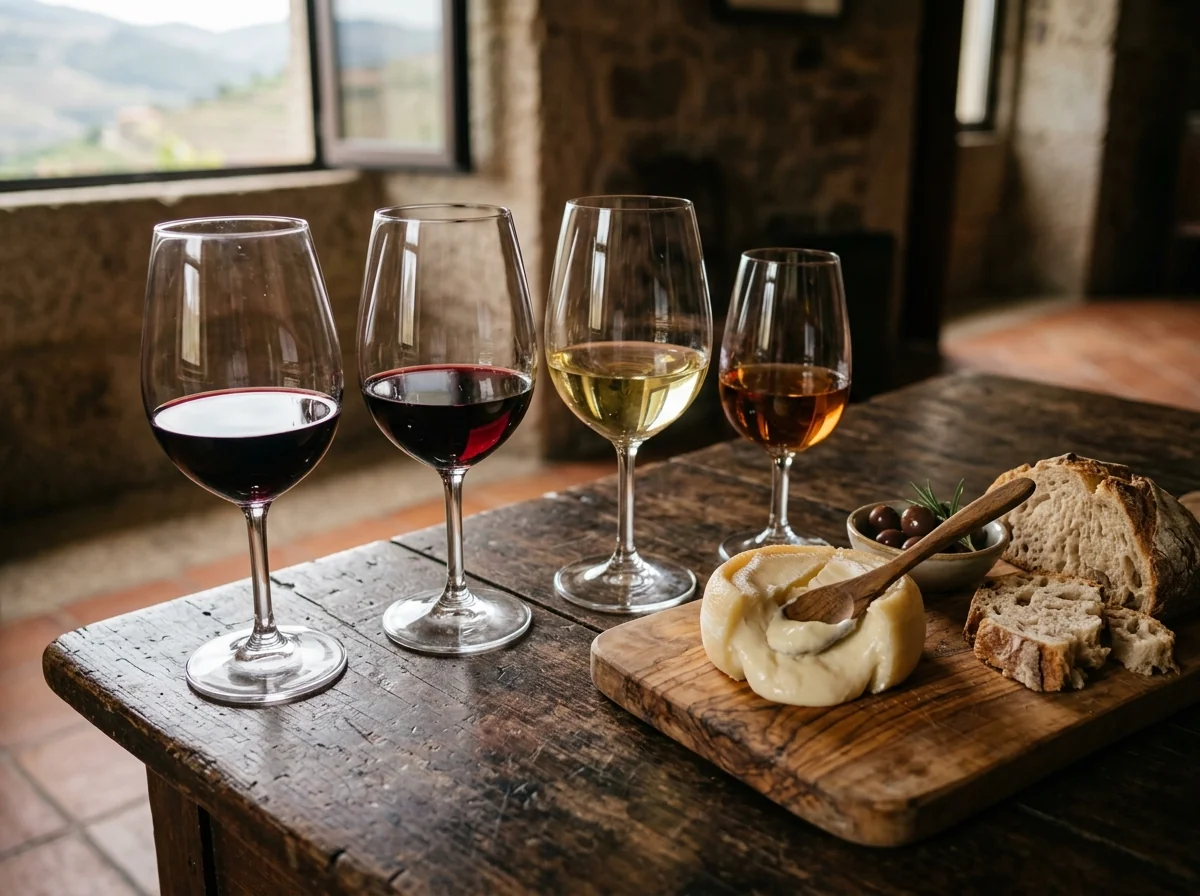
Queijo de Azeitao is a soft sheep’s cheese set with wild thistle, cured for a few weeks until the centre runs. You eat it by slicing off the top and scooping out the middle. Torta de Azeitao is the local cake, a thin rolled sponge filled with egg cream. Both are made to sit beside a glass of Moscatel de Setubal, the sweet fortified wine of these hills. If wine is the point of your trip, our guide to Azeitao wine tasting covers the cellars you can visit.
Where to Eat, and Getting There
Setubal keeps its food close together, which makes it easy to plan. You do not need a list of famous restaurants; you need the right streets.
| Area | What you will find |
|---|---|
| Avenida Luisa Todi | The main strip for choco frito and grilled fish, near the waterfront |
| Around the Mercado do Livramento | Small tascas cooking what the market sold that morning |
| The historic centre | Cafes, pastry shops and squares for coffee and cake |
Getting there from Lisbon is simple. The Fertagus train runs from Roma-Areeiro, Entrecampos or Sete Rios to Setubal in about 50 minutes, roughly every 30 minutes, for around 5 euros each way; check current fares on the Fertagus site. Driving takes about 45 minutes across the 25 de Abril bridge. For the wider region, the official Visit Setubal tourism site keeps event and market listings.
If you would rather taste the region without the planning, our full-day wine tour pairs the Azeitao cellars with a seafood lunch and beach time in the fishing town of Sesimbra, transport included. It gives you the wine and coast side of the peninsula; for a Setubal city food crawl, the train is all you need.
Recommended tour
FULL DAY PRIVATE TOUR - WINE TASTING + SESIMBRA & ARRÁBIDA NATIONAL PARK
Join a private 9-hour tour exploring Azeitão, Sesimbra, and Arrábida. Enjoy a guided journey with Francisco Gomes, including A.C. transport, professional guidance and a private wine tasting of four varieties at a renowned vineyard. Max: 8 people.
See dates & book →Frequently Asked Questions
What food is Setubal known for?
Setubal is famous for choco frito, or fried cuttlefish, its signature dish. The Sado estuary and fishing port also supply fresh fish, red mullet and oysters, sold daily at the Mercado do Livramento. The Azeitao hills nearby add Moscatel de Setubal wine and Queijo de Azeitao sheep cheese.
What is choco frito?
Choco frito is fried cuttlefish, the emblematic dish of Setubal. The cuttlefish is coated in seasoned flour and fried until crisp, then served with fries, salad and lemon wedges to squeeze over. Most of the city’s choco spots sit along Avenida Luisa Todi near the waterfront.
What are the opening hours of Mercado do Livramento?
The Mercado do Livramento is open Tuesday to Sunday, roughly 7:00 to 14:00, and closed on Mondays. Mornings bring the freshest catch and the liveliest atmosphere, so go early. Entry is free, and the tiled fish hall is worth seeing even if you are not there to shop.
How do you get from Lisbon to Setubal?
The Fertagus train runs from Lisbon at Roma-Areeiro, Entrecampos or Sete Rios to Setubal in about 50 minutes, roughly every 30 minutes and with no change. Driving takes about 45 minutes across the 25 de Abril bridge. Check current fares on the Fertagus site before you travel.
Is Setubal worth visiting for food?
Yes. Setubal is one of Portugal’s best seafood cities, built around a working fishing port and a famous market. You can eat choco frito, taste Moscatel de Setubal, and try Sado estuary oysters, all within a short walk, which makes it a strong food day trip from Lisbon.
What wine goes with Setubal seafood?
Crisp white wines from the Setubal Peninsula pair well with the fried and grilled fish, while the sweet Moscatel de Setubal is saved for dessert with cheese or cake. Both come from the Azeitao side of the Arrabida hills, a short drive from the city centre.
Plan Your Setubal Food Day
Setubal rewards a simple plan: reach the Mercado do Livramento in the morning, eat choco frito for lunch near the water, and finish with Queijo de Azeitao and a glass of Moscatel. It is one of the best-value food days near Lisbon, and the train makes it easy. To fold the wine and coast into one guided outing, our full-day wine and Sesimbra tour with Francisco covers the tasting and a seafood lunch with transport included.


-
FULL DAY PRIVATE TOUR - WINE TASTING + SESIMBRA & ARRÁBIDA NATIONAL PARK
From €95.00 per personBook Now