

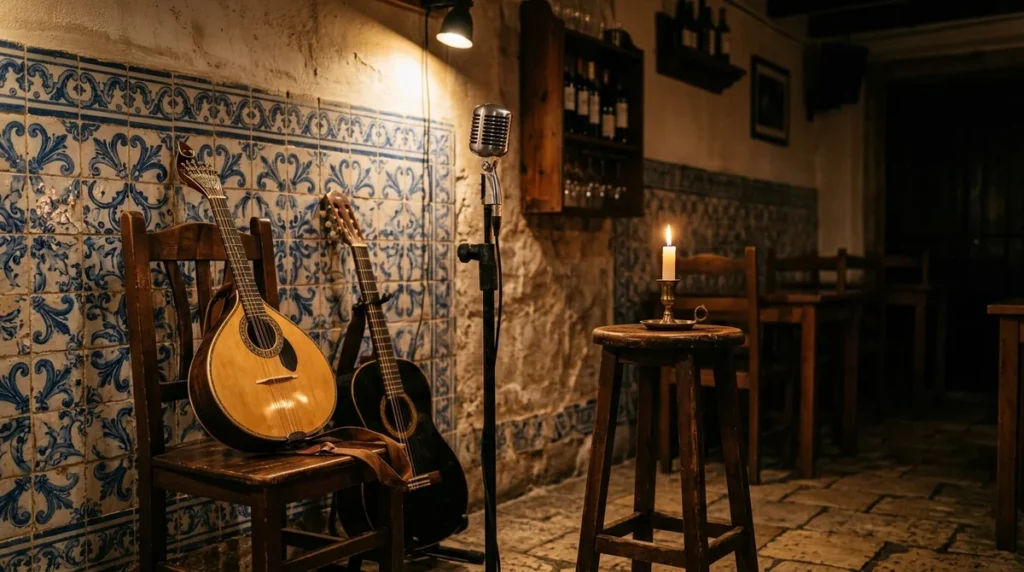
Fado is Lisbon’s soul set to music: a single voice, a Portuguese guitar, and a room that falls silent. To hear it for real, head to Alfama or Mouraria, the old neighbourhoods where it was born, and choose between a casa de fado, a dinner-and-show house, and a tavern where amateur fado breaks out over the wine. The trick is telling a genuine fado house from a tourist trap, and this guide shows you how.
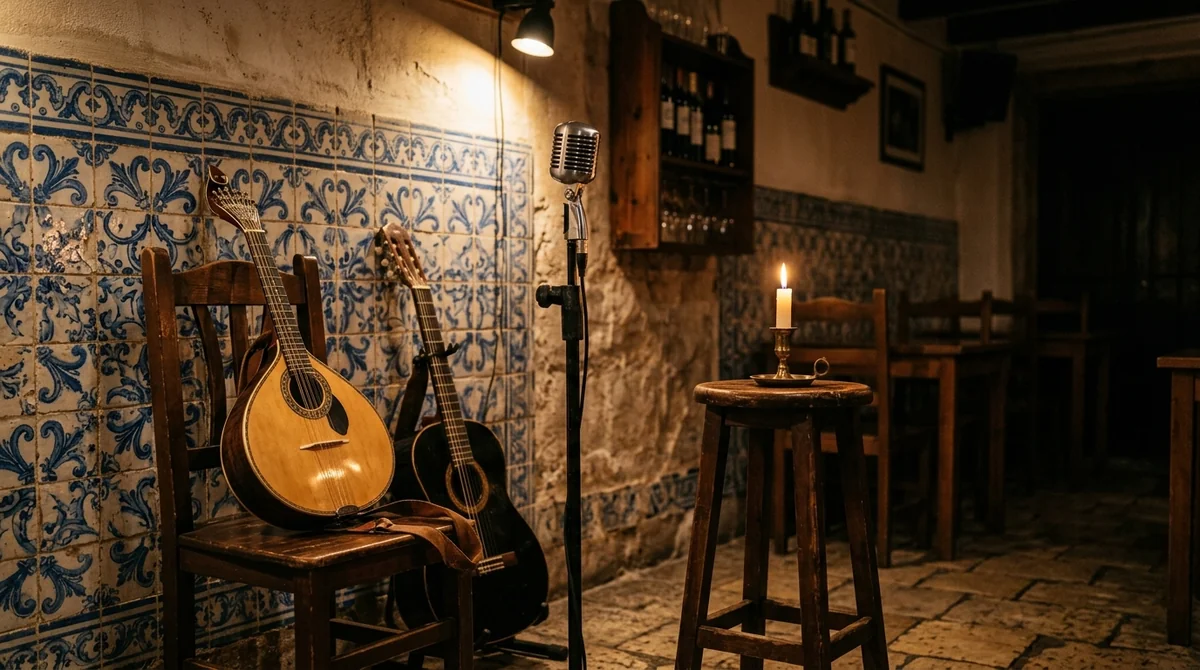
Most fado guides hand you a list of ten venues and leave you to guess which is real. This one starts with what fado actually is and where it truly lives, then teaches you to read a room before you sit down: the green flags of an honest house, the red flags of a coach-group trap, and the etiquette that separates a moving night from an awkward one. For the neighbourhood itself, our guide to Alfama covers the streets fado calls home.
Recommended tour
PRIVATE VINTAGE SAILBOAT TOUR ON TAGUS RIVER - LISBON
Experience Lisbon from the Tagus River aboard Believe – a beautifully restored vintage sailboat. Cruise along the city’s iconic waterfront while enjoying breathtaking views, portuguese tapas, and different types of wine. Details: Fits up to 12 guests Daily at 3 PM or 7 PM Just select the day and we will reach out to know the preferred departure time (3 PM or 7 PM)
See dates & book →What is fado?
Fado is Portugal’s melancholic urban song, a solo singer accompanied by two guitars: the classical guitar and the guitarra portuguesa, a pear-shaped, twelve-string instrument found nowhere else. The word comes from the Latin for fate, and the feeling it chases is saudade, a deep, bittersweet longing that does not translate cleanly into English.
It was born in Lisbon’s working-class quarters in the early 19th century, sung in taverns and on the street. In 2011, UNESCO recognised fado as Intangible Cultural Heritage of Humanity. It is not background music; it is the main event, and it is meant to be listened to.
Where to hear fado: Alfama, Mouraria and Bairro Alto
Fado lives in three Lisbon neighbourhoods, and each has a slightly different feel. Alfama is its living home, all narrow lanes and fado houses; Mouraria, next door, is where it was born and feels more local and raw; Bairro Alto, across the city, has more polished, tourist-facing houses.
For the most atmospheric night, start in Alfama or Mouraria. The steep, tiled streets, the sound drifting from a doorway, and the sense that this is where the music belongs are half the experience.
The two ways to hear fado: casa de fado vs fado vadio
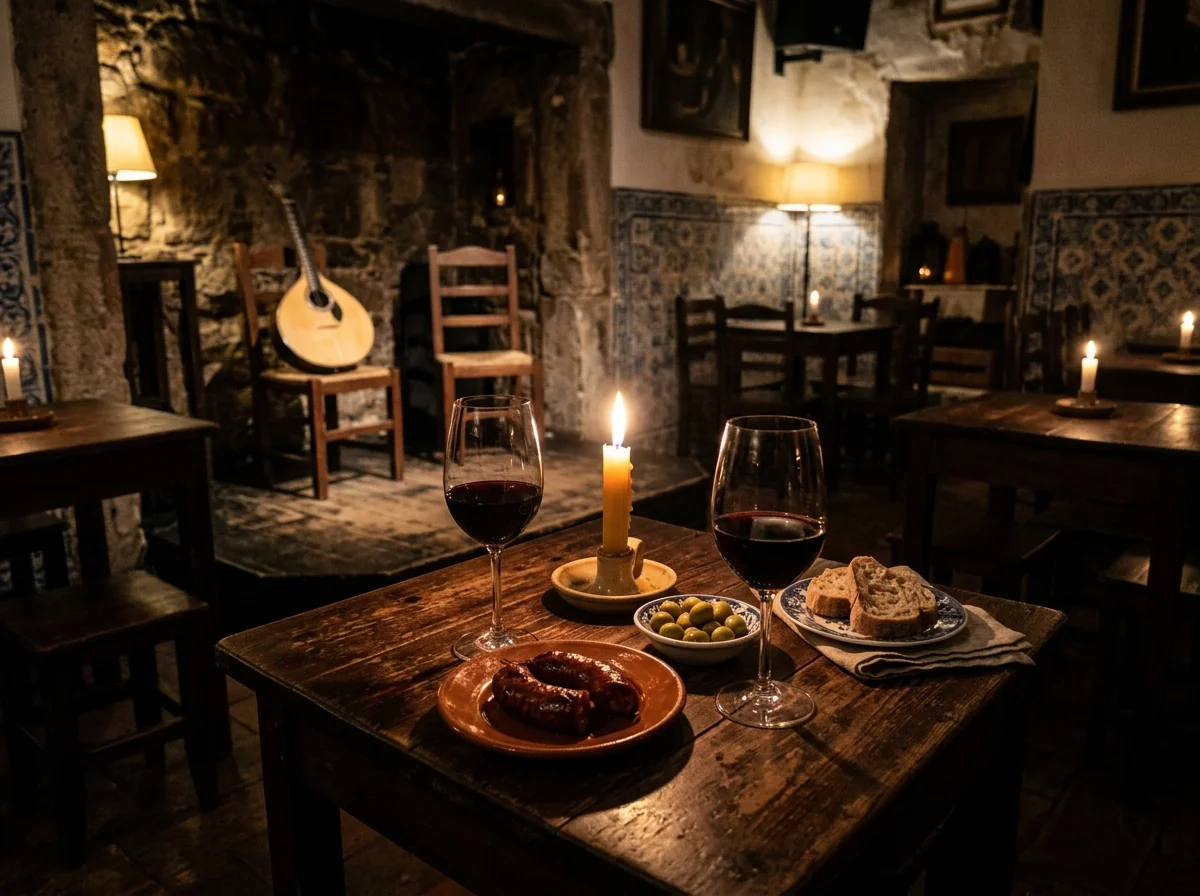
There are two very different formats, and knowing which you want saves both money and disappointment. One is a booked, professional evening; the other is a spontaneous local session.
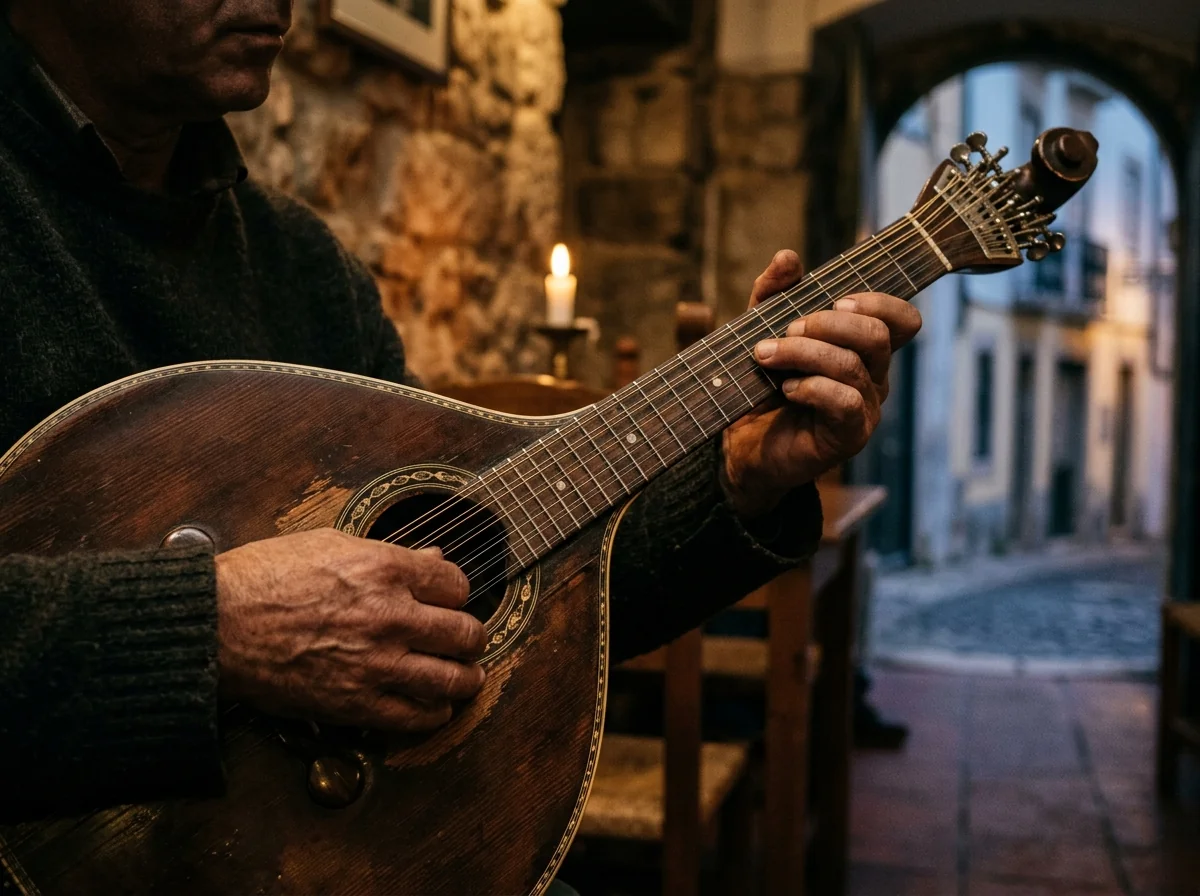
| Casa de fado | Fado vadio tavern | |
|---|---|---|
| What it is | Professional dinner and show | Amateurs sing between courses |
| Cost | About 50 to 100 euros with dinner | Price of food and drink, often 15 to 30 |
| Booking | Book ahead | Just turn up |
| Best for | A special night, guaranteed singers | A raw, unpredictable local feel |
How to spot a real fado house vs a tourist trap
This is where most visitors go wrong. A genuine fado house and a coach-group cabaret can look similar from the street, but a few signs give each away. Learn to read them before you commit to a table.
Green flags (the real thing)
|
Red flags (the trap)
|
What it costs
Prices depend entirely on the format, so decide what kind of night you want first.
- Casa de fado with dinner: roughly 50 to 100 euros a head, including a meal and a full evening of professional singers.
- Fado vadio tavern: often just the cost of your food and drink, around 15 to 30 euros, with amateur singers and no cover charge.
- Museu do Fado: around 5 euros to learn the history first.
Prices vary by venue and season, so confirm when you book. A casa de fado dinner is a set evening, so eat the Portuguese classics while you listen; our guide to Portuguese food covers what to order.
Fado etiquette, in six rules
Fado is listened to, not talked over, and a little respect transforms the night. Follow these and you will fit right in.
- Silence during each song: no talking, no clinking cutlery.
- No flash photography: and keep phones down while someone sings.
- Applaud at the end: only once the song finishes, never during.
- Do not request songs: the fadista chooses.
- Tip the musicians: it is normal and appreciated.
- Dress smart-casual: no need to be formal, but make an effort.
Learn the roots: the Fado Museum and Amalia Rodrigues
To understand what you are hearing, start at the Museu do Fado in Alfama, a small museum devoted to the music and its history, with a ticket of around 5 euros. It sets up the evening well and puts names to the sound.
One name towers over the rest: Amalia Rodrigues, the Rainha do Fado, or Queen of Fado, who carried the music to the world across the 20th century and defined its image, the black dress and the shawl. When she died in 1999, Portugal declared national mourning. Her recordings are the best place to start listening before you go.
Make it a full Lisbon evening
Lisbon keeps its best moments for after dark, and fado is one of them. Another is the river. A fado night and a sunset on the Tagus are two different kinds of Lisbon evening, and together they make a memorable stay.

Our private vintage sailboat sails the Tagus at sunset, past the old city and the bridge, an easy, unhurried counterpoint to a night of fado. The Lisbon sunset sailboat tour guide has the detail, and for the view from across the water, our guide to Cristo Rei and Cacilhas shows the same skyline from the far bank.
Recommended tour
PRIVATE VINTAGE SAILBOAT TOUR ON TAGUS RIVER - LISBON
Experience Lisbon from the Tagus River aboard Believe – a beautifully restored vintage sailboat. Cruise along the city’s iconic waterfront while enjoying breathtaking views, portuguese tapas, and different types of wine. Details: Fits up to 12 guests Daily at 3 PM or 7 PM Just select the day and we will reach out to know the preferred departure time (3 PM or 7 PM)
See dates & book →Frequently Asked Questions
Where can you hear fado in Lisbon?
The heart of fado is Alfama and Mouraria, the old neighbourhoods where it was born, with more fado houses in Bairro Alto. You can hear it two ways: at a casa de fado, a dinner-and-show restaurant, or in a small tavern where amateur fado, fado vadio, breaks out. The Museu do Fado in Alfama is the best introduction.
What is fado?
Fado is Portugal’s melancholic urban song, a solo voice backed by the pear-shaped Portuguese guitar and a classical guitar. Its mood is saudade, a deep longing. Born in Lisbon’s working-class quarters in the 1800s, it was recognised by UNESCO as Intangible Cultural Heritage of Humanity in 2011.
How much is a fado show in Lisbon?
It varies by format. A casa de fado with dinner and live singing typically runs from about 50 to 100 euros a head. A tavern with amateur fado vadio can cost only the price of your food and drink, often 15 to 30 euros. The Fado Museum is around 5 euros. Check prices when you book.
Do you have to eat dinner to see fado?
Not always. The formal fado houses expect you to have dinner or meet a minimum spend, which is where the higher prices come from. But in the amateur fado vadio taverns, and at some drink-only venues, you can hear real fado for the price of a glass of wine or two.
What should you wear and how should you behave at a fado show?
Dress smart-casual. The key rule is silence: fado is listened to in total quiet, so do not talk, eat noisily or use flash during a song. Applaud only when it ends. Do not request songs, and it is normal and appreciated to tip the musicians.
Is fado worth seeing?
Yes, if you pick a real house over a tourist trap. Heard properly, in a small room where the audience falls silent, fado is one of the most moving things you can do in Lisbon. In a large, rushed, coach-group restaurant it can feel like a cabaret, so choosing well is everything.
Choose the room, and let it move you
Fado rewards a little effort: pick Alfama or Mouraria, choose a small house over a coach-group cabaret, keep quiet during the songs, and let the guitarra do the rest. Start at the Fado Museum if you want the background first. Then trade one Lisbon evening for another and watch the sun set over the Tagus with Francisco on our private sailboat.






-
FULL DAY PRIVATE TOUR - WINE TASTING + SESIMBRA & ARRÁBIDA NATIONAL PARK
From €95.00 per personBook Now