

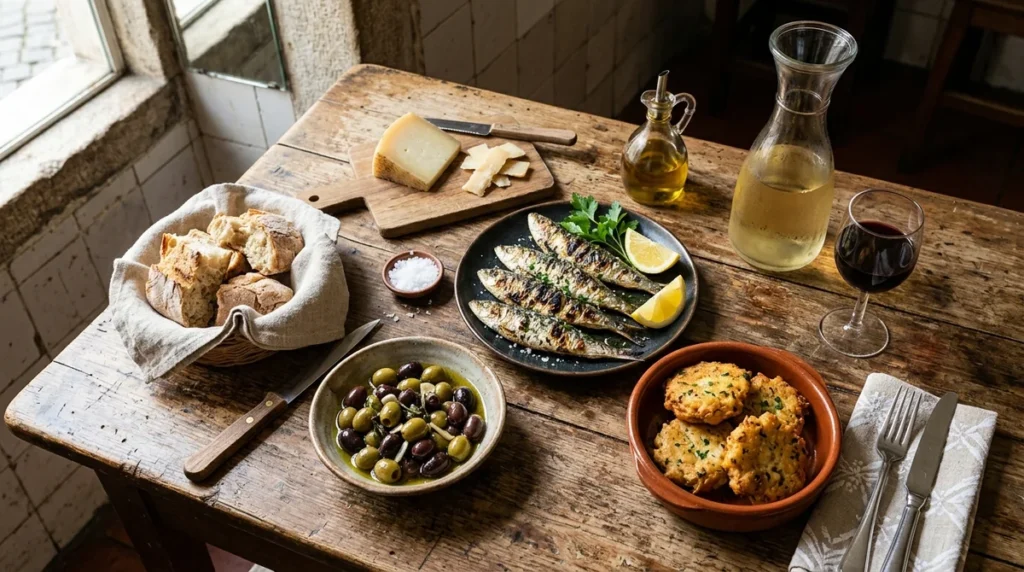
Portuguese food is built on the Atlantic and the farm: salt cod, grilled fish, slow-cooked pork, good bread, sheep’s cheese and custard tarts. If you try only five things, make them bacalhau, grilled sardines, a bifana, a francesinha and a pastel de nata. This guide runs through the dishes worth seeking out, where each one comes from, and how to order in a local tasca without the tourist mistakes.
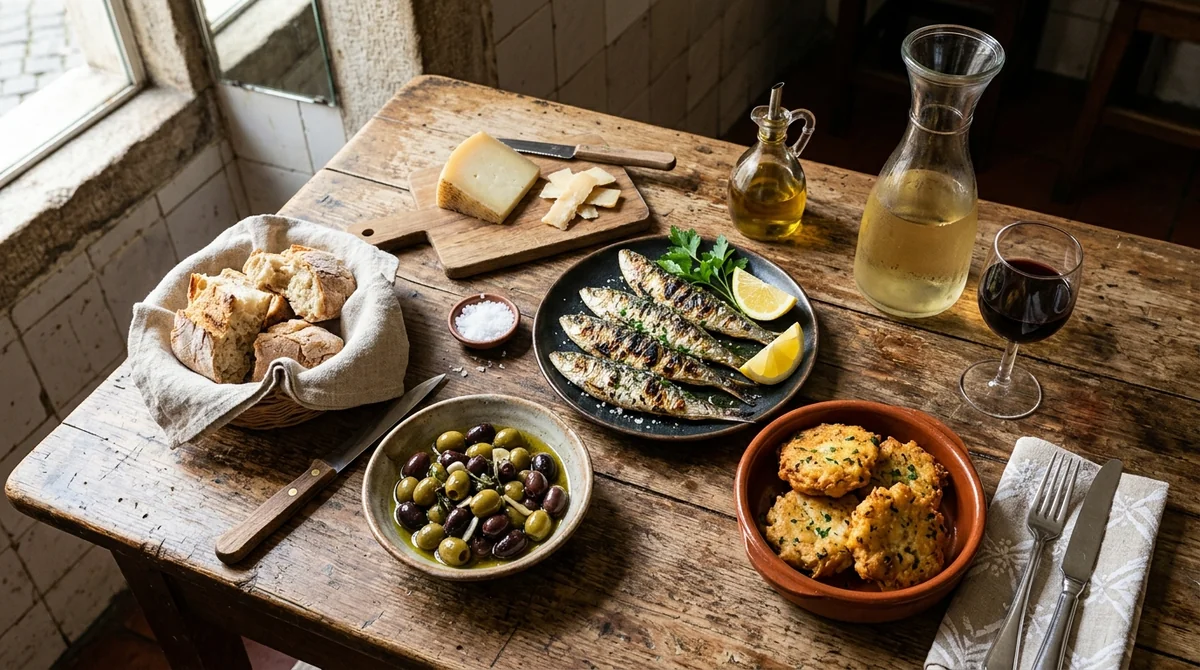
Portugal rewards eating locally. Almost every dish below has a region attached, and the version near Lisbon, on the Setubal and Arrabida coast, is one of the best tables in the country. Where a dish has its own story, this guide points you to the deeper reads: the original pastel de Belem, the food of Setubal, and the sweet Moscatel de Setubal.
Recommended tour
FULL DAY PRIVATE TOUR - WINE TASTING + SESIMBRA & ARRÁBIDA NATIONAL PARK
Join a private 9-hour tour exploring Azeitão, Sesimbra, and Arrábida. Enjoy a guided journey with Francisco Gomes, including A.C. transport, professional guidance and a private wine tasting of four varieties at a renowned vineyard. Max: 8 people.
See dates & book →The five dishes you should not leave without
If your time is short, these five give you the shape of Portuguese cooking: one salt cod dish, the summer fish, the everyday sandwich, the big indulgent one, and the tart.
- Bacalhau a bras: shredded salt cod with straw-cut fried potato, egg and black olives, the friendliest way into Portugal’s cod obsession.
- Sardinhas assadas: whole fresh sardines grilled over charcoal, eaten on bread, unbeatable in summer.
- Bifana: thin garlic-and-wine marinated pork in a soft roll, the national snack.
- Francesinha: Porto’s stacked meat sandwich under melted cheese and a beer-and-tomato sauce, a meal in itself.
- Pastel de nata: the flaky custard tart, best warm with cinnamon.
From the sea
Portugal has the longest Atlantic coast in mainland Europe, and it eats like it. Cod is the obsession, but the fresh fish and shellfish are where a coastal meal really shines.
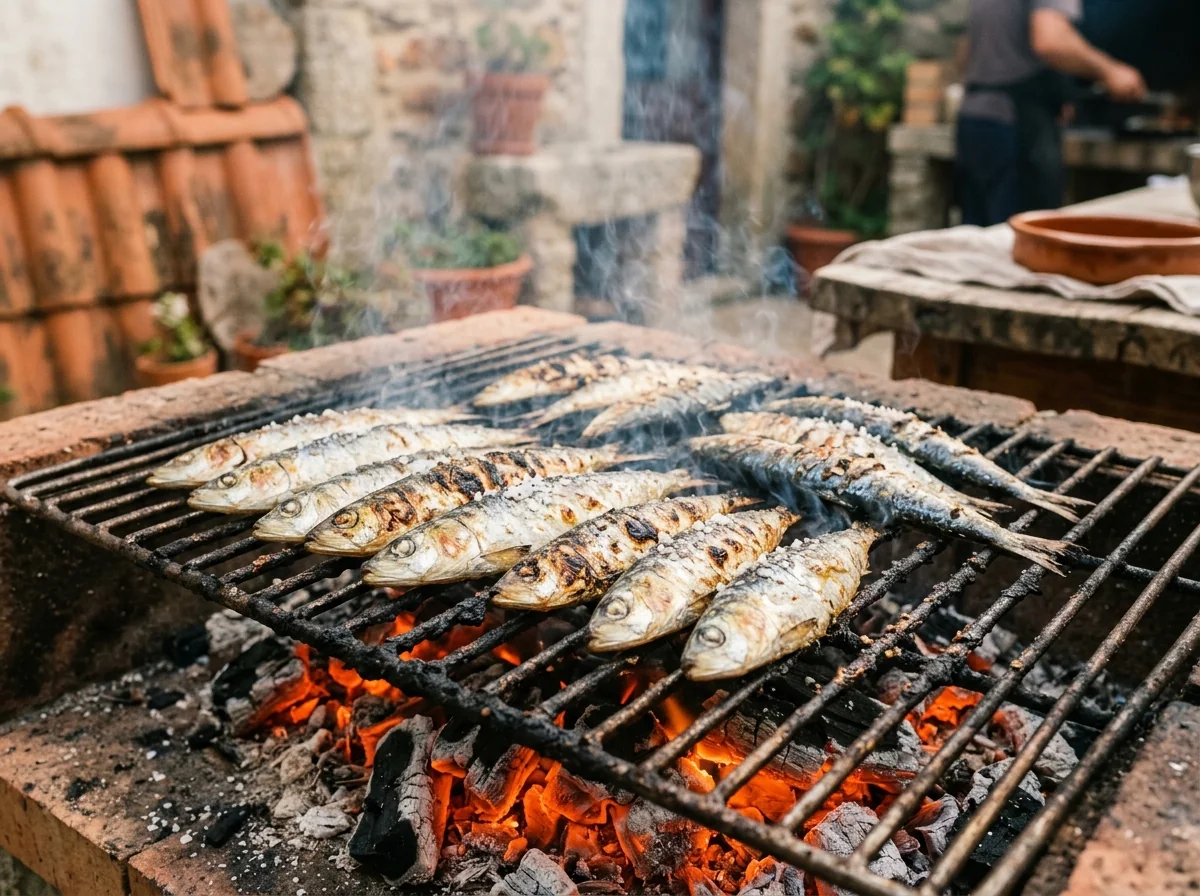
- Bacalhau: salted dried cod, so central that people say there are more than 365 ways to cook it, one for every day of the year.
- Polvo a lagareiro: octopus roasted with olive oil and garlic, served with small “punched” potatoes.
- Arroz de marisco: a soupy, generous seafood rice, at its best on the coast.
- Ameijoas a Bulhao Pato: clams cooked in olive oil, garlic, fresh coriander and a squeeze of lemon.
From the land: meat and the great sandwiches
Away from the coast, the kitchen turns to pork, slow stews and some of the best sandwiches in Europe. This is hearty, unfussy food.
- Leitao a Bairrada: crisp-skinned roast suckling pig, the pride of the Bairrada region.
- Cozido a portuguesa: a boiled feast of meats, sausages and vegetables, a winter staple.
- Prego: a garlicky beef steak in a roll, the classic way to end a meal or a night out.
- Alheira: a smoked sausage of bread and poultry from Tras-os-Montes, created by Jewish families to appear to be eating pork.
- Frango piri-piri: charcoal-grilled chicken with a chilli sauce that arrived through Portugal’s former African colonies.
Soups, sides and cheese
Every Portuguese meal has a soup and, if you are lucky, a good cheese. Two dishes and two cheeses are worth knowing by name.
- Caldo verde: a smooth potato soup with finely shredded kale and a slice of chourico, from the northern Minho.
- Acorda: a garlic-and-coriander bread soup, at its best in the Alentejo.
- Queijo da Serra: a buttery, almost runny raw sheep’s cheese from the Serra da Estrela, scooped from inside the rind.
- Queijo de Azeitao: a small, runny sheep’s cheese from Azeitao on the Setubal peninsula, our own tour region.
The sweet stuff
Portuguese sweets come from convents, where nuns used egg yolks left over from starching habits. That is why so many are rich, golden and egg-based.
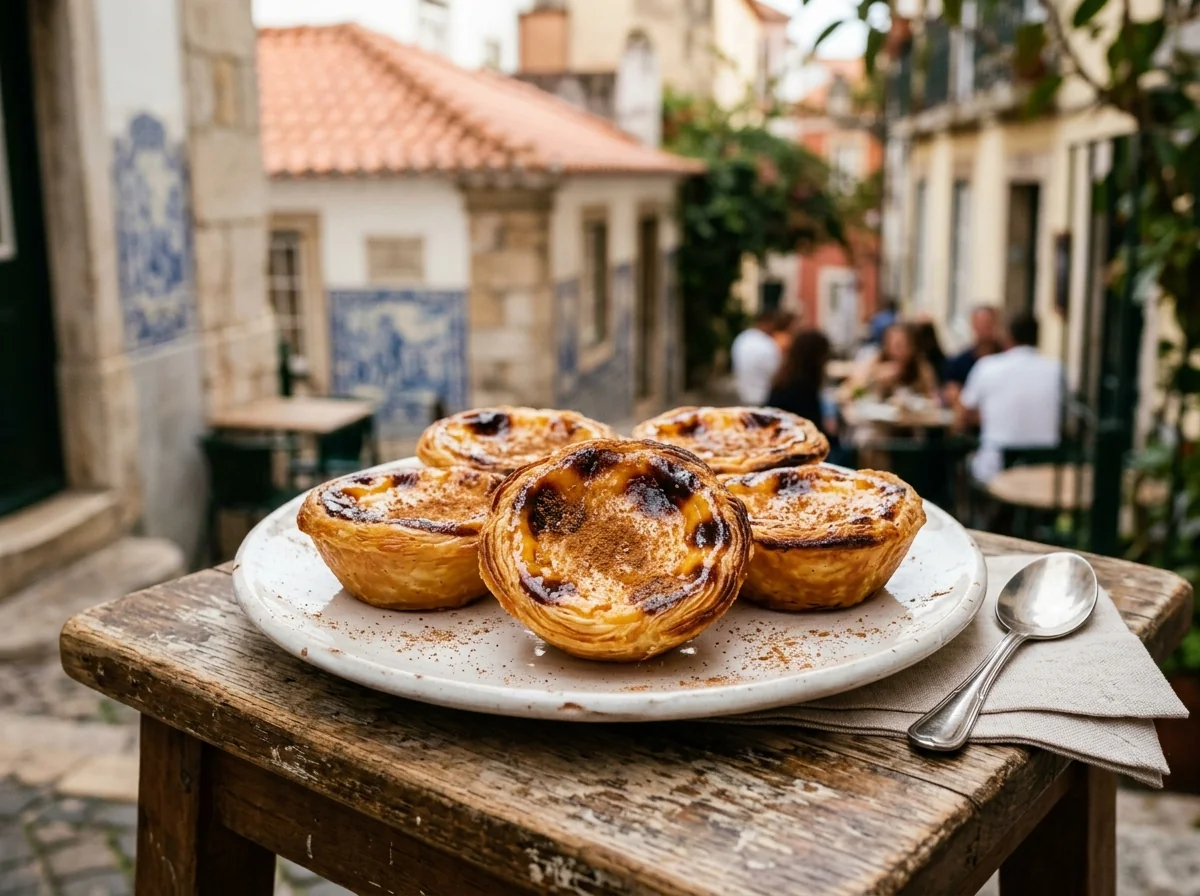
- Pastel de nata: the custard tart you will see everywhere; the original recipe, the pastel de Belem, is still made in secret.
- Ovos moles de Aveiro: a sweet egg-yolk paste in thin wafer shells, from the canal town of Aveiro.
- Travesseiros de Sintra: puff-pastry pillows filled with almond and egg cream, a Sintra speciality.
What to drink with it
The drinks are half the pleasure, and Portugal makes far more than port. Start young and light, finish sweet.
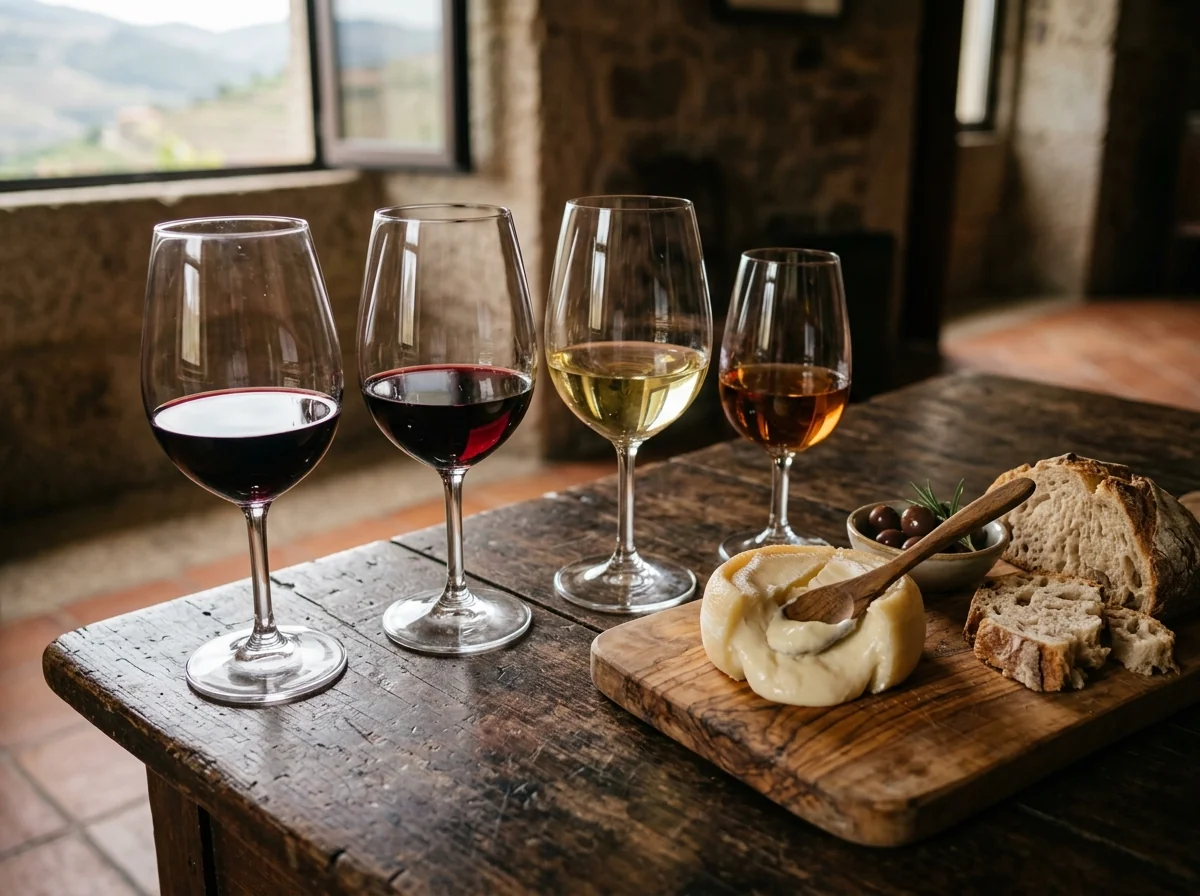
- Vinho Verde: a young, faintly spritzy white from the Minho, drunk cold and cheap.
- Port: the famous fortified wine from the Douro valley, aged across the river from Porto.
- Ginjinha: a sour-cherry liqueur, served in a shot glass or an edible chocolate cup.
- Moscatel de Setubal: a sweet fortified Muscat from the Setubal peninsula, a natural end to a meal.
Where the regions differ
Portuguese food changes as you move across the country. If you are basing yourself near Lisbon, the last two rows are within a day trip.
| Region | Taste it for |
|---|---|
| North (Minho) | Caldo verde, vinho verde |
| Porto | Francesinha, port wine |
| Bairrada (centre) | Leitao, roast suckling pig |
| Lisbon and Belem | Pastel de nata, bacalhau, sardines |
| Alentejo | Acorda, black pork |
| Setubal peninsula | Azeitao cheese, Moscatel, coast seafood |
How to eat like a local: tasca etiquette
A tasca is a small, family-run tavern, and it is where you eat best and cheapest. A few habits separate a local lunch from a tourist one.
Order the prato do dia, the dish of the day, which is usually the freshest thing in the kitchen and the best value. Coffee is a bica in Lisbon, a short, strong espresso taken standing at the counter. And house wine, the vinho da casa, is ordered by the jug and is nearly always fine.
Taste it for yourself near Lisbon
The easiest way to eat the real thing is on the coast just south of Lisbon, where the fish is landed that morning and the wine comes from the next valley. Our private day around Sesimbra and the Arrabida park includes a Portuguese lunch and a wine tasting in Azeitao, with the Moscatel and the sheep’s cheese at the source.
It is a full day of the flavours above, and our guide to wine tours from Lisbon explains the options. For official background on Portuguese cooking, the national tourism board’s gastronomy pages are a good starting point.
Recommended tour
FULL DAY PRIVATE TOUR - WINE TASTING + SESIMBRA & ARRÁBIDA NATIONAL PARK
Join a private 9-hour tour exploring Azeitão, Sesimbra, and Arrábida. Enjoy a guided journey with Francisco Gomes, including A.C. transport, professional guidance and a private wine tasting of four varieties at a renowned vineyard. Max: 8 people.
See dates & book →Frequently Asked Questions
What is Portugal’s most famous food?
Bacalhau, salted dried cod, is Portugal’s most famous food, cooked in hundreds of ways across the country. Its most famous sweet is the pastel de nata, the custard tart. Grilled sardines, in summer, are the other dish that nearly every visitor tries at least once.
What are the must-try Portuguese dishes?
Start with five: bacalhau a bras, shredded cod with egg and potato; grilled sardines; the francesinha, Porto’s stacked sandwich; a bifana, the pork roll; and a pastel de nata. From there try polvo a lagareiro, roast octopus, and caldo verde, the green cabbage soup.
What do Portuguese people eat for breakfast?
Breakfast in Portugal is small and often sweet: a coffee, usually a bica, the short espresso, with a pastry or buttered toast. A pastel de nata counts. Big savoury breakfasts are not the tradition here, so save your appetite for a long, generous lunch instead.
What is Portugal’s national dish?
There is no single official national dish, but bacalhau, salted cod, comes closest, so central that people say there are more than 365 recipes for it, one for every day. Cozido a portuguesa, a boiled meat and vegetable stew, is the other contender.
Is Portuguese food spicy?
Not really. Portuguese cooking leans on olive oil, garlic, coriander and good ingredients rather than heat. The main exception is frango piri-piri, chilli-grilled chicken, whose piri-piri sauce came from Portugal’s former African colonies. Elsewhere, chilli is used lightly if at all.
What should I not miss eating in Portugal?
Near Lisbon, do not miss fresh grilled fish and seafood on the Setubal and Arrabida coast, the runny Azeitao sheep’s cheese, and a glass of Moscatel de Setubal to finish. Add a pastel de nata and a bifana, and you have tasted the heart of it.
Come hungry, eat by region
The trick to eating well in Portugal is to follow the region: cod and tarts in Lisbon, francesinha in Porto, roast pork in the centre, and fresh fish and sheep’s cheese on the Setubal coast. Start with the five essentials, order the dish of the day, and let the couvert go if you do not want it. To taste the coast south of Lisbon at the source, spend a day with Francisco on our Sesimbra and Arrabida wine and food tour.






-
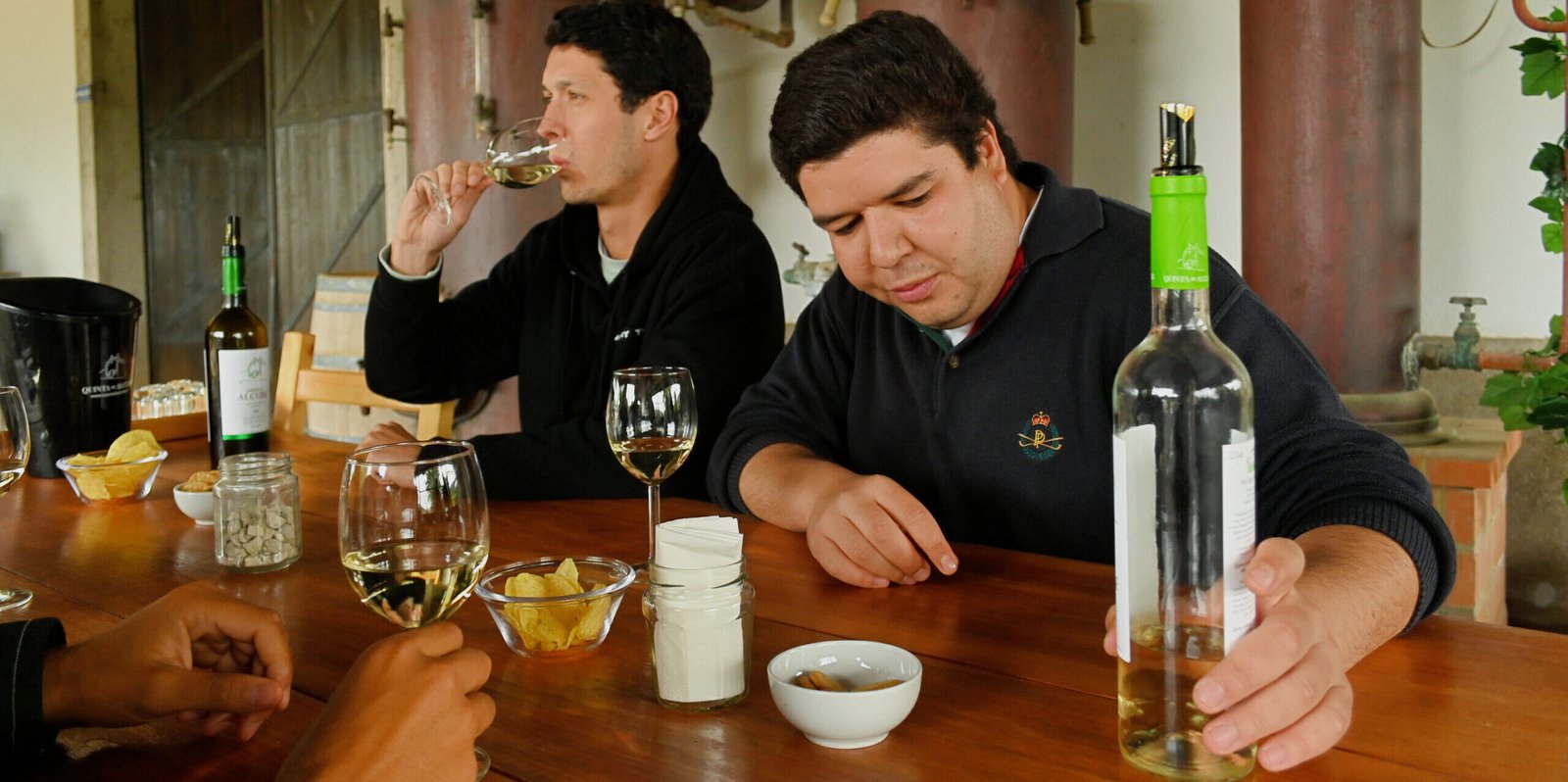
FULL DAY PRIVATE TOUR - WINE TASTING + SESIMBRA & ARRÁBIDA NATIONAL PARK
From €95.00 per personBook Now