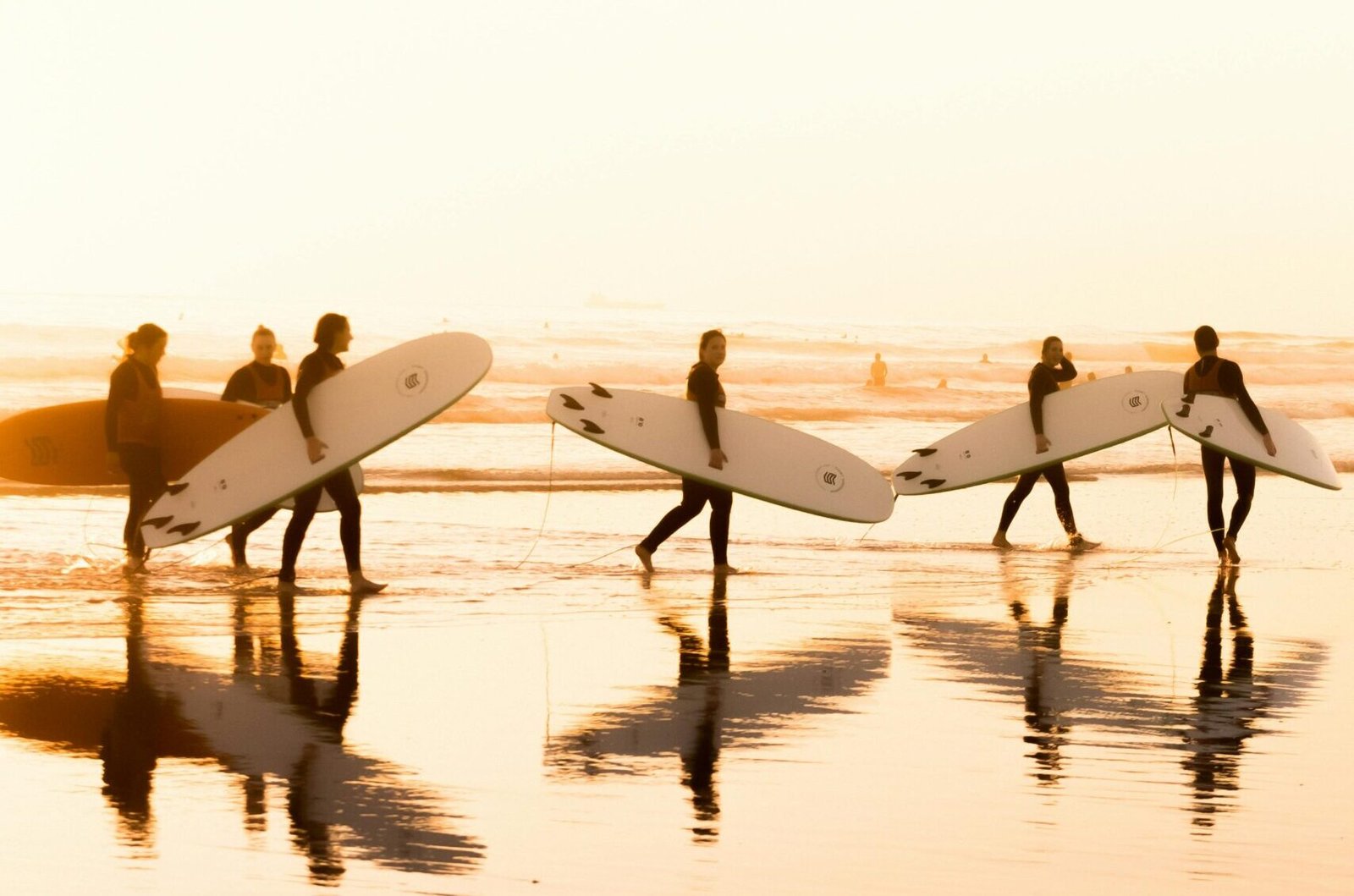

Learning to surf comes down to a simple, honest progression: start on the small broken waves close to shore, master paddling and the pop-up on a big soft board, and only move to unbroken green waves once those feel automatic. Most beginners stand up in their very first session on the whitewater. Riding real waves takes longer, but the first thrill comes fast.
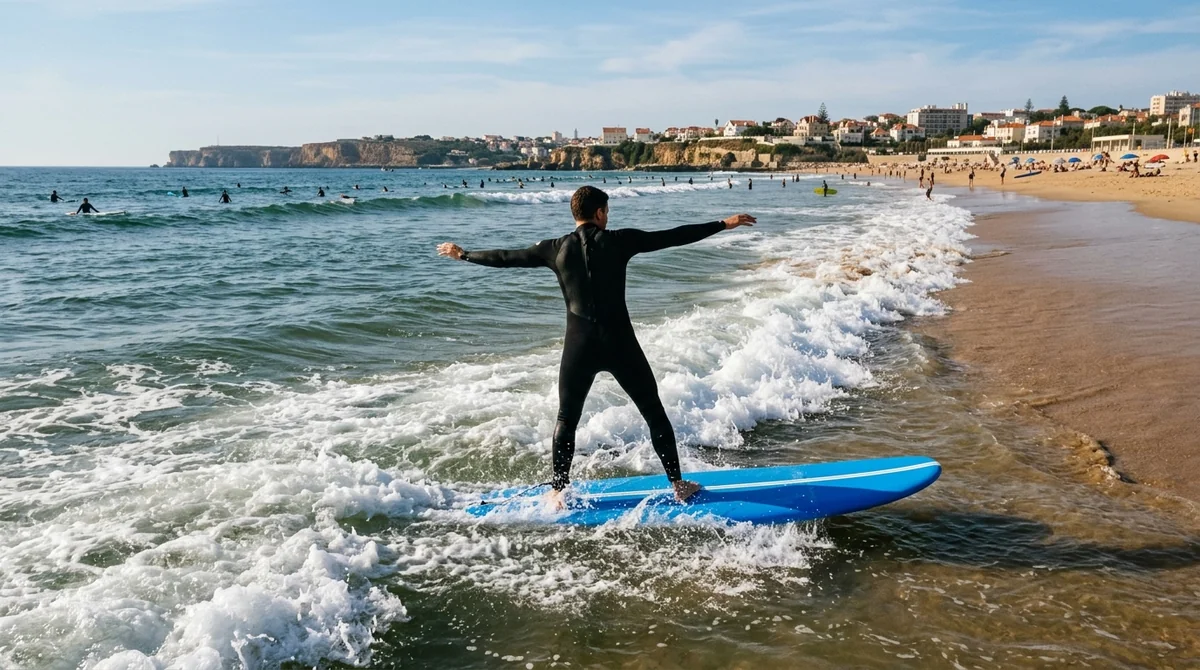
This is a professional surfer’s honest guide to learning, written by Luis Perloiro, who teaches beginners every week at Carcavelos beach near Lisbon. It covers what you need, the exact steps to your first wave, the ocean-safety basics that keep you out of trouble, the mistakes that hold people back, and whether to teach yourself or take a lesson.
Recommended tour
PRIVATE SURF LESSON
Join a 3.5-hour private surf session at Carcavelos Beach, with daily departures from Hard Rock Café at 9 A.M. Enjoy guidance from a professional surfer (Luis Perloiro), transport in an A.C. van, surf gear, and a final drink at Tricana Beach Bar. Max: 8 people. Intensity: 7/10.
See dates & book →Can anyone learn to surf?
Almost anyone. If you are reasonably comfortable in the sea and can swim, you can learn to surf. There is no minimum age or athletic background: children, retirees and complete non-athletes all stand up regularly on their first day. Surfing rewards patience and repetition far more than raw strength.
The one real requirement is that you can swim and feel calm in moving water, because you will fall in, a lot. Everything else, from paddling to the pop-up, is a skill you build wave by wave.
What you need to start
Beginners fail more often from the wrong equipment than from a lack of talent. The gear that makes learning fast is the opposite of what looks cool.
| Gear | What a beginner wants |
|---|---|
| Board | A soft-top foamie, 7 to 9 feet, wide and thick. The extra volume floats you and catches far more waves. Never a shortboard. |
| Leash | Always worn. It keeps your board with you and stops it hitting other surfers. |
| Wetsuit | Needed in Portugal most of the year for warmth and protection. A school provides one. |
| The beach | A gentle, sandy beach break with no rocks or reef. Carcavelos, near Lisbon, is ideal. |
If you are booking a lesson, the school supplies the board and wetsuit, so all you bring is swimwear and a towel. For what to wear the rest of the year, see our guide to what to wear surfing in Portugal.
The steps to your first wave
Catching a wave is a sequence, and each part is learnable. Here is the order a pro teaches it.
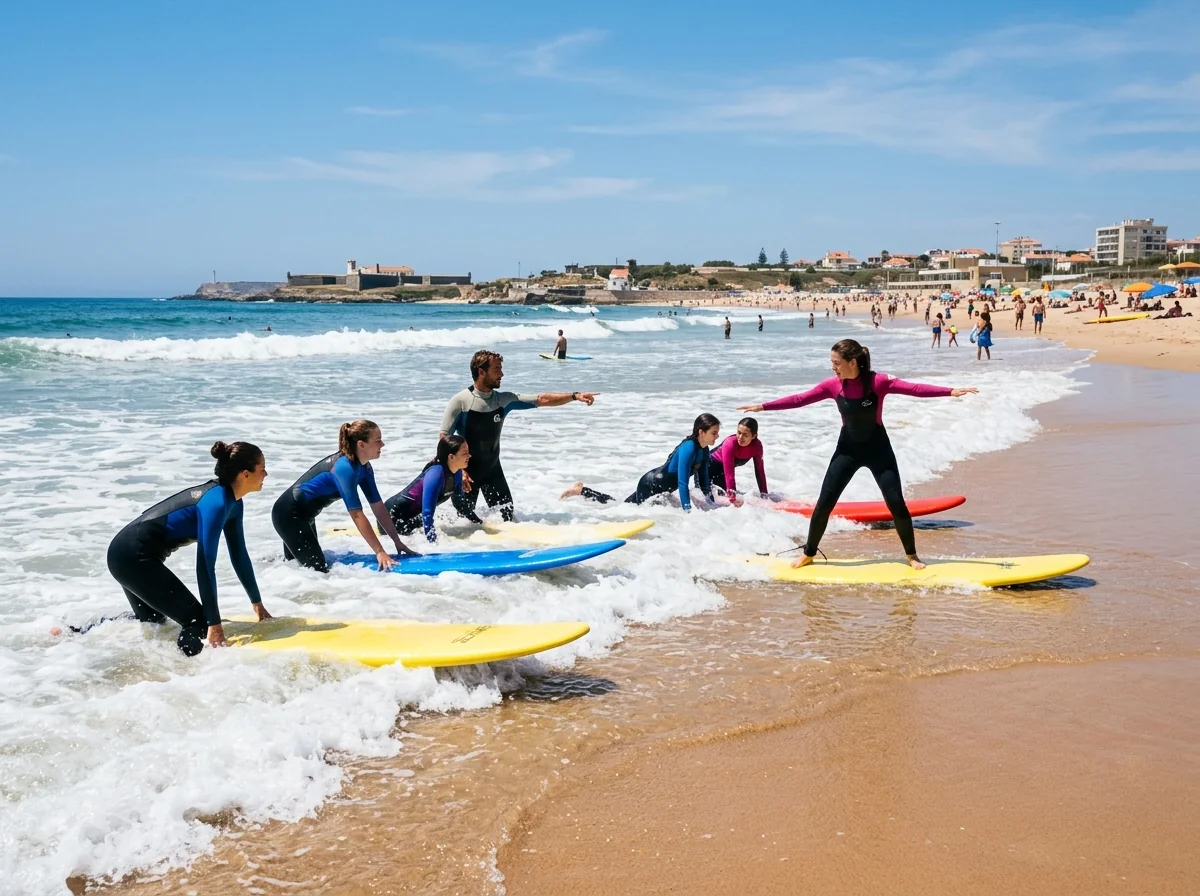
- Lie in the right spot. Centre yourself on the board with the nose about two or three inches above the water. Too far forward and the nose digs in; too far back and the tail drags.
- Paddle properly. Long, deep strokes with a full reach, pulling past your hip, not fast splashy ones. Point the board straight at the beach.
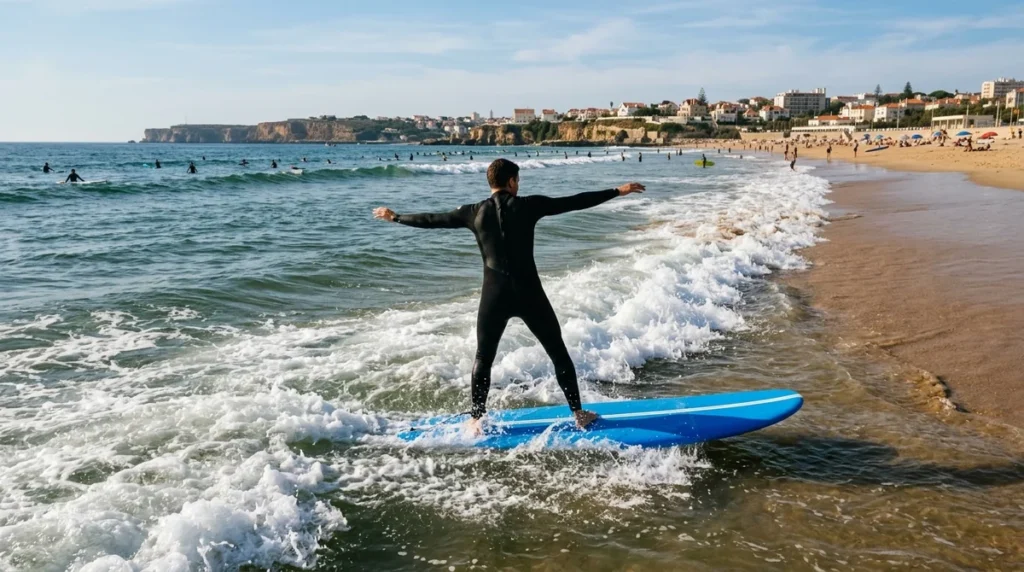
- Catch whitewater first. As a wave of foam reaches you, take a few strong strokes to match its speed. Learning on the broken white water, not the green wave, is what lets you stand up on day one.
- Pop up in one motion. Hands flat under your chest, push up, and bring your feet under you in a single fluid move, back foot then front foot. Never climb up on your knees.
- Stand low, look up. Land in an athletic stance, feet shoulder-width, knees bent, and look up towards the beach, never down at the board. Your body follows your eyes.
The pop-up is the move everyone struggles with, and it deserves its own practice. We break it down step by step in our guide to the surf pop-up.
Ocean safety every beginner must know
The ocean is the real teacher, and respecting it keeps surfing safe. A few basics matter more than anything on the board.
Common beginner mistakes
Nearly everyone makes the same handful of errors. Knowing them saves weeks of frustration.
- Popping up onto the knees instead of straight to the feet.
- Looking down at the board, which drops your weight forward.
- Standing stiff and straight-legged instead of low and bent.
- Lying too far back, so the board never catches the wave.
- Using a board that is too small, too early.
- Rushing to green waves before the pop-up is automatic.
Teach yourself, or take a lesson?
You can learn to surf alone, and plenty do. But the first stage, reading the ocean, positioning, and timing the paddle, is exactly where a coach saves you the most time and the most frustration.
| Self-taught | With a lesson | |
|---|---|---|
| First stand-up | Often several frustrating sessions. | Usually the first session. |
| Wave selection | Guesswork; wrong waves waste energy. | A coach pushes you into the right foam. |
| Safety | You learn rips and hazards the hard way. | Someone reads the ocean for you. |
| Gear | You have to buy or rent it. | Board and wetsuit provided. |
Learn to surf in Lisbon, at Carcavelos
Lisbon is one of the best places in Europe to start. Carcavelos, a wide, sandy, consistent beach break twenty minutes from the city centre, is as beginner-friendly as surf gets, and it works almost year-round. It is where the fundamentals in this guide come together fastest.
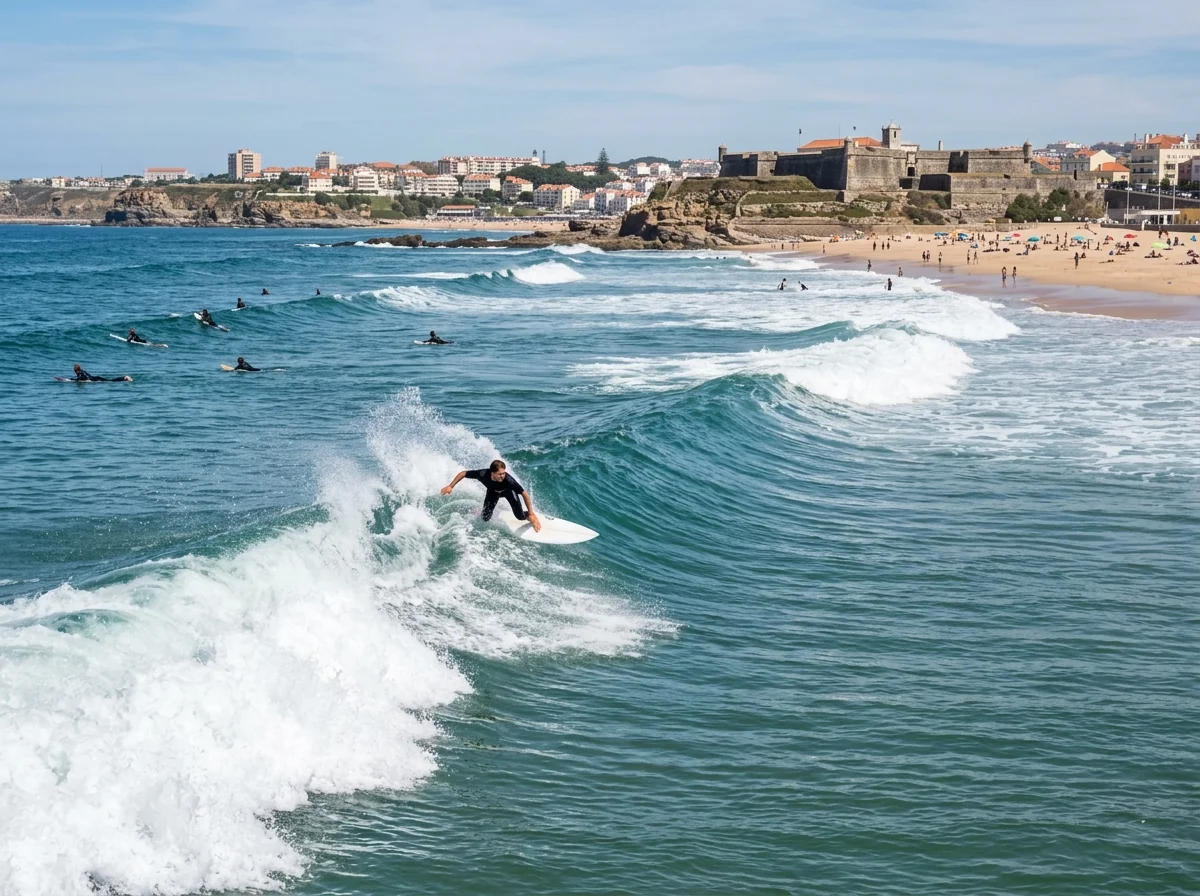
Our beginner surf lesson runs there with Luis, a professional surfer, on soft foamies with wetsuits provided. He reads the waves, pushes you into the right ones, and fixes the pop-up in person, which is the single fastest way past everything on the mistakes list above. Our complete guide to surfing in Lisbon and our Carcavelos surf guide cover the spot in full.
Recommended tour
PRIVATE SURF LESSON
Join a 3.5-hour private surf session at Carcavelos Beach, with daily departures from Hard Rock Café at 9 A.M. Enjoy guidance from a professional surfer (Luis Perloiro), transport in an A.C. van, surf gear, and a final drink at Tricana Beach Bar. Max: 8 people. Intensity: 7/10.
See dates & book →Frequently Asked Questions
Is surfing hard to learn?
Standing up is easier than most people expect: on a big soft board in gentle whitewater, most beginners get to their feet in their first session. What takes longer is riding unbroken green waves and reading the ocean, which comes with regular practice over weeks and months. Surfing is easy to start and endlessly deep to master.
Do you need to know how to swim to surf?
Yes. You should be a confident swimmer and comfortable in moving water before you surf, because you will fall in often and sometimes be held under briefly. You do not need to be a strong or fast swimmer, but you must be able to stay calm and get yourself back to your board and to shore.
What size surfboard should a beginner use?
A large soft-top foamie, roughly 7 to 9 feet long, wide and thick. The extra volume floats you higher and catches far more waves, so you get more practice and progress faster. Small, thin shortboards are much harder to paddle and balance on, and they slow beginners down badly.
How long does it take to learn to surf?
Most people stand up on whitewater in their first lesson. Reliably catching and riding green, unbroken waves usually takes weeks to months of regular surfing. A common rule of thumb is around 100 hours of practice to feel genuinely competent. Lessons, frequency and the right board all speed it up.
Is it better to take a surf lesson or teach yourself?
A lesson is the fastest way through the hardest early stage. A coach positions you, pushes you into the right waves, corrects your pop-up in real time and keeps you safe from rips, which removes most of the frustration beginners hit alone. Many people take a lesson or two, then continue practising on their own.
Where can beginners learn to surf near Lisbon?
Carcavelos is the classic beginner beach: a wide, sandy, consistent beach break about twenty minutes from central Lisbon, with gentle whitewater ideal for first waves. Our beginner surf lesson runs there with a professional surfer, boards and wetsuits included, so you only need to bring swimwear and a towel.
Your first wave is closer than you think
Learning to surf is not about strength or talent; it is about the right board, small foamy waves, a solid pop-up, and respect for the ocean. Get those right and you will stand up sooner than you expect. The fastest start of all is a session at Carcavelos with Luis, who puts every piece of this guide into your first hour in the water.




-
FULL DAY PRIVATE TOUR - WINE TASTING + SESIMBRA & ARRÁBIDA NATIONAL PARK
From €95.00 per personBook Now