
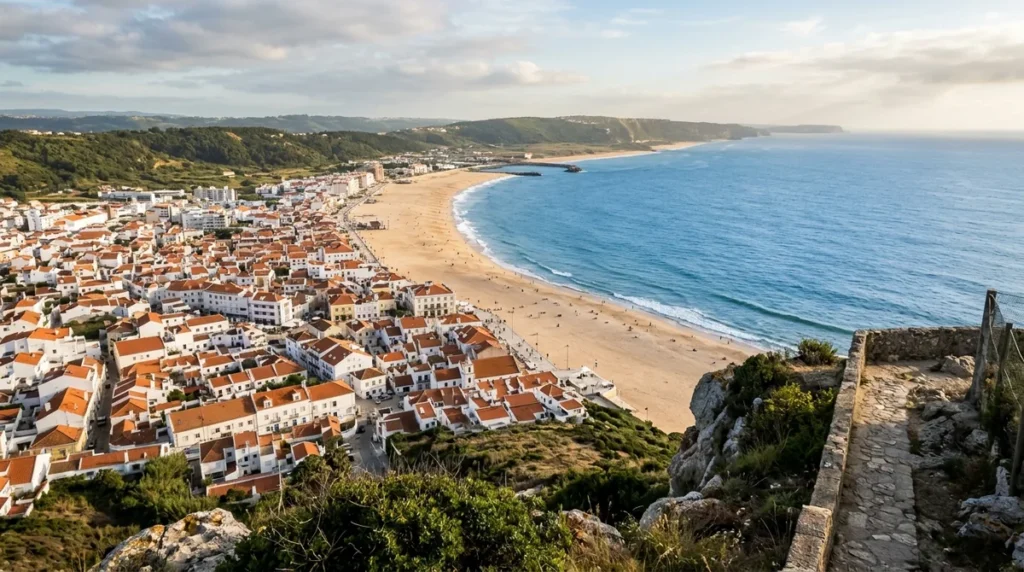
Nazaré is a fishing town on Portugal’s Silver Coast, about 120 km north of Lisbon, split into a beach town, Praia, and two older villages on the heights, Sítio and Pederneira. It is world-famous for the winter waves at Praia do Norte, but most of a visit happens in town: the clifftop views, the sanctuary, the lighthouse fort and fish drying on the beach.
This guide takes Nazaré neighbourhood by neighbourhood, with what to see in each, the legend that gave Sítio its sanctuary, the traditions you will still see on the seafront, a simple plan for one day and how to get there. It is written by Francisco Gomes, who guides our Óbidos and Nazaré day. For the waves themselves, see our Nazaré waves guide.
- Best for: coastal culture, clifftop views and seafood
- Time needed: half a day to a full day
- Don’t miss: the Sítio clifftop, the lighthouse fort, fish drying on the beach
- Getting there: about 120 km from Lisbon, 1 hour 20 to 1 hour 30 by car
- Giant waves: possible from October to March, never guaranteed
Where is Nazaré, and is it worth visiting?
Nazaré sits on the Atlantic coast of the Leiria district, at the northern end of the stretch north of Lisbon known as the Silver Coast. It is worth visiting if you like towns with a working fishing culture: in a few hours you can go up to the clifftop, see the sanctuary, walk to the fort above the big-wave beach and eat fish by the sea.
Pros
|
Cons
|
Recommended tour
FULL DAY PRIVATE TOUR - ÓBIDOS & NAZARÉ
Explore Óbidos and Nazaré on this enriching and private 8-hour tour. We offer personalized hotel pick up. Guidance and storytelling by Francisco Gomes or Luis Perloiro. Travel in an air-conditioned vehicle, try the local licor Ginjinha in Óbidos, and get to know the biggest wave spot in the world - Nazaré.
See dates & book →Praia, Sítio and Pederneira: Nazaré’s three parts
Nazaré is three places in one, and most of your day happens above the beach. Sítio and Pederneira, up on the heights, are the old villages; Praia, the beach town, only grew in the 19th century, as the threat of raids from the sea faded.
| Area | What it is | What to see | Best for |
|---|---|---|---|
| Praia | The beach town and modern centre | The town beach, fishing boats, fish drying, the seafront | The beach, food, an evening walk |
| Sítio | The old village on the clifftop | The sanctuary, the Ermida da Memória, the Suberco viewpoint, the road to the fort | Views, history, watching the waves |
| Pederneira | The older hilltop village inland | A viewpoint and quiet streets | Sunset and quiet |
Things to do in Nazaré
Start at the top and work your way down. These follow the order most visitors meet them: Sítio first, then the fort and the big-wave beach, then the town below.
1. Go up to Sítio by funicular, or on foot
The funicular has linked Praia and Sítio since 28 July 1889. It was built by the engineer Raul Mesnier du Ponsard and climbs 318 m of track at a 42% gradient, and it ran on steam until 1963.
2. The Miradouro do Suberco
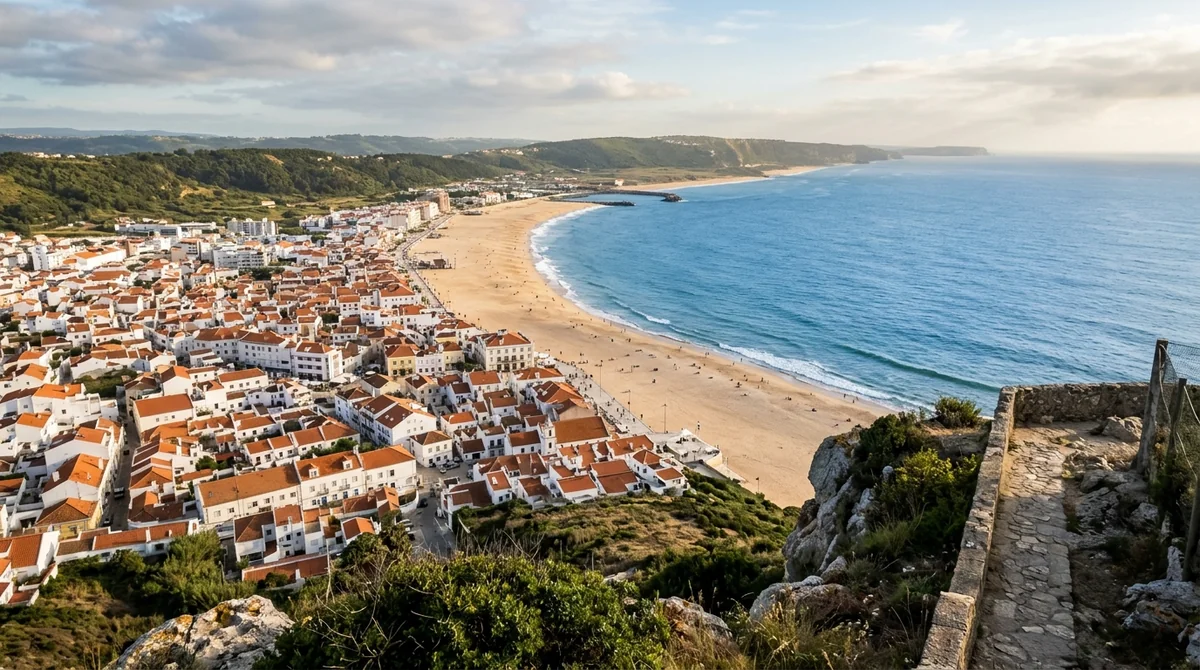
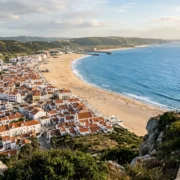
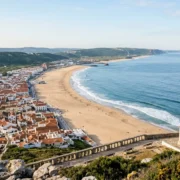
The Suberco viewpoint at the edge of the Sítio cliff gives the classic view of Nazaré: the curved bay, the white houses of Praia and the long sandy beach running south.
3. The Sanctuary of Nossa Senhora da Nazaré
The sanctuary on the Sítio square dates back to the 14th century and King Fernando. Inside are 6,568 Dutch tiles by Willem van der Kloet, which arrived in October 1709, and a painting of the Dom Fuas miracle. It has been listed as a property of public interest since 1978.
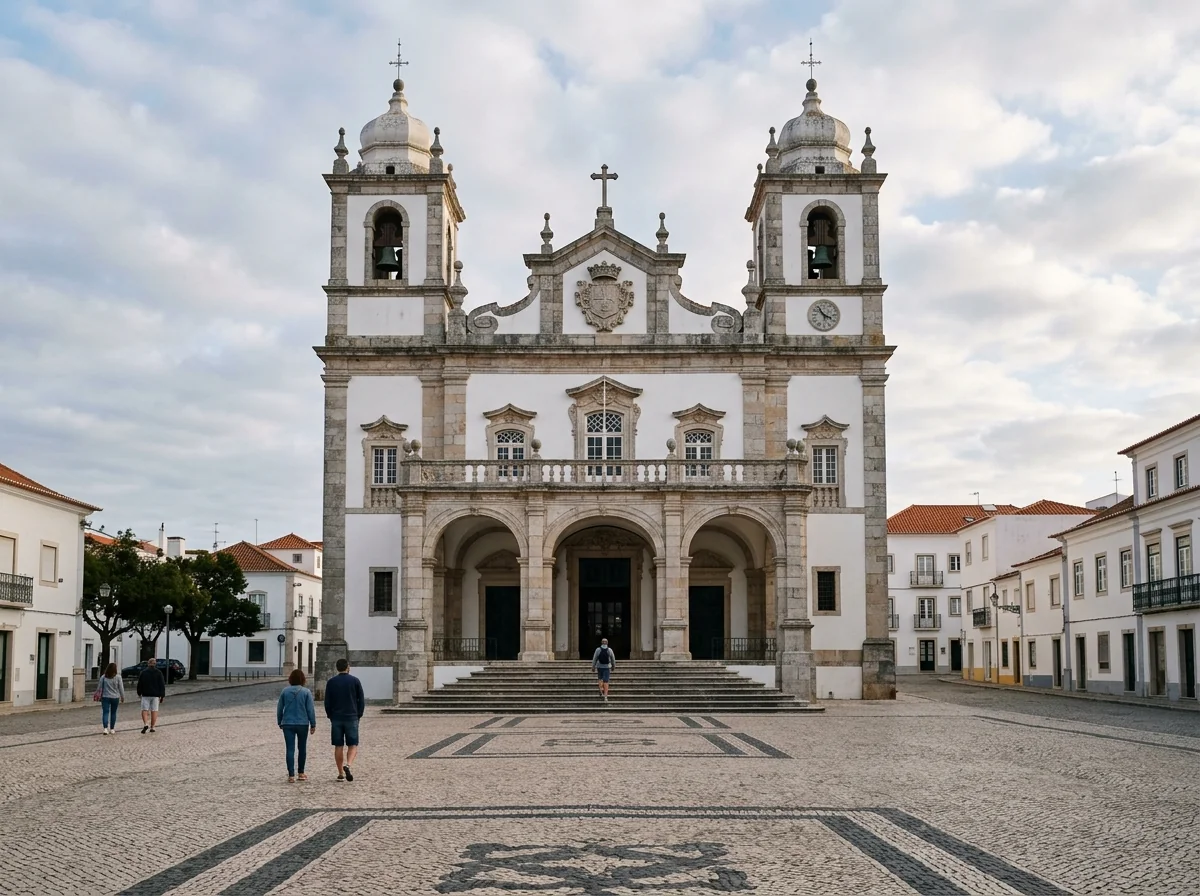
4. The Ermida da Memória and the legend of Nazaré
According to legend, in 1182 the knight Dom Fuas Roupinho was chasing a deer through the fog on the clifftop when his horse reached the edge, and he was saved by calling on Our Lady of Nazaré. He built the small Ermida da Memória over the grotto that held her statue, which tradition says had been brought from Nazareth, and which gave the town its name.
5. Forte de São Miguel Arcanjo and the lighthouse
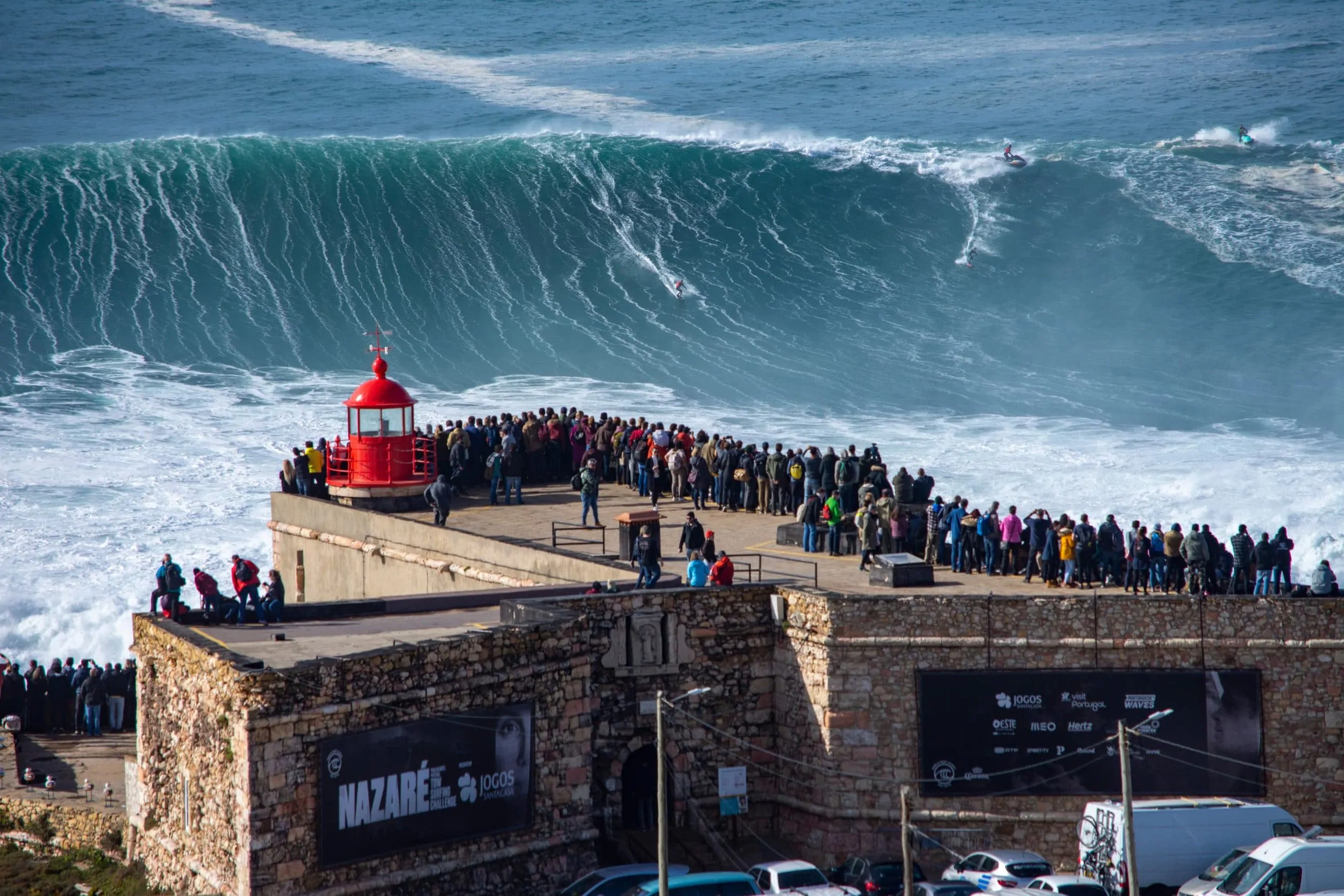
The fort on the headland was begun in 1577 under King Sebastião and remodelled in 1644 under João IV; a harbour light started working on 1 December 1903. Today it holds spaces on local history and the giant waves, with surfboards ridden by big-wave surfers on display, and it had more than 440,000 visits in 2025.
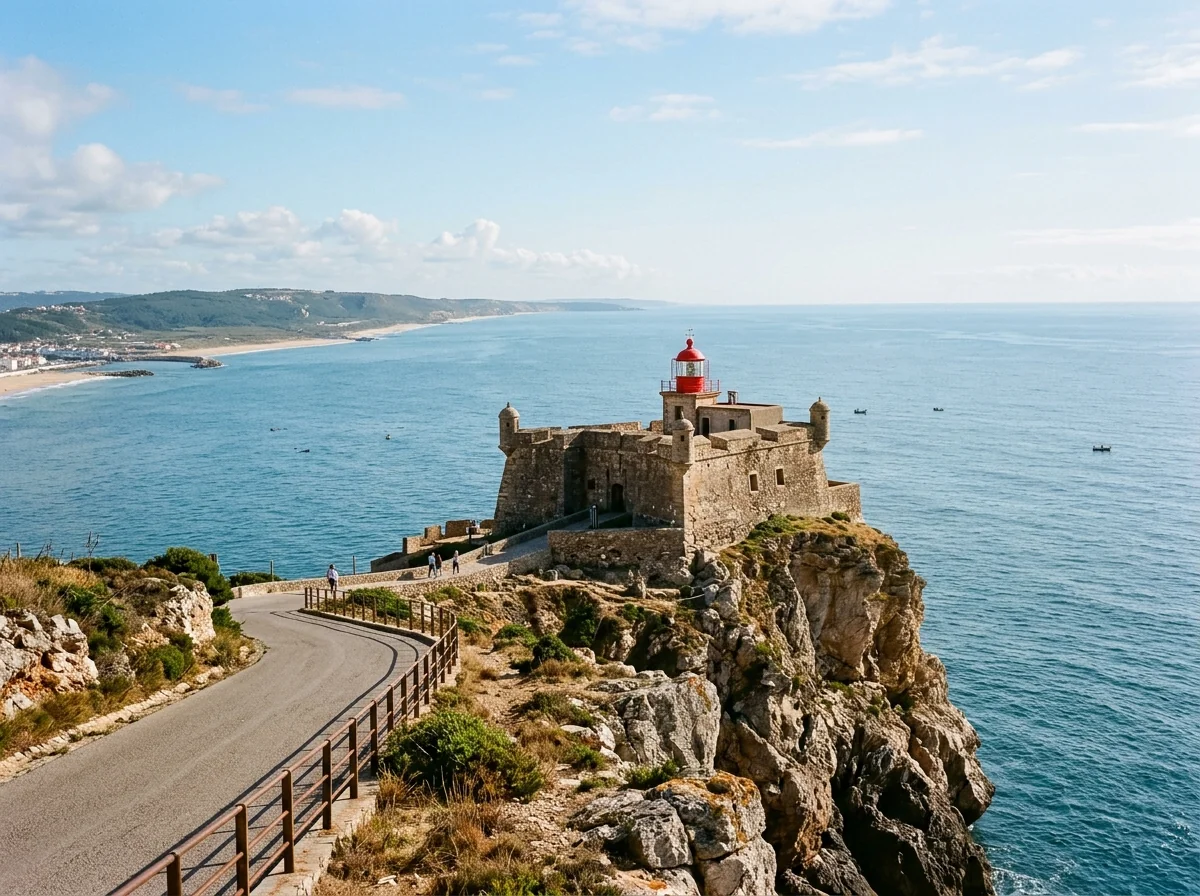
- Winter hours 2026: daily 10:00 to 18:00, last entry 17:30
- Entry: a small fee; check at the door
- On big-wave days: arrive early; see our Nazaré waves guide for where to stand
Hours from the Nazaré town hall; check before you go, as they change by season.
6. Praia do Norte
Praia do Norte is the long beach on the far side of the headland, where the giant waves break. It is a place to watch from above, not a swimming beach.
7. Praia da Nazaré: the town beach, boats and fish drying
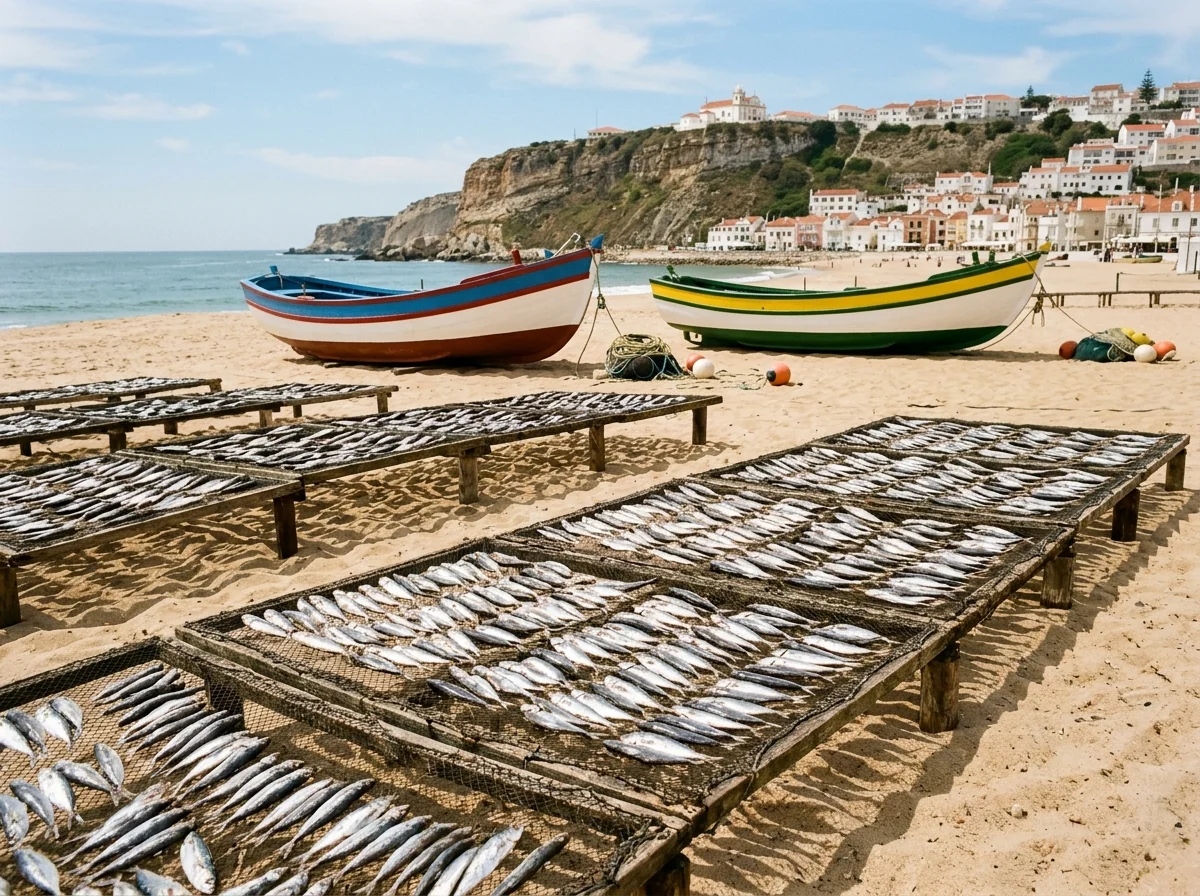
Down in Praia, the long town beach is where Nazaré still lives as a fishing town. Along the seafront, fish are laid out to dry in the sun on traditional net racks beside the boats, mostly horse mackerel (carapau), and the town has a small Dry Fish Museum telling the story.
8. The seven skirts
Nazaré is known for women wearing layered skirts, traditionally said to be seven. Today the full costume is mostly worn by older women, including some fish sellers, and on feast days.
9. Museu Dr. Joaquim Manso
The town’s ethnographic and archaeological museum in Sítio reopened in September 2026 after years closed. Its first temporary exhibition, of miniature figures, runs from 1 November to 31 December 2026.
10. The Pederneira viewpoint
The viewpoint in Pederneira, the quieter hilltop village inland, looks back over the town and the bay, and is the place for sunset.
What to eat in Nazaré
Nazaré is a fishing town, so eat fish. You do not need a reservation-list restaurant: the seafront in Praia is lined with places serving the day’s catch.
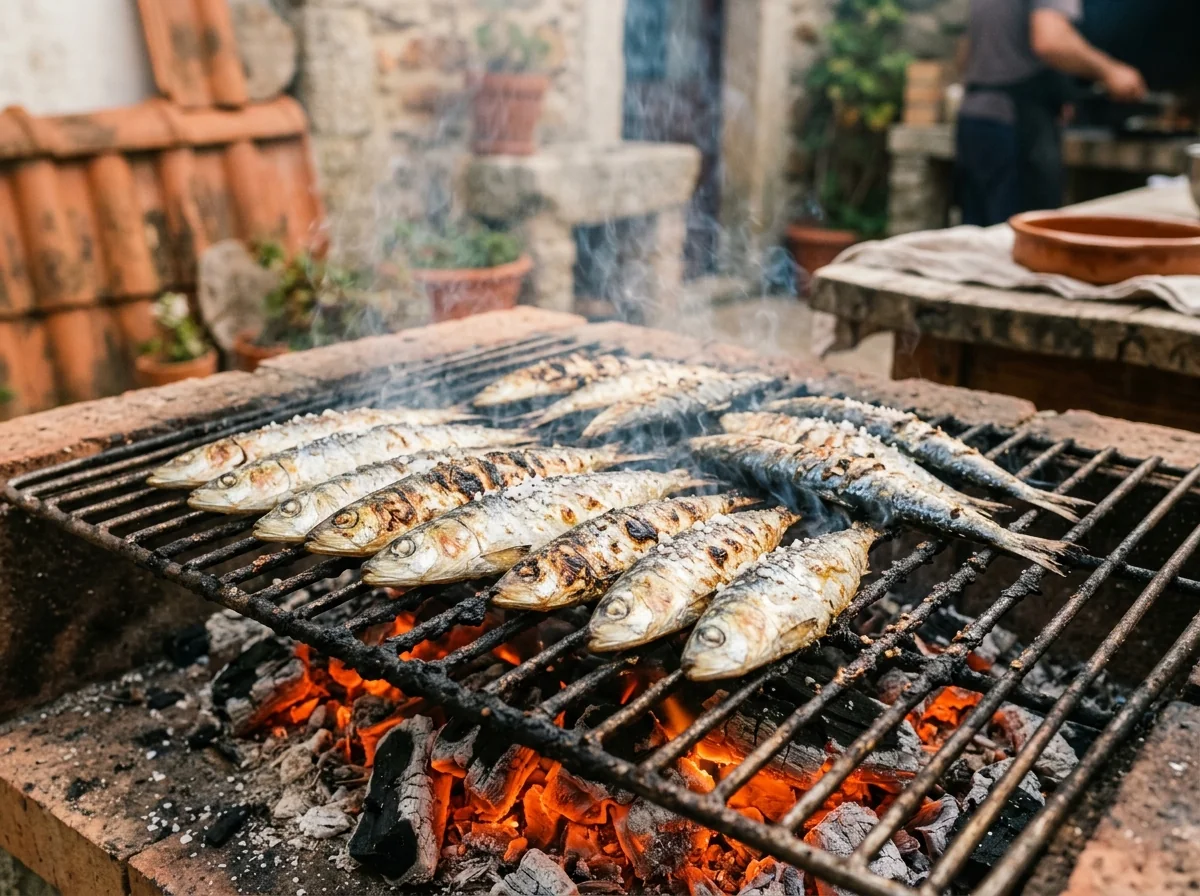
- Grilled sardines: in summer, straight off the charcoal
- Caldeirada: a layered fish stew
- Grilled fish of the day: whatever came in on the boats
- Dried horse mackerel: the fish you saw drying on the beach
For the rest of the menu, see our guide to Portuguese food.
Nazaré’s giant waves, in short
The giant waves break at Praia do Norte, mostly from October to March, with the strongest days usually from November to February. A deep underwater canyon just offshore, the Nazaré Canyon, focuses the Atlantic swell onto the beach. The biggest wave ever surfed, 26.21 m, was ridden there by Sebastian Steudtner on 29 October 2020, and no 30 m wave has ever been ratified.
For the season, how to check whether a big swell is coming and where to watch, read our Nazaré waves guide, and for the other big-wave spots on this coast, our guide to the biggest waves in Portugal.
When to visit Nazaré
Summer is for the beach, winter for the waves, and spring is quiet. Choose by what you want to see.
| When | What’s on | Crowds | Best for |
|---|---|---|---|
| June to September | Beach season; the Nossa Senhora da Nazaré festival around 8 September | Busiest | Swimming at the town beach, the festival |
| October to March | Big-wave season; the 2026/27 competition window runs 1 November 2026 to 31 March 2027 | Quiet, except on big-wave days | Watching the waves from the fort |
| April and May | Shoulder season | Moderate | Walking, views and seafood without the crowds |
A day in Nazaré: a simple plan
This plan starts high and finishes low, so the downhill walking is on your side.
- Morning, Sítio: up by funicular (if running) or bus; the sanctuary, the Ermida da Memória, the Suberco viewpoint and the Museu Dr. Joaquim Manso.
- Late morning, the fort: walk out to the lighthouse and look down on Praia do Norte; the fort opens at 10:00.
- Lunch, Praia: fish on the seafront.
- Afternoon: the town beach, the boats and the fish drying racks.
- Sunset: the Pederneira viewpoint.
To combine Nazaré with Óbidos in a single day, see our Nazaré and Óbidos day trip guide.
Getting to Nazaré from Lisbon
By car it is an easy run up the A8; by public transport it takes about two hours each way.
- Distance: about 120 km north of Lisbon
- By car: 1 hour 20 to 1 hour 30 on the A8 toll motorway
- By bus: express buses take about 2 hours
- By train: there is no station in town, so the train is not practical
- By tour: a private day trip that adds Óbidos on the way
Nazaré on a private day trip with Óbidos
Our private Óbidos and Nazaré tour takes about 8 hours, with pickup at 9:30 from your hotel or Airbnb, or at the Hard Rock Café on Restauradores. Francisco Gomes guides a private group of up to 8 in an air-conditioned van, with a ginjinha tasting in Óbidos, then Nazaré. Lunch in Nazaré is not included, and the waves depend on the sea that day.
For the first half of the day, see our guide to Óbidos, Portugal. For more of this coast, Peniche is covered in our Peniche guide, and for other trips from the capital, our roundup of the best day trips from Lisbon.
Recommended tour
FULL DAY PRIVATE TOUR - ÓBIDOS & NAZARÉ
Explore Óbidos and Nazaré on this enriching and private 8-hour tour. We offer personalized hotel pick up. Guidance and storytelling by Francisco Gomes or Luis Perloiro. Travel in an air-conditioned vehicle, try the local licor Ginjinha in Óbidos, and get to know the biggest wave spot in the world - Nazaré.
See dates & book →Frequently Asked Questions
What is Nazaré famous for?
Nazaré is famous for the giant winter waves at Praia do Norte, where the 26.21 m world record was surfed in 2020. The town is also known for its fishing traditions: fish drying on the beach, women in layered skirts, and the clifftop Sítio with its sanctuary and the legend of Dom Fuas Roupinho.
Is Nazaré worth visiting?
Yes, if you like coastal towns with a working fishing culture. In a few hours you can go up to the Sítio clifftop, see the sanctuary, walk to the lighthouse fort above Praia do Norte and eat fish by the beach. Giant waves are a winter bonus, never a guarantee.
What time of year are the big waves in Nazaré?
Big swells are most likely between October and March, and the strongest days usually fall from November to February. They need an Atlantic storm, so even in winter many days are calm. The 2026/27 competition window runs from 1 November 2026 to 31 March 2027. Check a forecast before you go.
Is Nazaré a day trip from Lisbon?
Yes. Nazaré is about 120 km north of Lisbon, roughly 1 hour 20 to 1 hour 30 minutes by car on the A8, or about 2 hours by express bus. It works well as a day trip, especially combined with Óbidos, which sits on the same route north.
What are the three parts of Nazaré?
Praia is the beach town and modern centre. Sítio is the old village on the clifftop, with the sanctuary, the viewpoints and the road to the lighthouse fort. Pederneira is the older hilltop village inland, quieter, with its own viewpoint. Sítio and Pederneira were settled long before the beach.
Is the Nazaré funicular running?
The funicular, open since 1889, links Praia and Sítio. It closed for safety checks on 10 September 2025, with a replacement bus, and has had maintenance stops since. Its current status could not be confirmed, so check the municipal services website before relying on it. A road and a steep footpath also connect the two.
Why do women in Nazaré wear seven skirts?
Nobody knows for certain. Local explanations include the seven days of the week, the seven virtues, the colours of the rainbow and the seven waves of the sea. What everyone agrees on is the link to the sea. Today the full costume is mostly worn by older women and on feast days.
Can you swim in Nazaré?
In summer, the town beach, Praia da Nazaré, is the usual place to swim, sheltered by the Sítio headland. Praia do Norte, on the other side, is not a swimming beach: its currents and waves are dangerous, above all in winter. Always follow the beach flags and local warnings.
Three towns in one, an hour and a half from Lisbon
Nazaré rewards a visit even when the sea is flat: the clifftop views from Sítio, the sanctuary and its legend, the lighthouse fort and fish drying on the beach. Come in winter and you might see the giant waves too. To see it with Óbidos in one day without the driving, join Francisco on our private Óbidos and Nazaré tour.

-
FULL DAY PRIVATE TOUR - WINE TASTING + SESIMBRA & ARRÁBIDA NATIONAL PARK
From €95.00 per personBook Now