
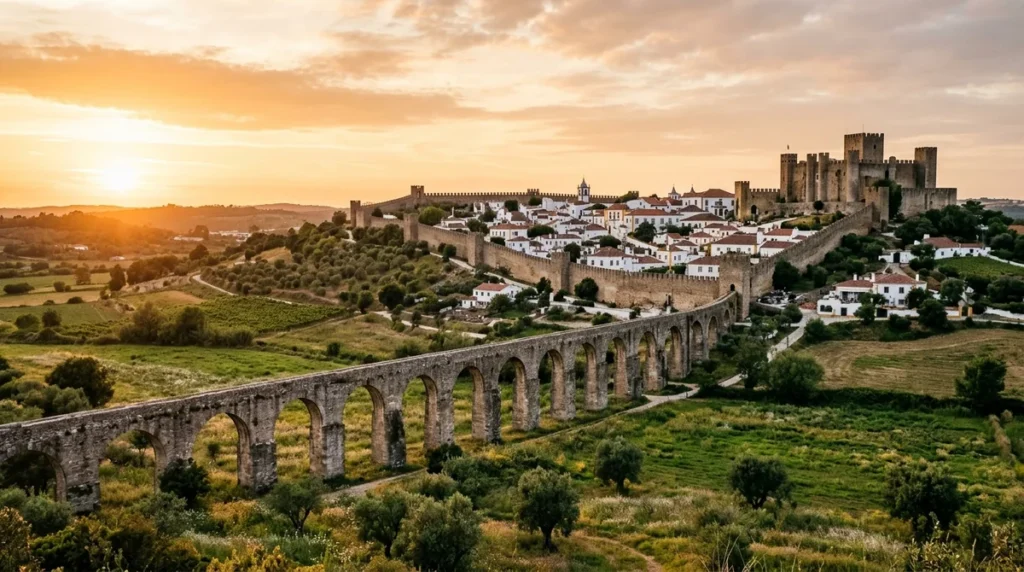
Óbidos is a walled medieval town about 80 km north of Lisbon, an hour up the A8. It is called the “town of the queens” because Portuguese kings gave it to their wives from 1210 until 1834. Walk its walls for free, see the queens’ churches, and drink ginja from a chocolate cup. Half a day covers the highlights; stay for lunch and it fills a full day.
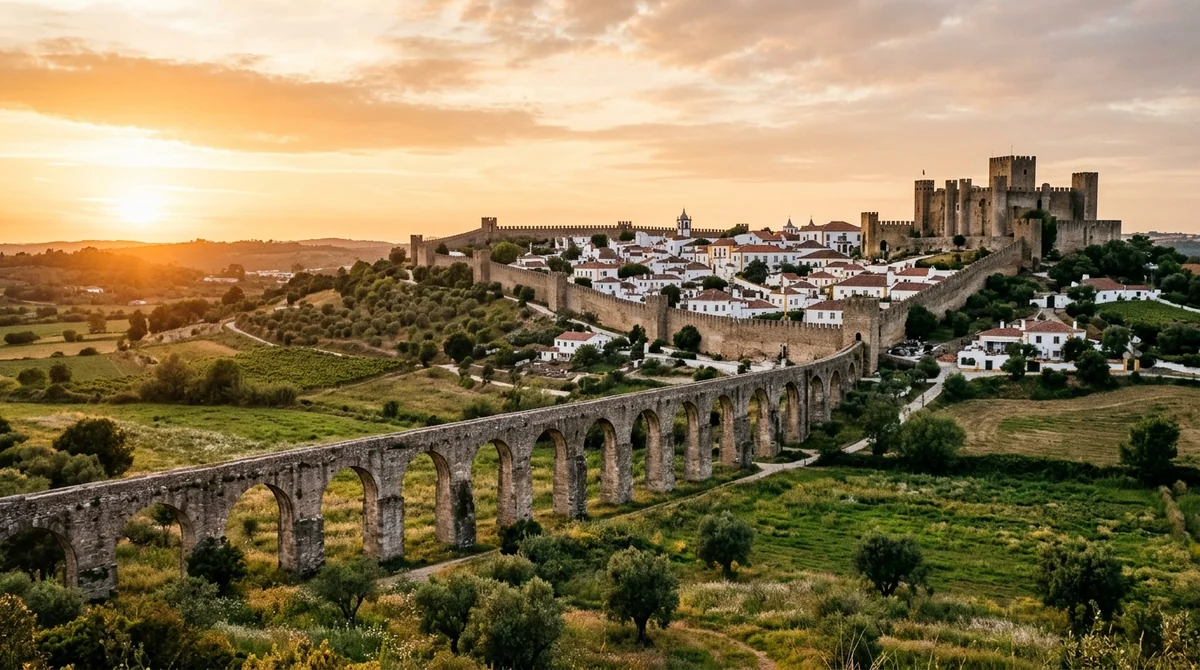
This guide covers the 12 best things to do in Óbidos, a self-guided walking route inside the walls tied to the queens who shaped each stop, a dated festival calendar, how long to stay, how to get there and where to go next. It is written by Francisco Gomes, who guides our Óbidos and Nazaré day, and every date has been checked against the Óbidos tourism office’s own sources (updated November 2026).
- Best for: history, photography and slow wandering
- Time needed: 2 to 3 hours for the highlights; half a day for the full walls
- Getting there: about an hour from Lisbon by the Rápida Verde express bus or on the A8
- Entry: the town and the walls are free; the castle is a hotel
- Don’t miss: the walls, Santa Maria church, ginja in a chocolate cup
- Pairs with: Nazaré’s giant waves, 40 km up the coast
Recommended tour
FULL DAY PRIVATE TOUR - ÓBIDOS & NAZARÉ
Explore Óbidos and Nazaré on this enriching and private 8-hour tour. We offer personalized hotel pick up. Guidance and storytelling by Francisco Gomes or Luis Perloiro. Travel in an air-conditioned vehicle, try the local licor Ginjinha in Óbidos, and get to know the biggest wave spot in the world - Nazaré.
See dates & book →Is Óbidos worth visiting?
Yes. Óbidos is still completely enclosed by its medieval walls, and it is compact enough to see properly in a few unhurried hours. The honest caveats are the crowds on Rua Direita in the middle of the day and a walkway on the walls with no railing on the town side.
Pros
|
Cons
|
If you are choosing between day trips, our guide to Sintra alternatives shows where Óbidos fits as the quieter option.
Why is Óbidos called the town of the queens?
Because for six centuries it belonged to Portugal’s queens. In 1210 King Afonso II gave the town to Queen Urraca, and in 1282 King Dinis gave it to his bride, Queen Isabel. It stayed in the queens’ estate until 1834, and several of them paid for the churches and the aqueduct you see today.
| Year | What happened |
|---|---|
| 1148 | Afonso Henriques, Portugal’s first king, takes Óbidos from the Moors |
| 1210 | Afonso II gives the town to Queen Urraca |
| 1282 | Dinis gives Óbidos to his bride, Queen Isabel |
| 1441 | The young King Afonso V marries his cousin Isabel in Santa Maria church, both still children |
| 1498 | Queen Leonor founds the Misericórdia, by tradition |
| 1571 | Santa Maria is rebuilt under Queen Catarina of Austria |
| 1573 | Work starts on Catarina’s aqueduct |
| 1755 | The great earthquake damages the castle and churches |
| 1834 | The queens’ estate is abolished |
| 1932 to 1935 | The walls are restored |
| 2007 | Óbidos Castle is voted one of the Seven Wonders of Portugal |
| 2015 | Óbidos becomes a UNESCO Creative City of Literature, on 11 December |
Dates from the town’s official timeline on Óbidos tourism. Some guides print 1228 for Isabel’s gift, which is impossible: she married Dinis in 1282.
12 best things to do in Óbidos
Óbidos is small, so these follow the order you meet them walking in from the main gate. Each one takes minutes, not hours.
1. Walk in through the Porta da Vila
The Porta da Vila, the main gate, is a double “elbow” gate from King Fernando’s reign in the 14th century, built so attackers could not charge straight through. Inside is the oratory of Nossa Senhora da Piedade, with a Baroque balcony and blue-and-white tile panels of Christ’s Passion from about 1740 to 1750.

2. Walk the town walls
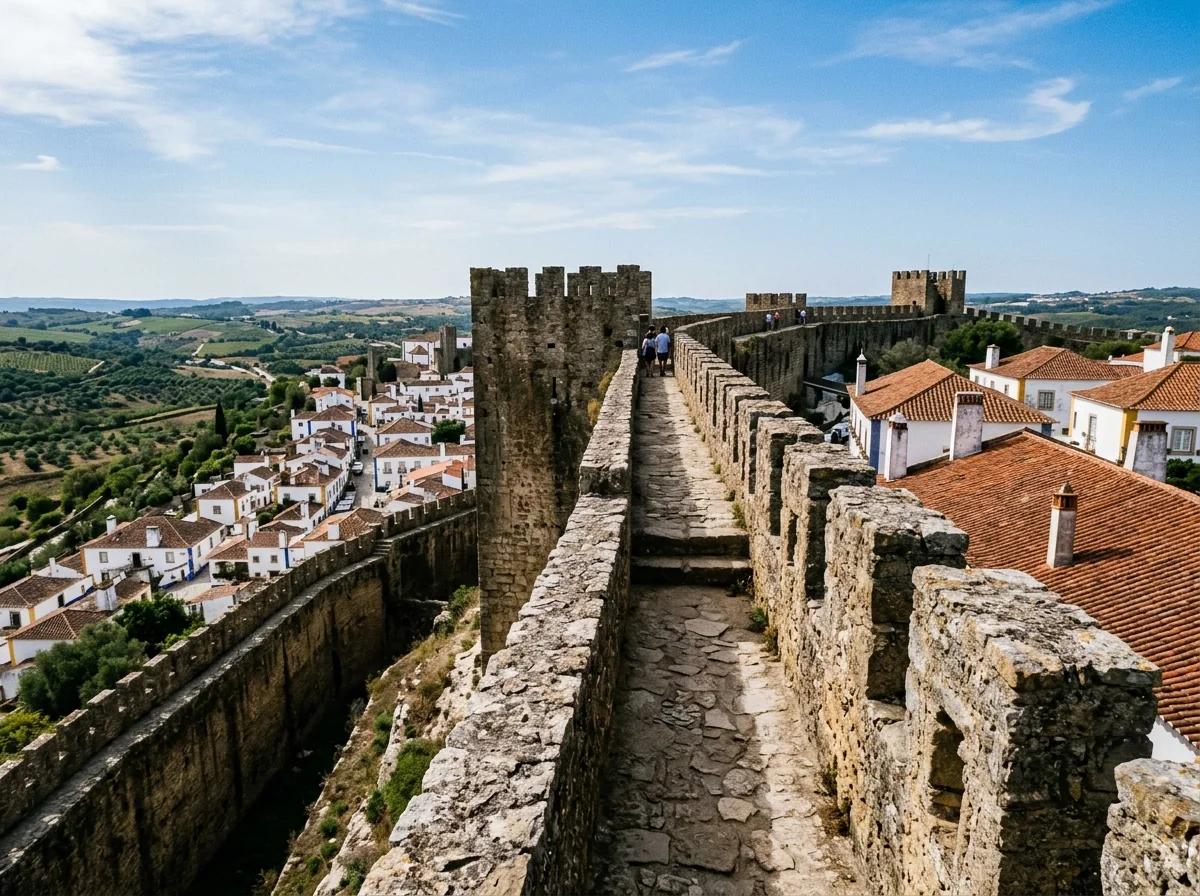
Walking the walls is free and the best thing to do in Óbidos. The loop is about 1.5 km; the steep stairs up are just inside the Porta da Vila, on the left. Allow about 30 minutes for half the circuit and about an hour for all of it, with the rooftops on one side and open countryside on the other.
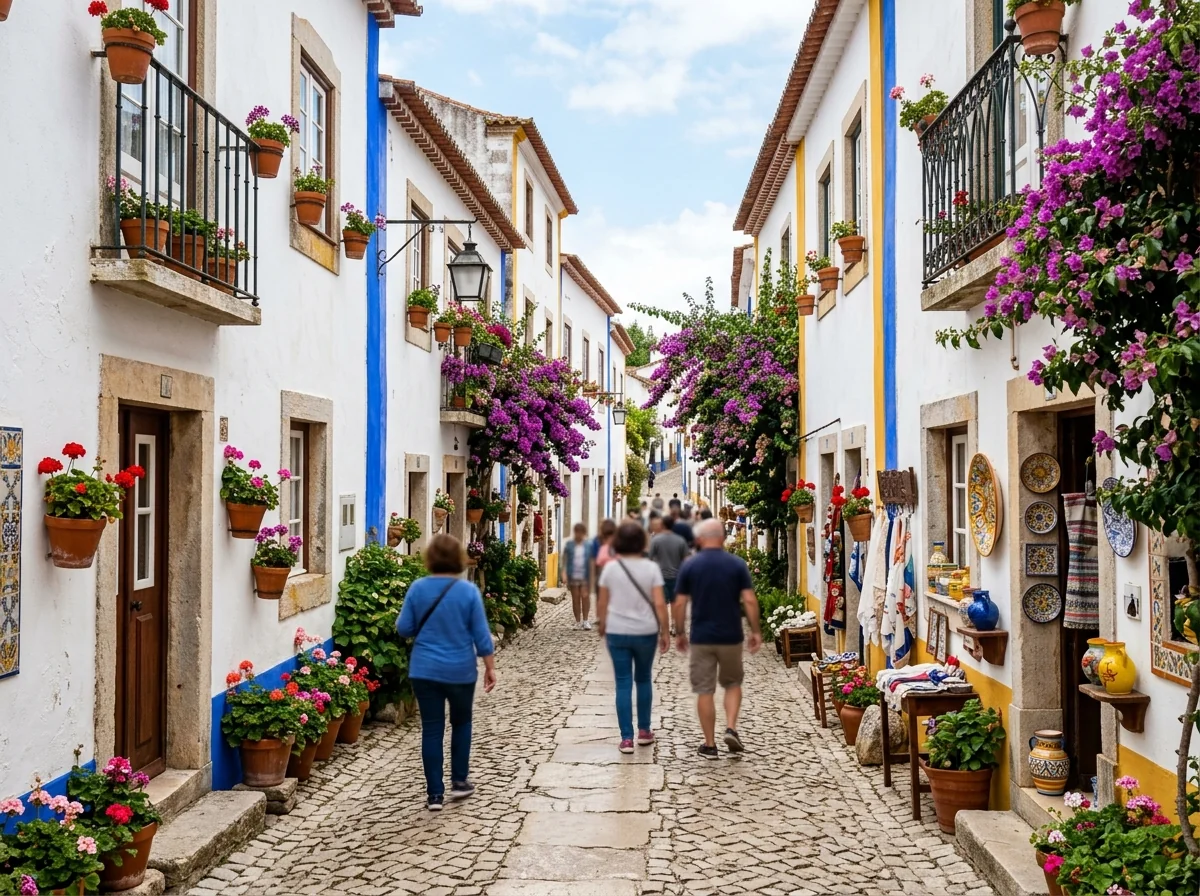
3. Wander Rua Direita, then get off it
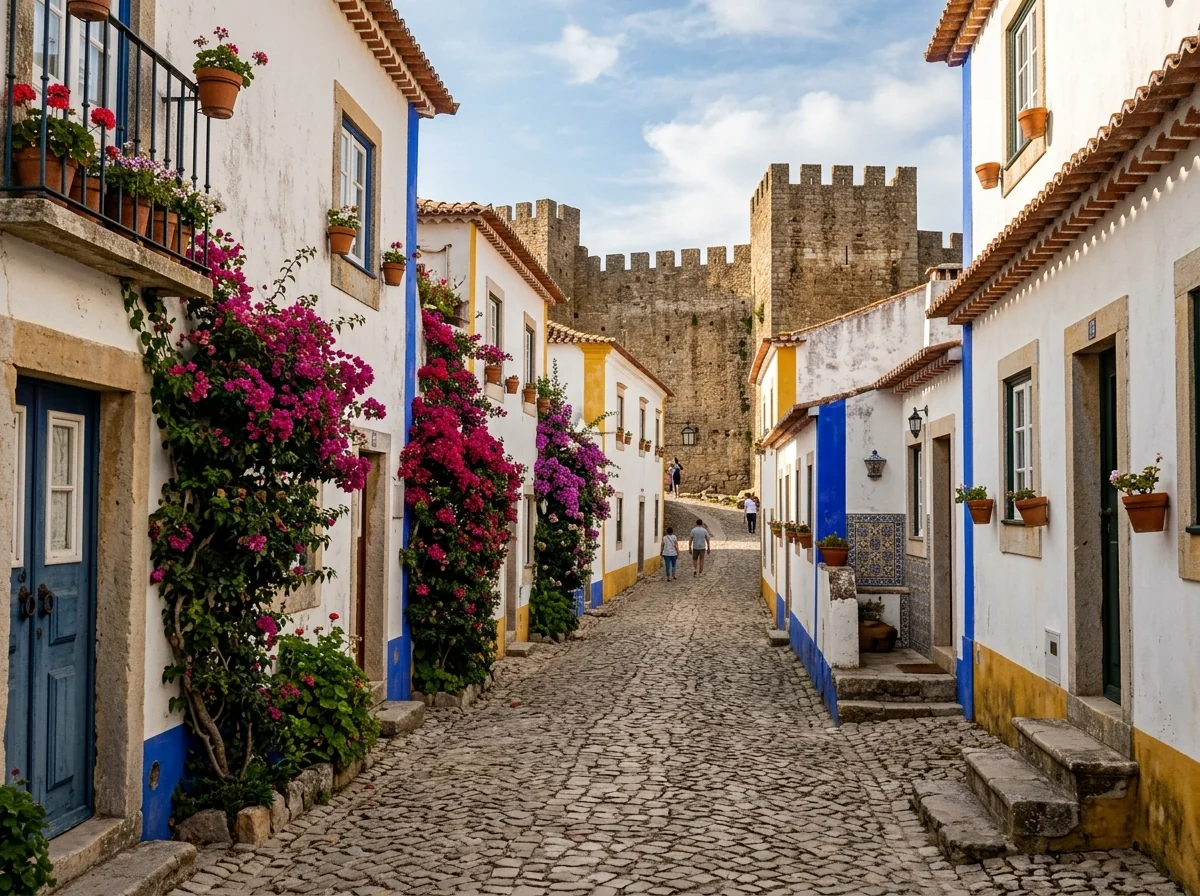
Rua Direita, the main street, already had its name in the 14th century and runs from the Porta da Vila up to the castle, lined with ceramic shops, ginja stalls and cafés. The quiet side lanes with their whitewashed walls and blue and yellow trim are where the town is at its best.
4. Igreja de Santa Maria and its square
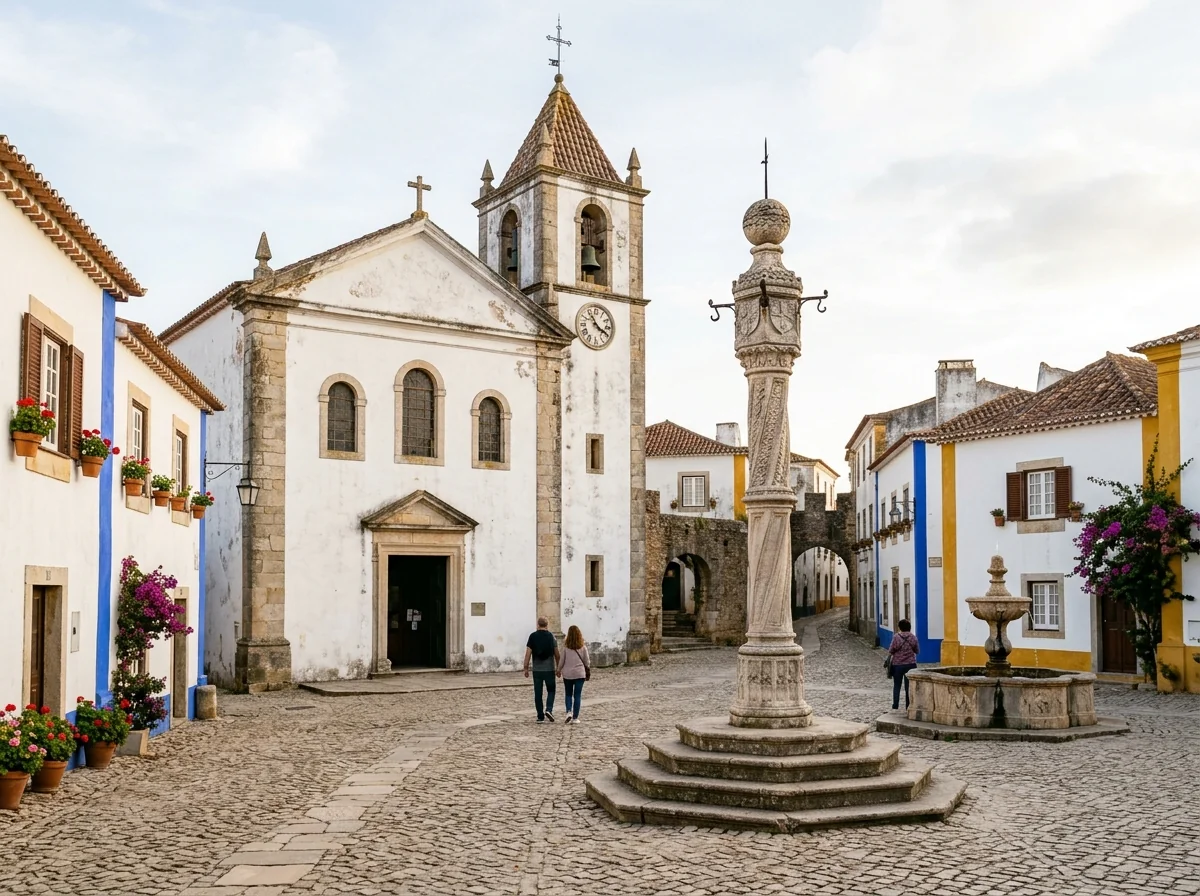
Santa Maria, the main church, was a mosque consecrated after 1148, reformed by Queen Leonor and rebuilt from 1571 under Queen Catarina. Its nave is lined with tiles, and its Santa Catarina altarpiece by the painter Josefa d’Óbidos is possibly her only work still in its original place. The young Afonso V married here in 1441. Outside, the pillory carries Queen Leonor’s emblem, a shrimp net.
5. The tiles of the Misericórdia
The Igreja da Misericórdia, founded by Queen Leonor in 1498 according to tradition, has a single nave covered in blue-and-yellow “carpet” tiles from about 1625 to 1630, with paintings by André Reinoso.
6. São Pedro and the chapel of São Martinho
The church of São Pedro has a gilded Baroque altarpiece, and Josefa d’Óbidos, who died in 1684, asked to be buried there. Opposite stands the chapel of São Martinho, a Gothic funerary chapel from 1331.
7. Browse a bookshop inside a church
The Livraria de Santiago, next to the castle, is a bookshop in the former church of Santiago, a medieval church rebuilt after the 1755 earthquake. It opened in 2013 and is open daily from 10:00 to 19:00, and it is the most visible sign of Óbidos’s UNESCO title as a City of Literature.
8. The castle and the Paço dos Alcaides
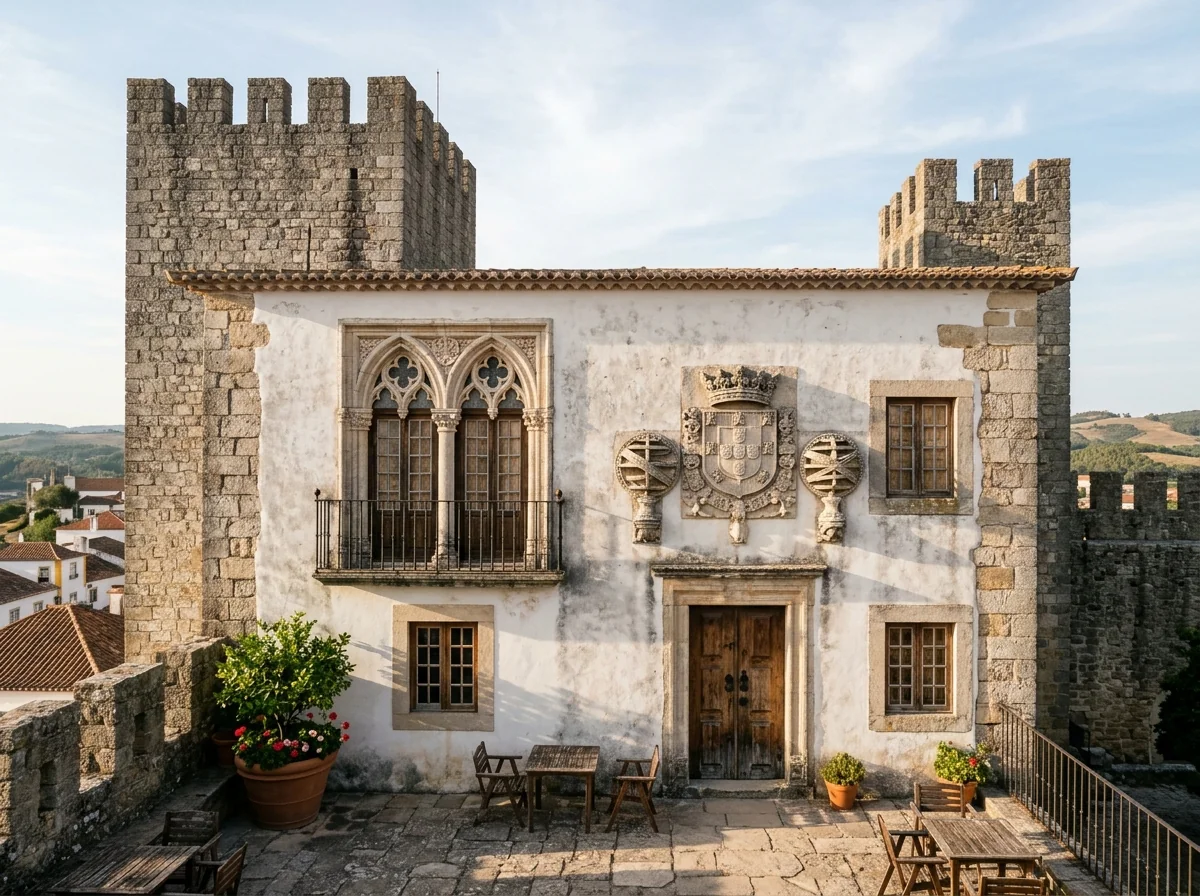
The castle at the top of the town has been a hotel, the Pousada Castelo Óbidos, since 1951, so its rooms are for guests and diners. Its terrace, the old parade ground behind it and the walls are free. Voted one of the Seven Wonders of Portugal in 2007, it has its own guide on this blog.
9. Drink ginja in a chocolate cup
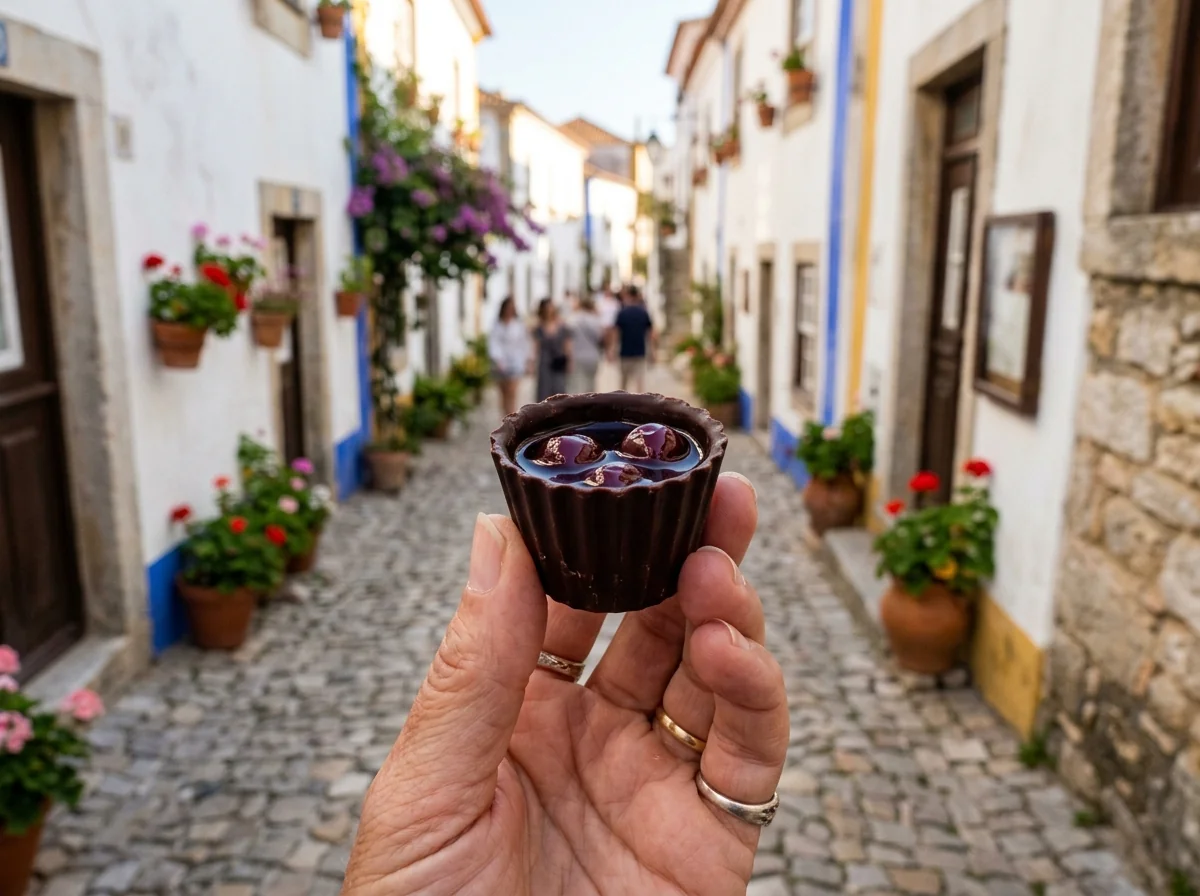
Óbidos is ginja country: the sour-cherry liqueur is served here in a small cup made of dark chocolate, and you eat the cup when you finish. Stalls on Rua Direita sell it for a euro or two. Our ginjinha guide tells the story of the drink.
10. Follow the aqueduct
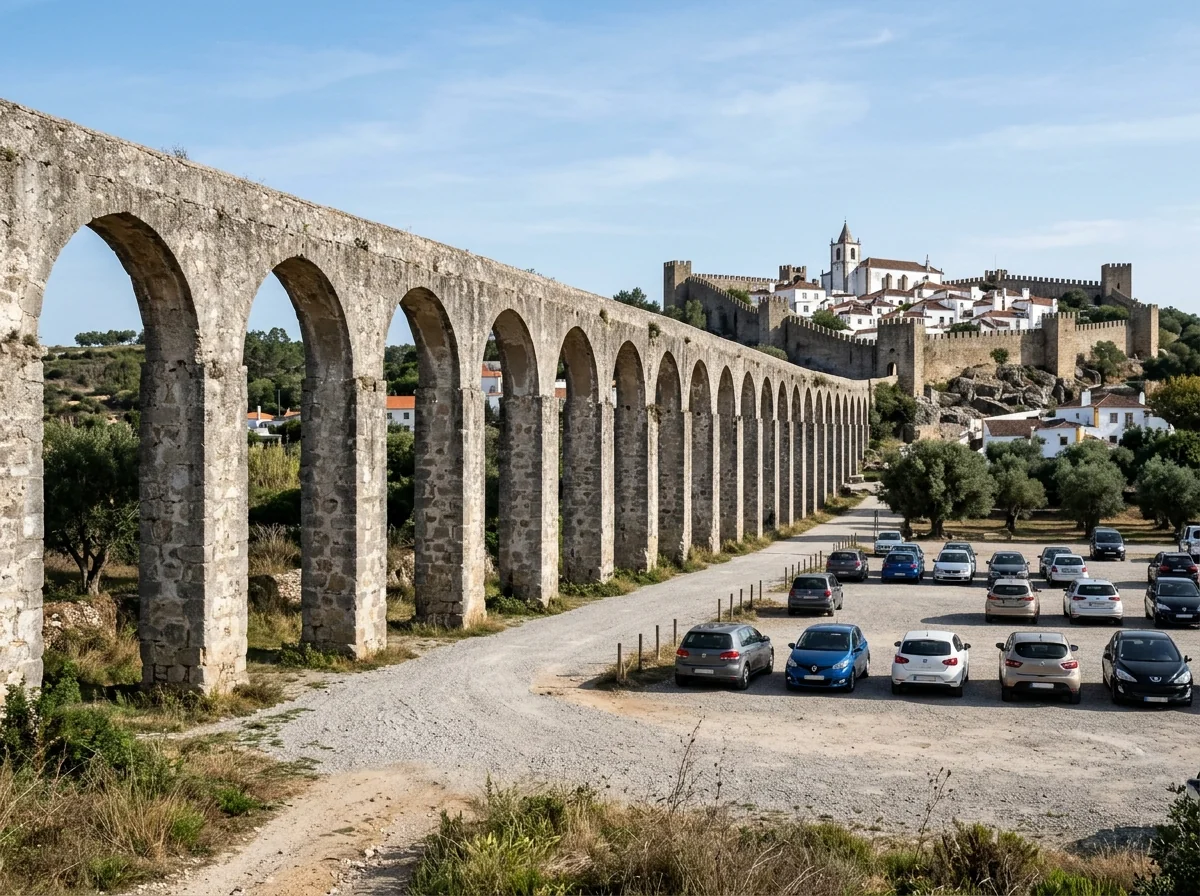
The aqueduct was begun in 1573 for Queen Catarina of Austria, who paid for it herself and received land known as the Várzea da Rainha in return. It runs for about 3 km and fed two fountains, one of them in Praça de Santa Maria. Its arches stand beside the main car parks outside the walls.
11. Santuário do Senhor Jesus da Pedra
Outside the walls on the road to Caldas da Rainha, this Baroque sanctuary opened in 1747 and has a round exterior wrapped around a six-sided interior. It is a short walk or drive from the town and usually far quieter.
12. Leave by the Porta da Senhora da Graça
The east gate was the town’s main entrance before Rua Direita existed. A chapel rebuilt in 1727 sits over it, and the street passes straight through, which makes it a quieter way out than the main gate.
A self-guided walking route inside the walls
This route takes 2 to 3 hours at an easy pace and links the stops above to the queens who shaped them. Pick up the official town map from the Óbidos tourism office to follow the lanes between them.
- Porta da Vila (5 minutes): the tiled oratory inside the gate.
- The walls (20 to 30 minutes): take the stairs on the left and walk a stretch for the town views.
- Rua Direita: come down and walk up the main street.
- Praça de Santa Maria (20 minutes): the church, the pillory and the fountain at the end of the aqueduct; queens Leonor and Catarina.
- The Misericórdia (10 minutes): Queen Leonor’s church and its tiles.
- São Pedro and São Martinho (10 minutes): Josefa d’Óbidos’s church and the 1331 chapel.
- Livraria de Santiago (15 minutes): the bookshop in a church.
- The castle terrace (15 minutes): the citadel enlarged in the time of Dinis and Isabel.
- The west walls (optional, 20 to 30 minutes): walk back along the other side.
- Porta da Senhora da Graça and the aqueduct: leave by the east gate and finish at Catarina’s arches.
When to visit Óbidos
Any time of year works; what changes is the crowd. Come early in the morning or after about 16:00, when the town is quietest, and match your dates to the festivals below if you want one, or avoid them if you don’t.
Best time of day
Midday is when most day visitors arrive, so arrive by mid-morning or stay for the late afternoon, when the light turns gold on the whitewashed walls. Weekdays are quieter than weekends all year.
Óbidos festival calendar
Óbidos runs a festival in most seasons. The usual month is the reliable part; 2027 dates are announced by each festival’s organisers.
| Festival | Usual month | 2026 edition | What it is |
|---|---|---|---|
| Christmas Village (Vila Natal) | Late November to early January | 27 Nov 2026 to 3 Jan 2027 | A ticketed Christmas village in the castle grounds |
| International Chocolate Festival | March | 6 to 22 March, weekends only | Chocolate sculptures, workshops and contests |
| Holy Week (Semana Santa) | March or April, with Easter | 29 March to 5 April | Processions and concerts |
| Teatro em Óbidos | June | 5 to 28 June | Theatre for all ages |
| Medieval Market | July | 16 to 26 July | A ticketed medieval fair, running since 2002 |
| Opera Festival | September | 5 to 20 September | Opera, opening outdoors by the castle walls |
| FOLIO literary festival | October | 8 to 18 October | Authors, exhibitions and concerts, held since 2015 |
Dates verified on the organisers’ and Óbidos tourism sites in October 2026.
For the Christmas season, see what to do inside in our Óbidos Christmas Village activities guide, and for the wider country at that time of year, our guide to Christmas in Portugal.
How long do you need in Óbidos?
Half a day is right for most people. Here is what each length of visit gets you.
| Time | What you can do |
|---|---|
| 2 hours | Rua Direita, Santa Maria, a stretch of wall and a ginja |
| Half a day | The full walking route and the whole wall loop |
| A full day | Add a long lunch, the aqueduct and the Senhor da Pedra sanctuary, or Nazaré |
| Overnight | Empty streets at dawn and dusk, after the day visitors leave |
Getting to Óbidos from Lisbon
The express bus and the car both take about an hour. The train is the slow option, and a private tour is the way to add Nazaré without driving.
| Option | Time | Notes |
|---|---|---|
| Rápida Verde express bus | About 1 hour | From Lisbon’s Campo Grande; €9.45 adult single on the October 2026 timetable; stops about 100 m from the historic centre |
| Car | About 1 hour | About 80 km on the A8 toll motorway, exit 15; park outside the walls |
| Train (Oeste line) | Close to 3 hours with a change | CP ran replacement buses for much of 2026; trains return to the Óbidos stretch from 15 November 2026; the station is about 1 km below town |
| Private tour | 8-hour day | Door to door, combined with Nazaré |
Parking in Óbidos
- Where: signposted car parks outside the walls; you cannot drive into the old town
- Paid: three car parks next to the Tourist Office
- By the aqueduct: a car park run by the local volunteer firefighters
- Motorhomes: a separate paid motorhome park
- Taxis: waiting at the Porta da Vila
Parking details from the official How to get to Óbidos page, which does not publish prices.
What to eat and drink in Óbidos
- Ginja: the sour-cherry liqueur, in a chocolate cup
- Chocolate: the town’s other sweet tradition, with its own festival in March
- Fish stew from the lagoon: caldeirada de peixe, which the tourism office itself recommends
- Seafood: clams from the Óbidos Lagoon, a local speciality
For the rest of the menu, see our guide to Portuguese food.
Beyond the walls: the lagoon and the Silver Coast
Óbidos sits at the heart of the Silver Coast, with beaches, a lagoon and the surf coast all within half an hour or so by car.
| Place | What it is |
|---|---|
| Óbidos Lagoon and Foz do Arelho | Where the lagoon meets the Atlantic: calm water on one side of the sand, waves on the other |
| Caldas da Rainha | The queen’s spa town, 15 minutes away, with a daily fruit market and Bordallo Pinheiro ceramics |
| Peniche | The surf town and the boats to the Berlengas |
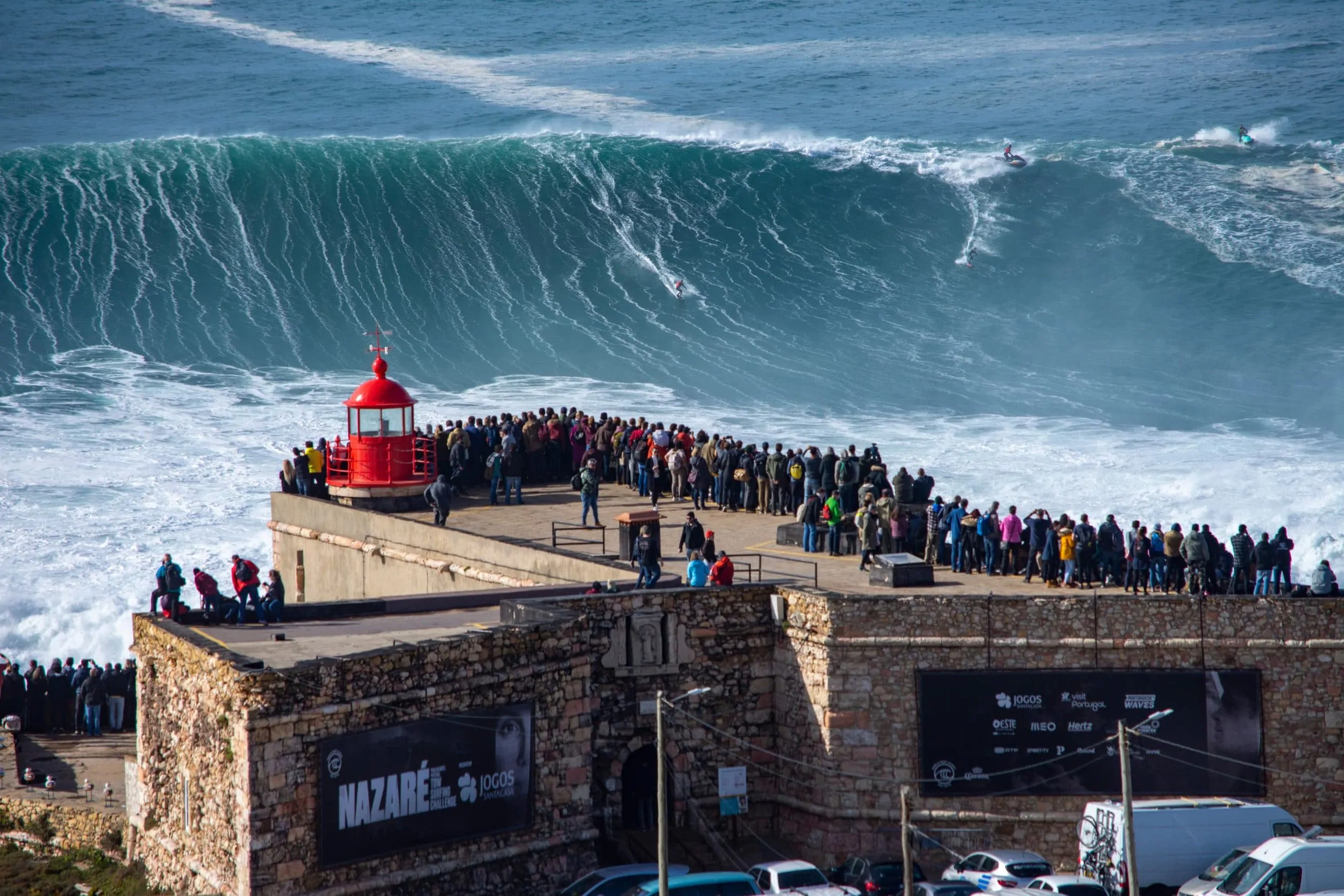
| Nazaré | The giant waves of Praia do Norte, about 40 km north |
| Fátima | The pilgrimage town inland; not on our tour |
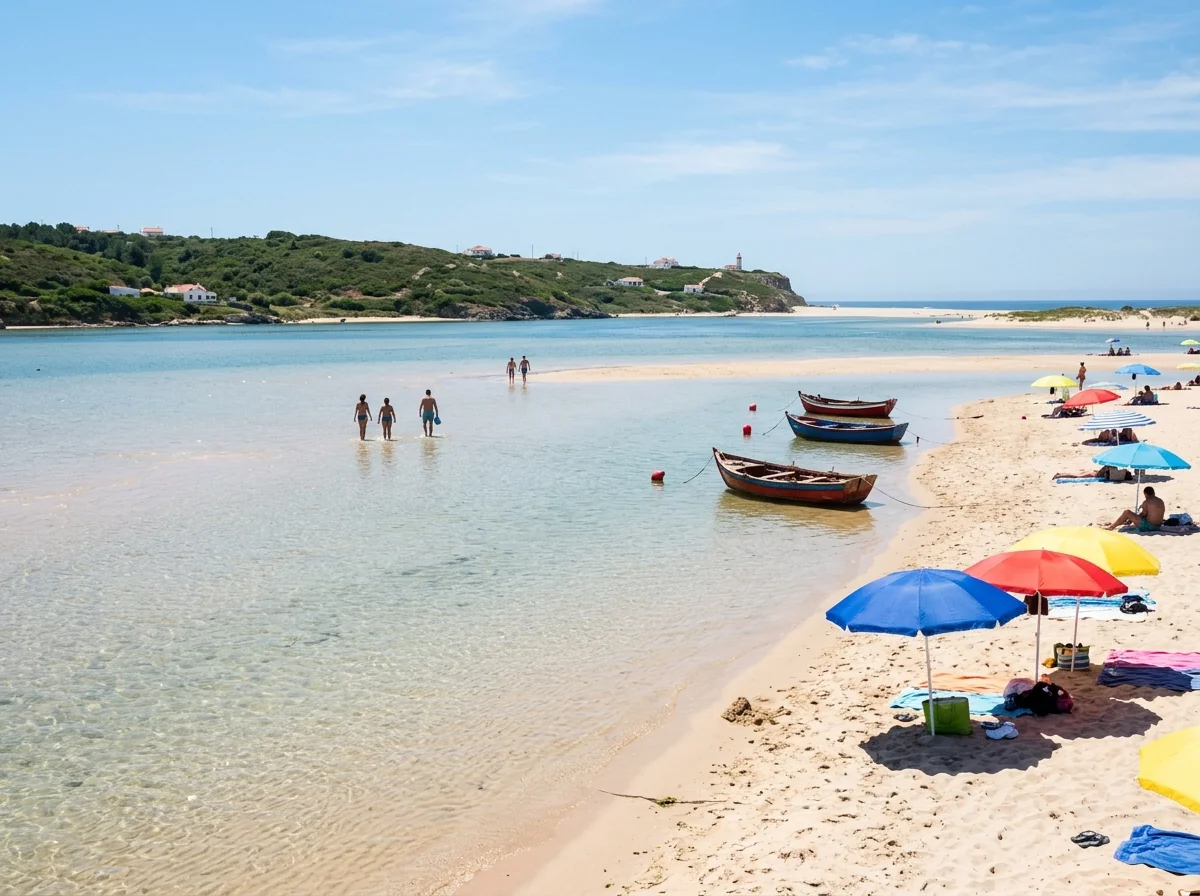
The lagoon is the closest beach to Óbidos; the Óbidos tourism office describes it as the most extensive coastal lagoon system on the Portuguese coast.
Óbidos and Nazaré in one private day
Óbidos pairs naturally with Nazaré, the fishing town up the coast famous for the biggest surfed waves in the world, and the two make a classic day from Lisbon. Doing it by bus is hard: the express bus reaches Nazaré only once a day on weekdays, in the evening.
Our roundup of the best day trips from Lisbon shows where this day fits, and the Nazaré and Óbidos day trip guide plans the combined day.
Recommended tour
FULL DAY PRIVATE TOUR - ÓBIDOS & NAZARÉ
Explore Óbidos and Nazaré on this enriching and private 8-hour tour. We offer personalized hotel pick up. Guidance and storytelling by Francisco Gomes or Luis Perloiro. Travel in an air-conditioned vehicle, try the local licor Ginjinha in Óbidos, and get to know the biggest wave spot in the world - Nazaré.
See dates & book →Frequently Asked Questions
Is Obidos worth visiting?
Yes. Óbidos is a compact, genuinely medieval town still enclosed by its walls, about an hour from Lisbon. You can walk the walls, see the queens’ churches and drink ginja from a chocolate cup in half a day. Go early or late, as Rua Direita gets crowded in the middle of the day.
What is Óbidos known for?
Its complete medieval walls, its castle, voted one of the Seven Wonders of Portugal in 2007, and ginja served in chocolate cups. It is also known as the town of the queens, as a UNESCO Creative City of Literature since 2015, and for festivals such as the Christmas Village and the Medieval Market.
Why is Óbidos called the town of the queens?
Because it belonged to Portugal’s queens for six centuries. King Afonso II gave it to Queen Urraca in 1210, King Dinis gave it to his bride, Queen Isabel, in 1282, and it stayed in the queens’ estate until 1834. Several queens paid for its churches and its aqueduct.
Is it free to enter Óbidos and walk the walls?
Yes. The town and the walls are free, with no ticket or opening hours. Some events are ticketed, including the Christmas Village and the Medieval Market. Take care on the walls: the walkway is narrow and uneven, with no railing on the town side.
Can you go inside Óbidos Castle?
Only partly. The castle has been a historic hotel, the Pousada Castelo Óbidos, since 1951, so its rooms are for guests. Visitors can walk up to the castle, use its terrace and the old parade ground behind it for free, and book a table at the hotel restaurant to see inside.
How do you get to Óbidos from Lisbon?
The easiest way is the Rápida Verde express bus from Campo Grande, about an hour, for 9.45 euros on the October 2026 timetable. By car it is about 80 km on the A8, leaving at exit 15. The train is slower, with a change, and a private tour can add Nazaré the same day.
How much time do you need in Óbidos?
Two to three hours covers the highlights: Rua Direita, Santa Maria church, a stretch of the walls and a ginja. Half a day lets you walk the whole wall loop and the full route inside the walls. Stay overnight to see the streets empty at dawn and dusk.
When is the best time to visit Óbidos?
Any season works. Spring and autumn are mild and quieter, summer brings the Medieval Market in July, and the Christmas Village runs from late November to early January. Whatever the month, arrive by mid-morning or after about 16:00 to avoid the midday crowds on Rua Direita.
The walled town worth the trip north
Óbidos gives you a complete medieval town in half a day: walk the walls, follow the queens from Santa Maria to the castle, and drink a ginja from a chocolate cup. Come early or late, check the festival calendar, and mind your footing on the walls. To pair it with Nazaré’s waves and skip the timetables, join Francisco on our private Óbidos and Nazaré day.

-
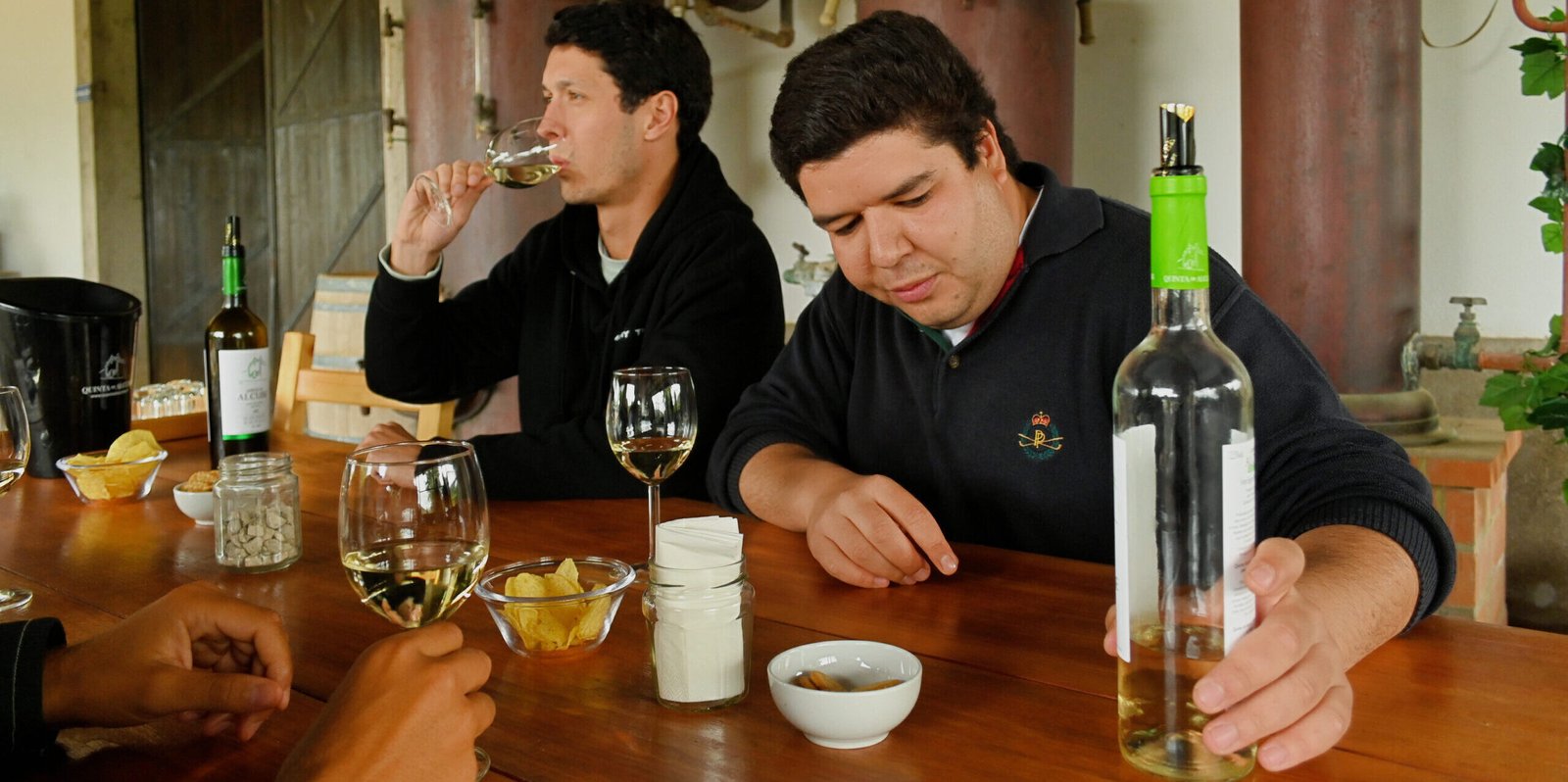
FULL DAY PRIVATE TOUR - WINE TASTING + SESIMBRA & ARRÁBIDA NATIONAL PARK
From €95.00 per personBook Now